
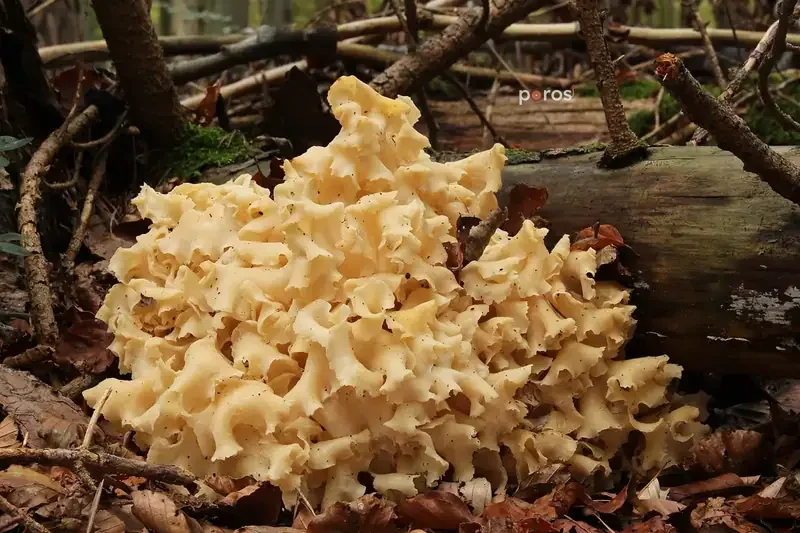


Cauliflower mushroom
Sparassis crispa · Sparassidaceae
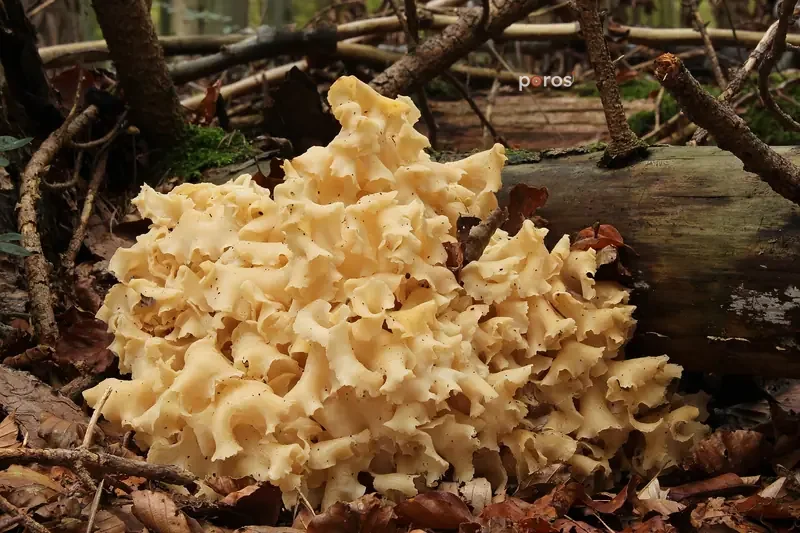
The cauliflower mushroom (Sparassis crispa), karnabahar mantarı in Turkish, is an edible mushroom when young, made of curly, wavy lobes that look like a cauliflower or a sponge and growing at the base of conifers such as pines; never eat it without certain identification.
Last updated: Prepared by the Poros Mantar editorial team6 sources checkedReport a correction
The cauliflower mushroom (Sparassis crispa), karnabahar mantarı in Turkish, is an edible mushroom when young, made of curly, wavy lobes that look like a cauliflower or a sponge and growing at the base of conifers such as pines; never eat it without certain identification. It is cream to pale yellow, 10–25 cm across and sometimes up to 50 cm. It causes brown rot in the roots of its host and can reappear in the same spot each year. Soil and insects get caught in its folds, so it needs careful cleaning.
Also called: wood cauliflower, cauliflower fungus Turkish: Karnabahar mantarı Synonyms: Sparassis radicata
How to recognise it
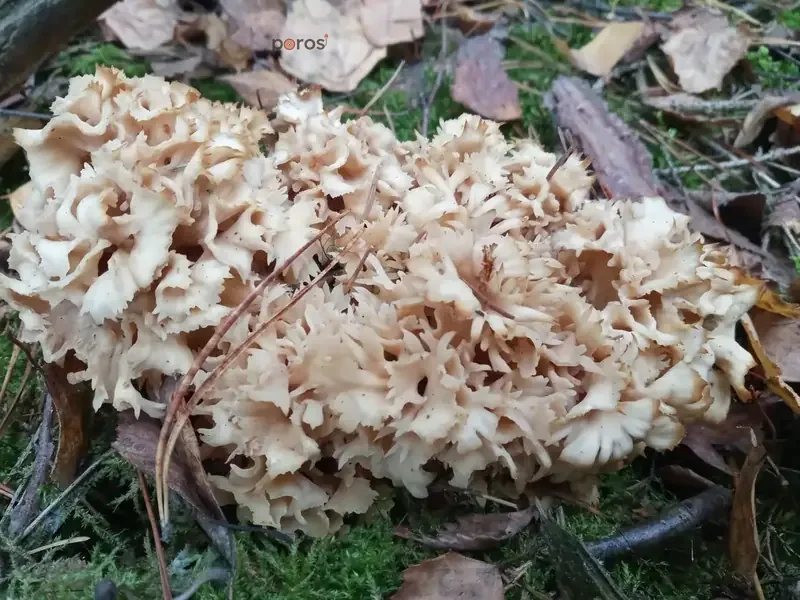
Cauliflower mushroom, part by part
No ring or volva Spore print: White to pale cream Pleasant and nutty; flesh flexible when young, tough when old.

When and where
Aug–Nov
- Jan
- Feb
- Mar
- Apr
- May
- Jun
- Jul
- Augin season
- Sepin season
- Octin season
- Novin season
- Dec
The cauliflower mushroom fruits from late summer to late autumn. Its only Turkish GBIF record is from October.
Where do cauliflower mushrooms grow?
The cauliflower mushroom grows at the base of conifers, mainly pines, or over their roots close to the ground; it is a parasite that causes root and butt rot.
Where is cauliflower mushrooms found in Turkey?
The cauliflower mushroom is rarely recorded in Turkey; GBIF holds only one Turkish record, from Kastamonu.
Which months
- Jan0
- Feb0
- Mar0
- Apr0
- May0
- Jun0
- Jul0
- Aug0
- Sep0
- Oct2
- Nov0
- Dec0
2 provinces, 2 observations (GBIF, iNaturalist); months from observation dates. Record density also reflects where observers work.
Latest cauliflower mushroom observations
-
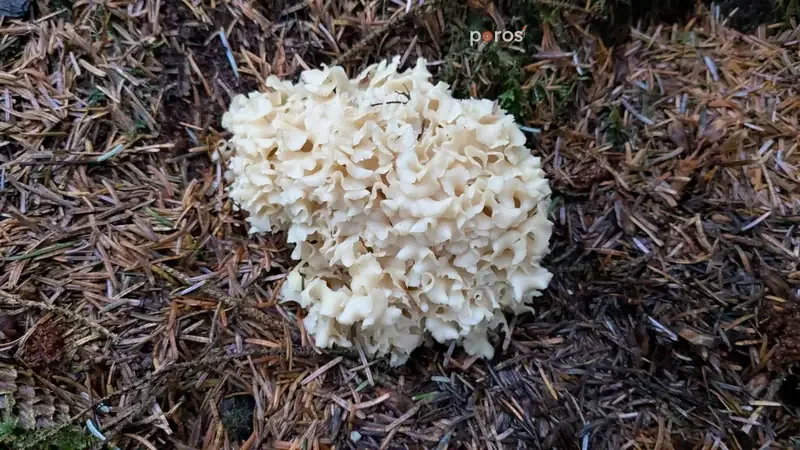
 Illustrative
Bolu23 Oct 2026 · iNaturalist
-
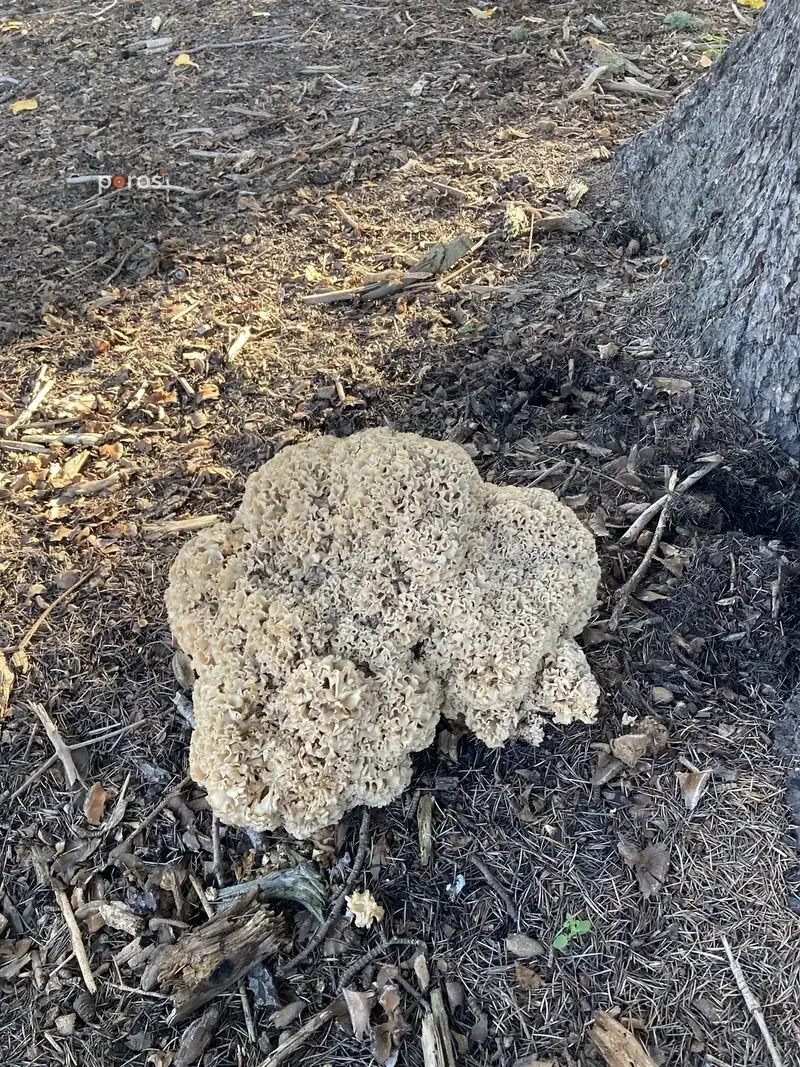
 Illustrative
Kastamonu21 Oct 2017 · iNaturalist
- See on the map
On "illustrative" cards the image is a photo of the species; the observation photo cannot be shown here because of its licence, but can be seen at the source.
Look-alikes
What could it be confused with?
Cauliflower mushroom can be mistaken for the species below. Each card shows the look-alike and how it differs from Cauliflower mushroom.
 Poisonous
not Cauliflower mushroom
Salmon coral Ramaria formosa
Has upright, branching coral tips rather than curly lobes, is pinkish salmon and causes gastrointestinal poisoning.
 Edible species
not Cauliflower mushroom
Wood cauliflower Sparassis spathulata
Has flatter, broader, zoned lobes and grows mostly at the base of broadleaf trees.
 Edible species
not Cauliflower mushroom
Maitake Grifola frondosa
Made of grey-brown fan-shaped caps with pores underneath; grows at the base of oaks.
 Inedible
not Cauliflower mushroom
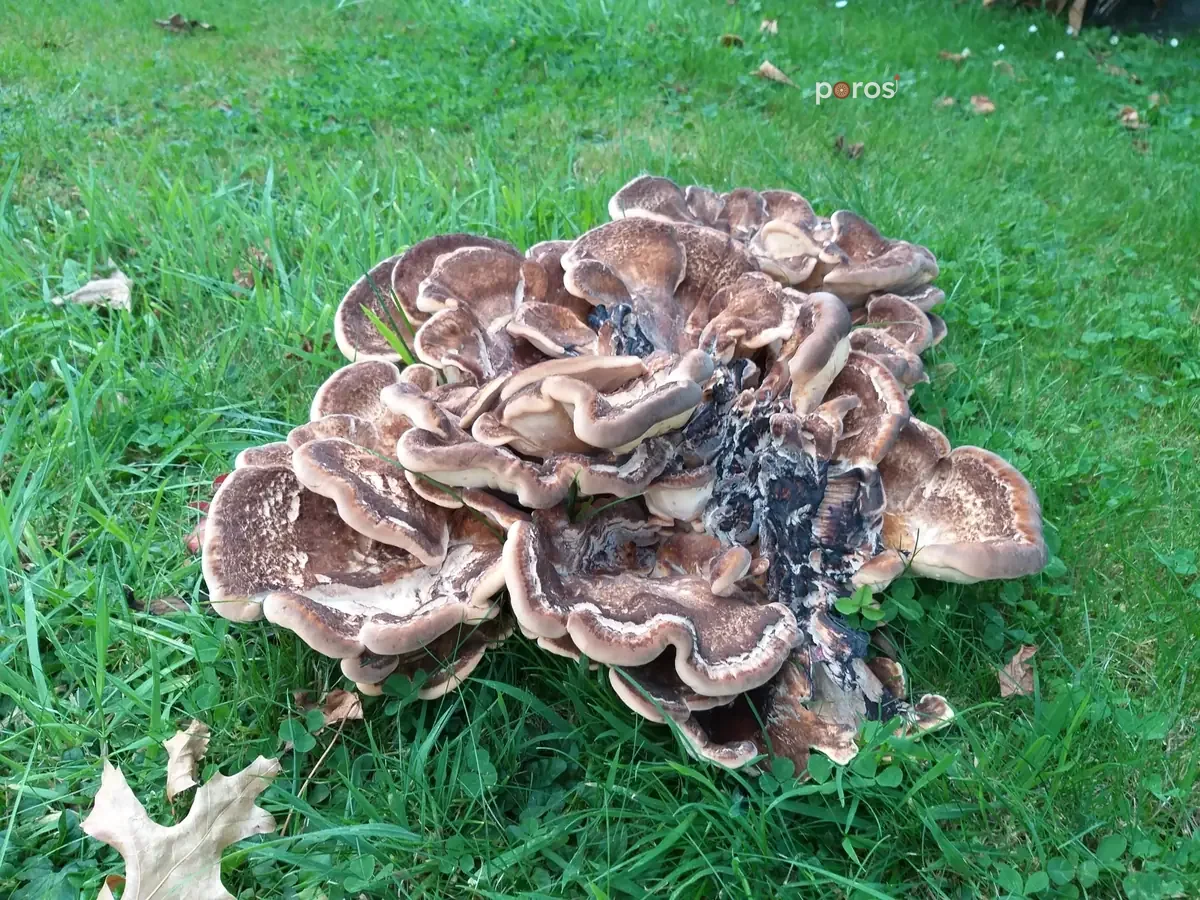
Giant polypore Meripilus giganteus
Large brown shelf-like caps; the pore surface blackens when touched and the flesh is tough.
How to cook and eat cauliflower mushrooms
Safety first. Eat the cauliflower mushroom only when young and well cooked, and never without certain identification. Some coral fungi (Ramaria) are poisonous.
How to prepare it
Needles and soil lodge in its folds: break it into small clumps, clean under running water with an old toothbrush and blanch for 2–3 minutes before adding it to the dish.
How to cook it
Cook it slowly. It can also be preserved in oil or dried.
What goes with it?
- cauliflower
- shallots
- garlic
- thyme
- olive oil
- vegetable stock
- raw cashews
- soy sauce
- nutritional yeast
- balsamic vinegar
Source: Wikipedia · practical details from our recipes.
Recipe
How to store cauliflower mushrooms
Grow it, buy it
Cauliflower mushroom price list
| Product | Us | Market (sourced, dated) |
|---|---|---|
| Fresh cauliflower mushrooms | Made to order · ask | — |
| Dried cauliflower mushrooms | Made to order · ask | — |
We make our cauliflower mushrooms products in small batches, to order; send a request and we email you the price and delivery date. The market column shows prices seen on other sellers' pages on the date given; they are not our prices and may have changed.
Frequently asked questions
Is the cauliflower mushroom edible?
Yes, the cauliflower mushroom is edible when young, but never eat it without certain identification. Only fresh, young specimens are eaten, well cooked; old ones can be tough and bitter.
How do you recognise a cauliflower mushroom?
It is a rounded mass of cream to pale yellow, curly, wavy lobes that looks like a cauliflower or a sponge. It has no gills or pores and grows at the base of conifers such as pines.
What can be mistaken for a cauliflower mushroom?
The main risk is the salmon coral (Ramaria formosa), which causes gastrointestinal poisoning and has upright, branching coral tips. The wood cauliflower and hen of the woods look similar but are edible.
Where and when does it grow?
It grows from late summer to late autumn at the base of conifers, mainly pines. It is rarely recorded in Turkey; the only GBIF record is from Kastamonu.
How do you clean a cauliflower mushroom?
Break it into small pieces, clean soil, pine needles and insects from the folds with a brush and running water, then cook it thoroughly. Discard any browned parts.
Does the cauliflower mushroom harm trees?
Yes, it is a parasite that causes brown rot in the roots and lower trunk of conifers, which is why it can reappear at the foot of the same tree for years.
Is the cauliflower fungus the same as the cauliflower mushroom?
Yes. Cauliflower fungus and cauliflower mushroom both mean Sparassis crispa, the cream-coloured, crinkled ball that grows at the base of pines.
What is Sparassis spathulata?
Sparassis spathulata is a related species with broader, flatter lobes that grows at the base of oaks. Sparassis crispa grows with conifers.
How do we cook a cauliflower mushroom?
After cleaning it well, we tear the cauliflower mushroom into small pieces and sauté them in butter or oil, or simmer them in soups and stews. It keeps its firm, noodle-like texture during cooking.
Are cauliflower mushrooms edible?
Yes, the cauliflower mushroom is an edible species. Eat a wild one only after an expert has identified it with certainty: it can be confused with salmon coral (Ramaria formosa). Eat the cauliflower mushroom only when young and well cooked, and never without certain identification. Some coral fungi (Ramaria) are poisonous.
When is cauliflower mushroom season in Turkey?
In our calendar, cauliflower mushroom season runs Aug–Nov. The cauliflower mushroom fruits from late summer to late autumn. Its only Turkish GBIF record is from October.
Where do cauliflower mushrooms grow?
The cauliflower mushroom grows at the base of conifers, mainly pines, or over their roots close to the ground; it is a parasite that causes root and butt rot.
Where are cauliflower mushrooms found in Turkey?
The cauliflower mushroom is rarely recorded in Turkey; GBIF holds only one Turkish record, from Kastamonu.
What can the cauliflower mushroom be confused with?
The cauliflower mushroom can be confused with salmon coral (Ramaria formosa, poisonous), wood cauliflower (Sparassis spathulata, edible species), hen of the woods (Grifola frondosa, edible species) and giant polypore (Meripilus giganteus, inedible). Look-alikes are compared on this page.
What is the cauliflower mushroom called in Turkish?
In Turkish, the cauliflower mushroom (Sparassis crispa) is called Karnabahar mantarı.
Related species
-
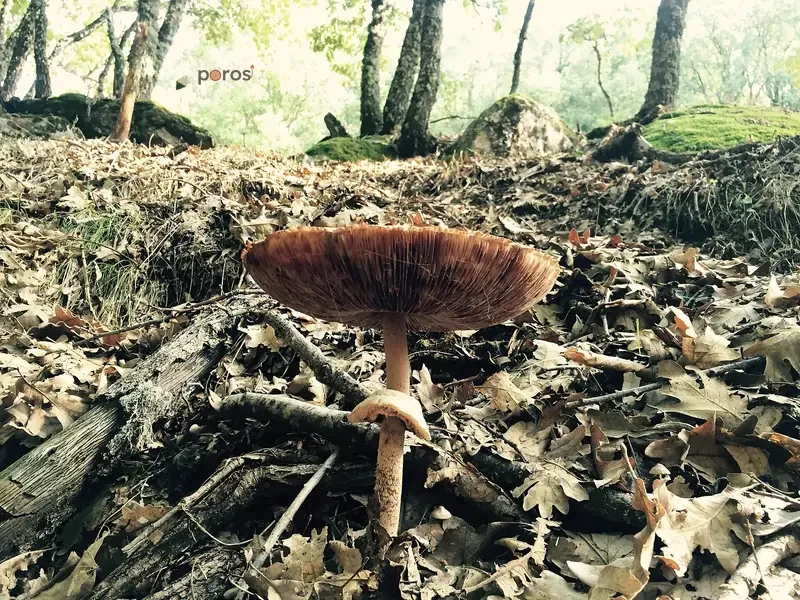 Anatolian matsutakeTricholoma anatolicumEdible species
-
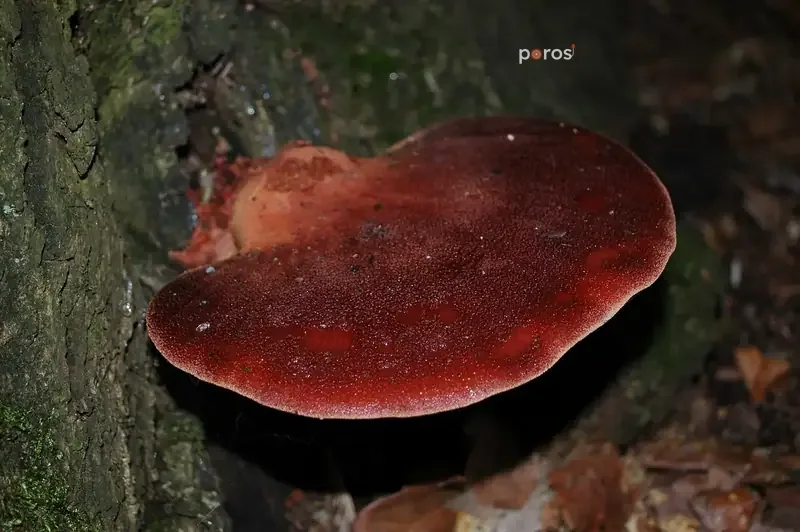 Beefsteak fungusFistulina hepaticaEdible species
-
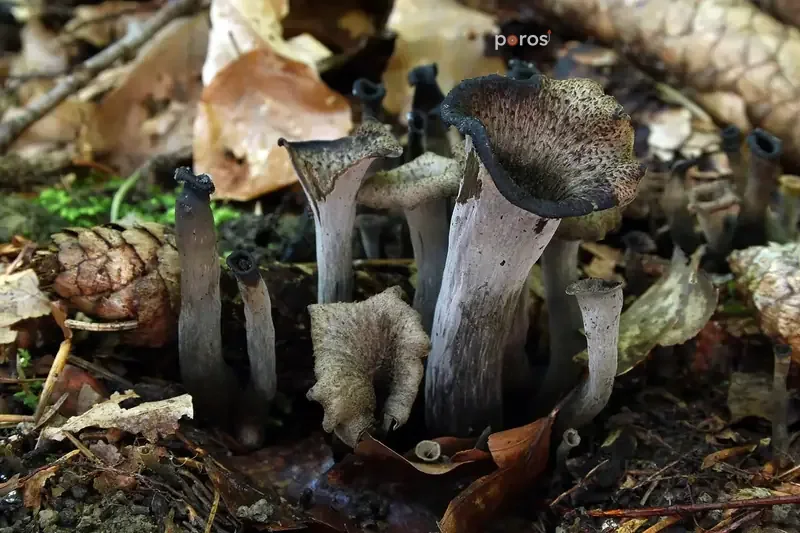 Black trumpetCraterellus cornucopioidesEdible species
-
 Bloody milk capLactarius sanguifluusEdible species
-
 Button mushroomAgaricus bisporusEdible species
-
 Caesar’s mushroomAmanita caesareaEdible species
-
 ChanterelleCantharellus cibariusEdible species
-
 Chicken of the woodsLaetiporus sulphureusEdible species
Sources
- Sharma ve ark. (2022), IMA Fungus: Sparassis crispa derlemesi pubmed.ncbi.nlm.nih.gov
- Adanacıoğlu ve ark. (2014), ANADOLU (Ege Tarımsal Araştırma Enstitüsü): Türkiye makromantar genetik kaynakları I. Ege Bölgesi dergipark.org.tr
- Wikipedia (EN): Sparassis crispa en.wikipedia.org
All sources (6)
- First Nature: Sparassis crispa first-nature.com
- Wikipedia (EN): Ramaria formosa en.wikipedia.org
- GBIF: Türkiye kayıtları gbif.org
Photo credits (8)
- File:Krause Glucke Sparassis crispa.JPG · Holger Krisp · CC BY 3.0
- Sparassis crispa · iNaturalist #199818707 · sarahcalgary · CC0
- Sparassis crispa · iNaturalist #139011496 · Dmitry Semigradsky · CC0
- Sparassis crispa · iNaturalist #185755960 · Quentin Groom · CC0
- Sparassis crispa · iNaturalist #314444727 · edm1_ · CC0
- Sparassis crispa · iNaturalist #142831501 · John Kenrick Gibson · CC0
- Sparassis crispa · iNaturalist #254654914 · K.P. · CC BY 4.0
- File:Sparassis crispa 26759929.jpg · Jeremy · CC BY 4.0

