
Shaggy bracket
Inonotus hispidus · Hymenochaetaceae

The shaggy bracket (Inonotus hispidus) is a large annual bracket high up on living ash, apple, walnut, mulberry and plane trunks. It is coarsely hairy on top, juicy and orange-rust when young and turns black with age, and it weeps yellow droplets from its pores when moist. It causes white rot in the tree. It is tough and bitter and not edible.
Also called: shaggy bracket Turkish: Kıllı kırçıllı mantarı, kıllı kırçıllı mantarı Synonyms: Boletus hispidus, Polyporus hispidus
Last updated: Prepared by the Poros Mantar editorial team5 sources checkedReport a correction
Shaggy bracket photos
-
© Katja Schulz · CC BY 4.0
-

© Jimmis · CC0
-

© Shawn O'Donnell · CC BY 4.0
-

© Zihao Wang · CC BY 4.0
-

© J Castillo · CC BY 4.0
-

© EvelynG · CC BY 4.0
-

© Tony Rebelo · CC BY-SA 4.0
-

© William Stephens · CC BY 4.0
-

Cap© Repina Tatyana · CC BY 4.0
-

Pores© Cristina Villaverde · CC BY 4.0
-
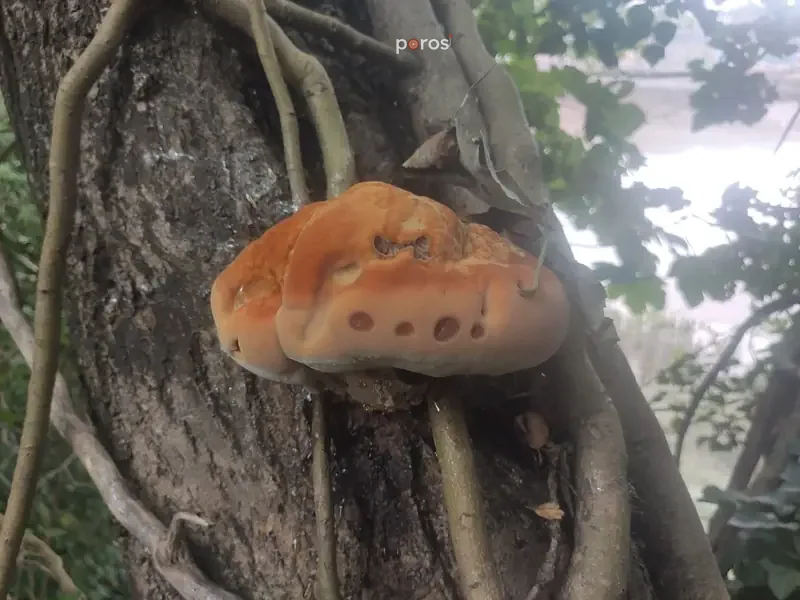
In habitat© alia · CC BY 4.0


These are licensed records of this species; photos alone are not enough to identify a mushroom.
Are shaggy brackets poisonous?
The shaggy bracket is not known to be poisonous, but it is tough, fibrous and bitter, and not edible.
Are shaggy brackets edible?
No. It is tough, fibrous and bitter, and not edible; it is not known to be poisonous.
How to recognise it
Appearance of shaggy brackets
No ring or volva Spore print: Brown Not distinctive; taste bitter.
When and where
When to find shaggy brackets
Jun–Oct
It grows in summer and autumn; blackened dead brackets stay on the tree through winter. Our Turkish records fall between June and October.
Where do shaggy brackets grow?
It grows on living hardwoods, especially ash, apple, walnut, mulberry and plane, mostly at branch scars and high on the trunk; it also appears in parks and orchards.
Where is shaggy brackets found in Turkey?
Our map data (GBIF and iNaturalist) holds 10 Turkish records: Ankara (2), Diyarbakır (2), Istanbul (2), Giresun (1), Tokat (1), Eskişehir (1), Kocaeli (1). The records are from June, July, August, September, October. GBIF lists 13 Turkish records in total, including literature surveys.
- Diyarbakır2
- Ankara2
- İstanbul2
- Tokat1
- Giresun1
- Eskişehir1
- Kocaeli1
Which months
- Jan0
- Feb0
- Mar0
- Apr0
- May0
- Jun1
- Jul2
- Aug1
- Sep2
- Oct4
- Nov0
- Dec0
7 provinces, 10 observations (GBIF, iNaturalist); months from observation dates. Record density also reflects where observers work.
Latest shaggy bracket observations
-
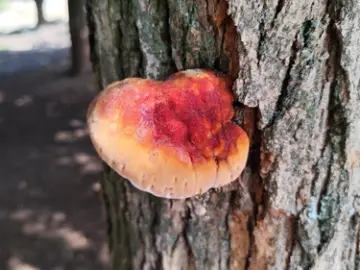 Diyarbakır3 Oct 2026 · iNaturalist© Mustafa Arisli · CC BY
-
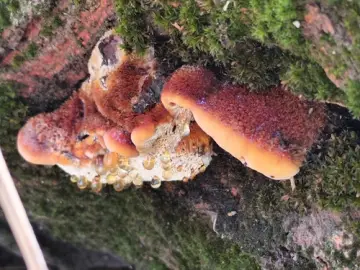 Diyarbakır3 Oct 2026 · iNaturalist© Mustafa Arisli · CC BY
-
 Illustrative
Ankara17 Jul 2026 · iNaturalist
-
 Illustrative
İstanbul12 Oct 2024 · iNaturalist
-
 Illustrative
Tokat5 Oct 2024 · iNaturalist
-
 Illustrative
Giresun11 Aug 2024 · iNaturalist
-
 Illustrative
Ankara1 Jun 2024 · iNaturalist
-
 Illustrative
Eskişehir24 Jul 2023 · iNaturalist
- See on the map
On "illustrative" cards the image is a photo of the species; the observation photo cannot be shown here because of its licence, but can be seen at the source.
Look-alikes
What could it be confused with?
Shaggy bracket can be mistaken for the species below. Each comparison shows Shaggy bracket on the left, the look-alike on the right, and how to tell them apart.
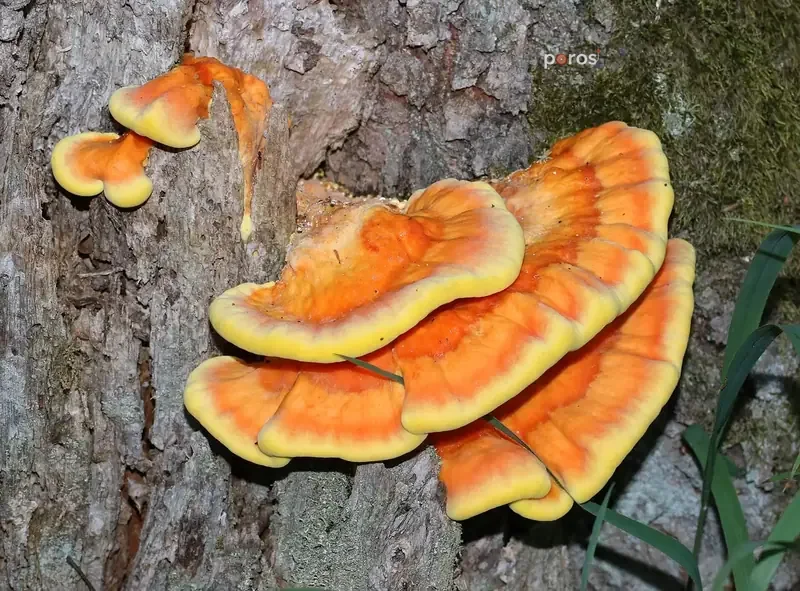
Chicken of the woods Laetiporus sulphureus
How to tell Chicken of the woods is bright lemon-yellow to orange, smooth and velvety on top, with sulphur-yellow pores.

Beefsteak fungus Fistulina hepatica
How to tell The beefsteak fungus is red-brown and soft like meat, oozes red juice when cut and has pores made of separate little tubes.
Other look-alikes (1)
 Inedible
not Shaggy bracket
Tufted bracket Fuscoporia torulosa
The tufted bracket is perennial, woody, velvety and banded on top.
Shaggy bracket and its look-alikes compared
| Species | Status | Underside | Spore print | Season |
|---|---|---|---|---|
| Shaggy bracketInonotus hispidus | Inedible | Yellow-brown to rusty pores that weep golden droplets when young | Brown | Jun–Oct |
| Chicken of the woodsLaetiporus sulphureus | Edible species | No gills; sulphur-yellow underside with small pores | White | May–Nov |
| Beefsteak fungusFistulina hepatica | Edible species | Cream to pale pink | Pale pinkish brown | Aug–Nov |
| Tufted bracketFuscoporia torulosa | Inedible | Very small rusty to cinnamon-brown pores | Pale yellowish to whitish | Feb–Mar, Sep–Oct, Dec |
The table is compiled from each species page. The status column is a guide only; do not eat a wild mushroom unless an expert has seen it in person. Compare look-alikes side by side
The shaggy bracket is not known to be poisonous, but it is tough, fibrous and bitter, and not edible. Its young orange colour should not be mistaken for chicken of the woods. If poisoning is suspected, call poison control.
Frequently asked questions
Are shaggy brackets poisonous?
The shaggy bracket is not known to be poisonous, but it is tough, fibrous and bitter, and not edible.
Are shaggy brackets edible?
No. It is tough, fibrous and bitter, and not edible; it is not known to be poisonous.
How do you identify it?
A large, thick bracket high on a living ash, mulberry, walnut or apple trunk; coarsely hairy, orange-rust with yellow droplets when young, black with age.
What can it be confused with?
The main look-alikes are: Chicken of the woods, Beefsteak fungus. The differences are listed in the look-alikes section; with poisonous look-alikes, always check the cross-section and habitat.
Where does it grow?
It grows on living hardwoods, especially ash, apple, walnut, mulberry and plane, mostly at branch scars and high on the trunk; it also appears in parks and orchards.
When does it appear?
It grows in summer and autumn; blackened dead brackets stay on the tree through winter. Our Turkish records fall between June and October.
Does the shaggy bracket harm the tree?
Yes. It causes white rot in living trees and can weaken branches or the trunk until they break; it is an important decay fungus in urban trees.
Is it used as a dye?
Yes. It is known as a dye mushroom that gives yellow, gold and brown shades on wool and silk.
Is it found in Turkey?
Our map data (GBIF and iNaturalist) holds 10 Turkish records: Ankara (2), Diyarbakır (2), Istanbul (2), Giresun (1), Tokat (1), Eskişehir (1), Kocaeli (1). The records are from June, July, August, September, October. GBIF lists 13 Turkish records in total, including literature surveys.
When is shaggy bracket season in Turkey?
In our calendar, shaggy bracket season runs Jun–Oct. It grows in summer and autumn; blackened dead brackets stay on the tree through winter. Our Turkish records fall between June and October.
Where do shaggy brackets grow?
It grows on living hardwoods, especially ash, apple, walnut, mulberry and plane, mostly at branch scars and high on the trunk; it also appears in parks and orchards.
Where are shaggy brackets found in Turkey?
Our map data (GBIF and iNaturalist) holds 10 Turkish records: Ankara (2), Diyarbakır (2), Istanbul (2), Giresun (1), Tokat (1), Eskişehir (1), Kocaeli (1). The records are from June, July, August, September, October. GBIF lists 13 Turkish records in total, including literature surveys.
What can the shaggy bracket be confused with?
The shaggy bracket can be confused with chicken of the woods (Laetiporus sulphureus, edible species), beefsteak fungus (Fistulina hepatica, edible species) and tufted bracket (Fuscoporia torulosa, inedible). Look-alikes are compared on this page.
What is the shaggy bracket called in Turkish?
In Turkish, the shaggy bracket (Inonotus hispidus) is called Kıllı kırçıllı mantarı.
Related species
-
 ChagaInonotus obliquusInedible
-
Tufted bracketFuscoporia torulosaInedible
-
 Amethyst deceiverLaccaria amethystinaInedible
-
 Anemone stinkhornAseroe rubraInedible
-
 Artist’s bracketGanoderma applanatumInedible
-
 Barometer earthstarAstraeus hygrometricusInedible
-
 Birch polyporeFomitopsis betulinaInedible
-
 Bitter boleteTylopilus felleusInedible
Sources
- Wikipedia (EN): Inonotus hispidus en.wikipedia.org
- iNaturalist: Inonotus hispidus (takson, adlar ve fotoğraflar) inaturalist.org
- GBIF: Inonotus hispidus gbif.org
All sources (5)
- GBIF: Türkiye kayıtları gbif.org
- iNaturalist: Türkiye gözlemleri (araştırma düzeyi) inaturalist.org
Photo credits (13)
- Inonotus hispidus · iNaturalist #4404043 · Katja Schulz · CC BY 4.0
- Inonotus hispidus · iNaturalist #189974216 · Jimmis · CC0
- Inonotus hispidus · iNaturalist #19161154 · Shawn O'Donnell · CC BY 4.0
- Inonotus hispidus · iNaturalist #15533189 · Zihao Wang · CC BY 4.0
- Inonotus hispidus · iNaturalist #388829155 · J Castillo · CC BY 4.0
- Inonotus hispidus · iNaturalist #385438560 · EvelynG · CC BY 4.0
- Inonotus hispidus · iNaturalist #10876524 · Tony Rebelo · CC BY-SA 4.0
- Inonotus hispidus · iNaturalist #190408151 · William Stephens · CC BY 4.0
- File:Inonotus hispidus 94570736.jpg · Repina Tatyana · CC BY 4.0
- File:Inonotus hispidus 106634658.jpg · Cristina Villaverde · CC BY 4.0
- Inonotus hispidus · iNaturalist #94818238 · alia · CC BY 4.0
- iNaturalist: Diyarbakır, 3 Oct 2026 · Mustafa Arisli · CC BY
- iNaturalist: Diyarbakır, 3 Oct 2026 · Mustafa Arisli · CC BY

