
Tufted bracket
Fuscoporia torulosa · Hymenochaetaceae

The tufted bracket (Fuscoporia torulosa) is a woody, perennial, rusty to dark brown bracket at the base of living and dead hardwoods, especially oak, olive, carob and fruit trees. Its top is velvety and banded and often covered in moss and algae. It is common in Mediterranean climates. It is as hard as wood and not edible.
Also called: tufted bracket Turkish: Fuscoporia torulosa Synonyms: Phellinus torulosus, Polyporus torulosus
Last updated: Prepared by the Poros Mantar editorial team5 sources checkedReport a correction
Tufted bracket photos
-
© zebedeugalinha · CC BY 4.0
-

© zebedeugalinha · CC BY 4.0
-

© Chaym Turak · CC BY-SA 4.0
-

© Blanchemain Joël · CC0
-

© Tatiana Pires · CC BY 4.0
-

© Umut Nuri Erdoğan · CC BY 4.0
-

© victor laborde · CC BY 4.0
-

© Francesco Santoro · CC BY 4.0
These are licensed records of this species; photos alone are not enough to identify a mushroom.
Are tufted brackets poisonous?
The tufted bracket is not known to be poisonous, but it is woody and not edible. If poisoning is suspected, call 112 at once (Turkish poison centre: 114) and keep any leftover mushroom.
Are tufted brackets edible?
No. It is woody and not edible; it is not known to be poisonous.
How to recognise it
Appearance of tufted brackets
No ring or volva Spore print: Pale yellowish to whitish Not distinctive.
Where do tufted brackets grow?
It grows at the base of trunks and on roots of living or dead oak, olive, carob, acacia, plum and other hardwoods, causing white rot. It is frequent on Mediterranean and Aegean coasts and in city parks.
Where is tufted brackets found in Turkey?
Our map data (GBIF and iNaturalist) holds 14 Turkish records: Istanbul (12), Ankara (1), Kocaeli (1). The records are from February, March, September, October, December.
Which months
- Jan0
- Feb1
- Mar5
- Apr0
- May0
- Jun0
- Jul0
- Aug0
- Sep2
- Oct1
- Nov0
- Dec4
3 provinces, 13 observations (GBIF, iNaturalist); months from observation dates. Record density also reflects where observers work.
Latest tufted bracket observations
-
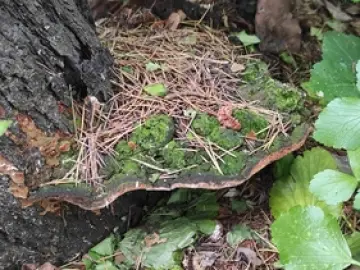 İstanbul20 Mar 2024 · iNaturalist© Umut Nuri Erdoğan · CC BY
-
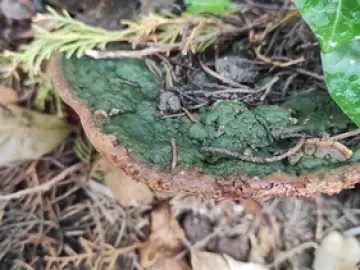 İstanbul20 Mar 2024 · iNaturalist© Umut Nuri Erdoğan · CC BY
-
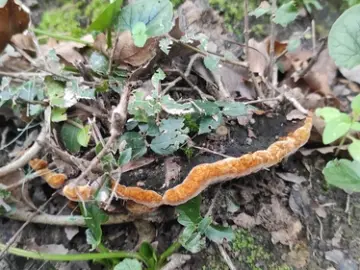 İstanbul30 Dec 2023 · iNaturalist© Umut Nuri Erdoğan · CC BY
-
 Illustrative
Ankara7 Mar 2025 · iNaturalist
-
 Illustrative
İstanbul14 Feb 2025 · iNaturalist
-
 Illustrative
İstanbul20 Mar 2024 · Mushroom Observer
-
 Illustrative
İstanbul20 Oct 2014 · iNaturalist
-
 Illustrative
İstanbul3 Sep 1972 · Aphyllophorales externi
- See on the map
On "illustrative" cards the image is a photo of the species; the observation photo cannot be shown here because of its licence, but can be seen at the source.
Look-alikes
What could it be confused with?
Tufted bracket can be mistaken for the species below. Each comparison shows Tufted bracket on the left, the look-alike on the right, and how to tell them apart.

Tinder fungus Fomes fomentarius
How to tell The tinder fungus is grey to silvery on top and grows mostly higher up on beech and birch trunks.

Shaggy bracket Inonotus hispidus
How to tell The shaggy bracket is annual, coarsely hairy on top, juicy and orange-rust when young.
Tufted bracket and its look-alikes compared
| Species | Status | Underside | Spore print | Season |
|---|---|---|---|---|
| Tufted bracketFuscoporia torulosa | Inedible | Very small rusty to cinnamon-brown pores | Pale yellowish to whitish | Feb–Mar, Sep–Oct, Dec |
| Tinder fungusFomes fomentarius | Inedible | No gills; cream underside that browns with age, with 2–3 round pores per millimetre | White to pale yellow | All year |
| Shaggy bracketInonotus hispidus | Inedible | Yellow-brown to rusty pores that weep golden droplets when young | Brown | Jun–Oct |
The table is compiled from each species page. The status column is a guide only; do not eat a wild mushroom unless an expert has seen it in person. Compare look-alikes side by side
The tufted bracket is not known to be poisonous, but it is woody and not edible. Finding it at the base of a tree can point to trunk or root decay. If poisoning is suspected, call 112 or the Turkish poison centre (114).
Frequently asked questions
Are tufted brackets poisonous?
The tufted bracket is not known to be poisonous, but it is woody and not edible. If poisoning is suspected, call 112 at once (Turkish poison centre: 114) and keep any leftover mushroom.
Are tufted brackets edible?
No. It is woody and not edible; it is not known to be poisonous.
How do you identify it?
Rusty-brown, velvety, banded woody brackets at the base of oak, olive or fruit trees, with tiny rusty pores underneath, present all year.
What can it be confused with?
The main look-alikes are: Tinder fungus, Shaggy bracket. The differences are listed in the look-alikes section; with poisonous look-alikes, always check the cross-section and habitat.
Where does it grow?
It grows at the base of trunks and on roots of living or dead oak, olive, carob, acacia, plum and other hardwoods, causing white rot. It is frequent on Mediterranean and Aegean coasts and in city parks.
When does it appear?
It is perennial and visible all year; new growth is added in damp periods.
Does it harm the tree?
On living trees it causes white rot in the trunk base and roots and can weaken the tree over years; arborists take it into account in safety checks.
Where is it found in Turkey?
Our map data holds 14 records: 12 from Istanbul and one each from Ankara and Kocaeli.
When is tufted bracket season in Turkey?
In our calendar, tufted bracket season runs Feb–Mar, Sep–Oct, Dec. It is perennial and visible all year; new growth is added in damp periods.
Where do tufted brackets grow?
It grows at the base of trunks and on roots of living or dead oak, olive, carob, acacia, plum and other hardwoods, causing white rot. It is frequent on Mediterranean and Aegean coasts and in city parks.
Where are tufted brackets found in Turkey?
Our map data (GBIF and iNaturalist) holds 14 Turkish records: Istanbul (12), Ankara (1), Kocaeli (1). The records are from February, March, September, October, December.
What can the tufted bracket be confused with?
The tufted bracket can be confused with tinder fungus (Fomes fomentarius, inedible) and shaggy bracket (Inonotus hispidus, inedible). Look-alikes are compared on this page.
What is the tufted bracket called in Turkish?
In Turkish, the tufted bracket (Fuscoporia torulosa) is called Fuscoporia torulosa.
Related species
-
 ChagaInonotus obliquusInedible
-
Shaggy bracketInonotus hispidusInedible
-
 Amethyst deceiverLaccaria amethystinaInedible
-
 Anemone stinkhornAseroe rubraInedible
-
 Artist’s bracketGanoderma applanatumInedible
-
 Barometer earthstarAstraeus hygrometricusInedible
-
 Birch polyporeFomitopsis betulinaInedible
-
 Bitter boleteTylopilus felleusInedible
Sources
- Wikipedia (EN): Fuscoporia torulosa en.wikipedia.org
- iNaturalist: Fuscoporia torulosa (takson, adlar ve fotoğraflar) inaturalist.org
- GBIF: Fuscoporia torulosa gbif.org
All sources (5)
- GBIF: Türkiye kayıtları gbif.org
- iNaturalist: Türkiye gözlemleri (araştırma düzeyi) inaturalist.org
Photo credits (11)
- Fuscoporia torulosa · iNaturalist #261590162 · zebedeugalinha · CC BY 4.0
- Fuscoporia torulosa · iNaturalist #334607567 · zebedeugalinha · CC BY 4.0
- Fuscoporia torulosa · iNaturalist #343192666 · Chaym Turak · CC BY-SA 4.0
- Fuscoporia torulosa · iNaturalist #260894155 · Blanchemain Joël · CC0
- Fuscoporia torulosa · iNaturalist #233664446 · Tatiana Pires · CC BY 4.0
- Fuscoporia torulosa · iNaturalist #195274504 · Umut Nuri Erdoğan · CC BY 4.0
- Fuscoporia torulosa · iNaturalist #339140118 · victor laborde · CC BY 4.0
- Fuscoporia torulosa · iNaturalist #164204664 · Francesco Santoro · CC BY 4.0
- iNaturalist: İstanbul, 20 Mar 2024 · Umut Nuri Erdoğan · CC BY
- iNaturalist: İstanbul, 20 Mar 2024 · Umut Nuri Erdoğan · CC BY
- iNaturalist: İstanbul, 30 Dec 2023 · Umut Nuri Erdoğan · CC BY