
Snow fungus (white jelly fungus, silver ear)
Tremella fuciformis · Tremellaceae

Tremella fuciformis is a translucent white, jelly-like fungus made of wavy, frond-like lobes. It does not feed on the tree directly but parasitises another fungus (Annulohypoxylon) in the wood. It is used in sweet soups and drinks in Chinese cooking and has a place in traditional Chinese medicine. Almost all of it on sale is dried and cultivated.
Also called: snow fungus, white jelly fungus, silver ear, yin er Turkish: Tremella fuciformis, kar mantarı
Last updated: Prepared by the Poros Mantar editorial team3 sources checkedReport a correction
Snow fungus photos
-
© Alex Abair · CC BY 4.0
-

© Cheongweei Gan · CC BY-SA 4.0
-

© Mati Aristeguieta P. · CC BY 4.0
-

© Grey Smith · CC BY 4.0
-

Cap© Mati Aristeguieta P. · CC BY 4.0
-
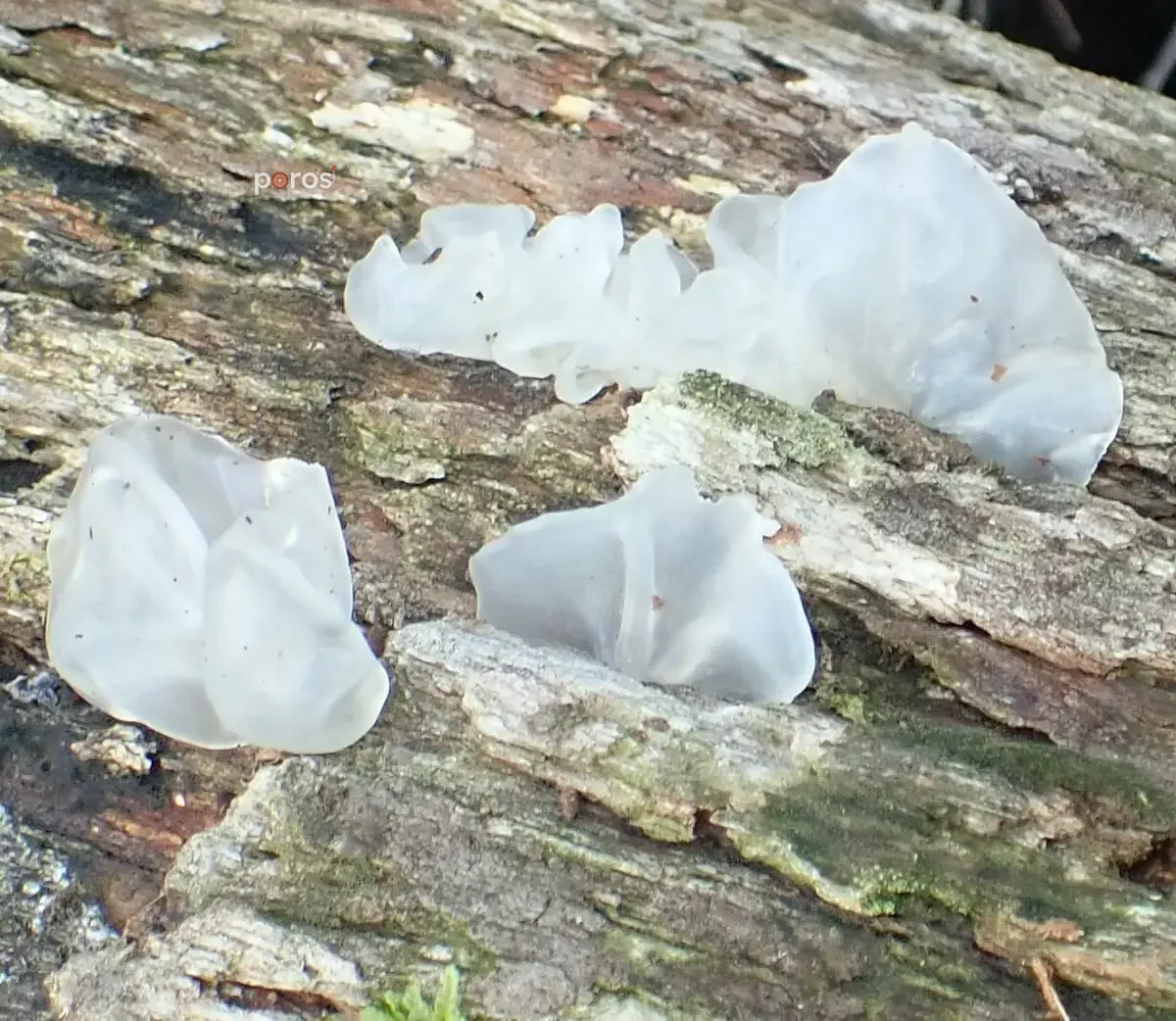
In habitat© corunastylis · CC0
-
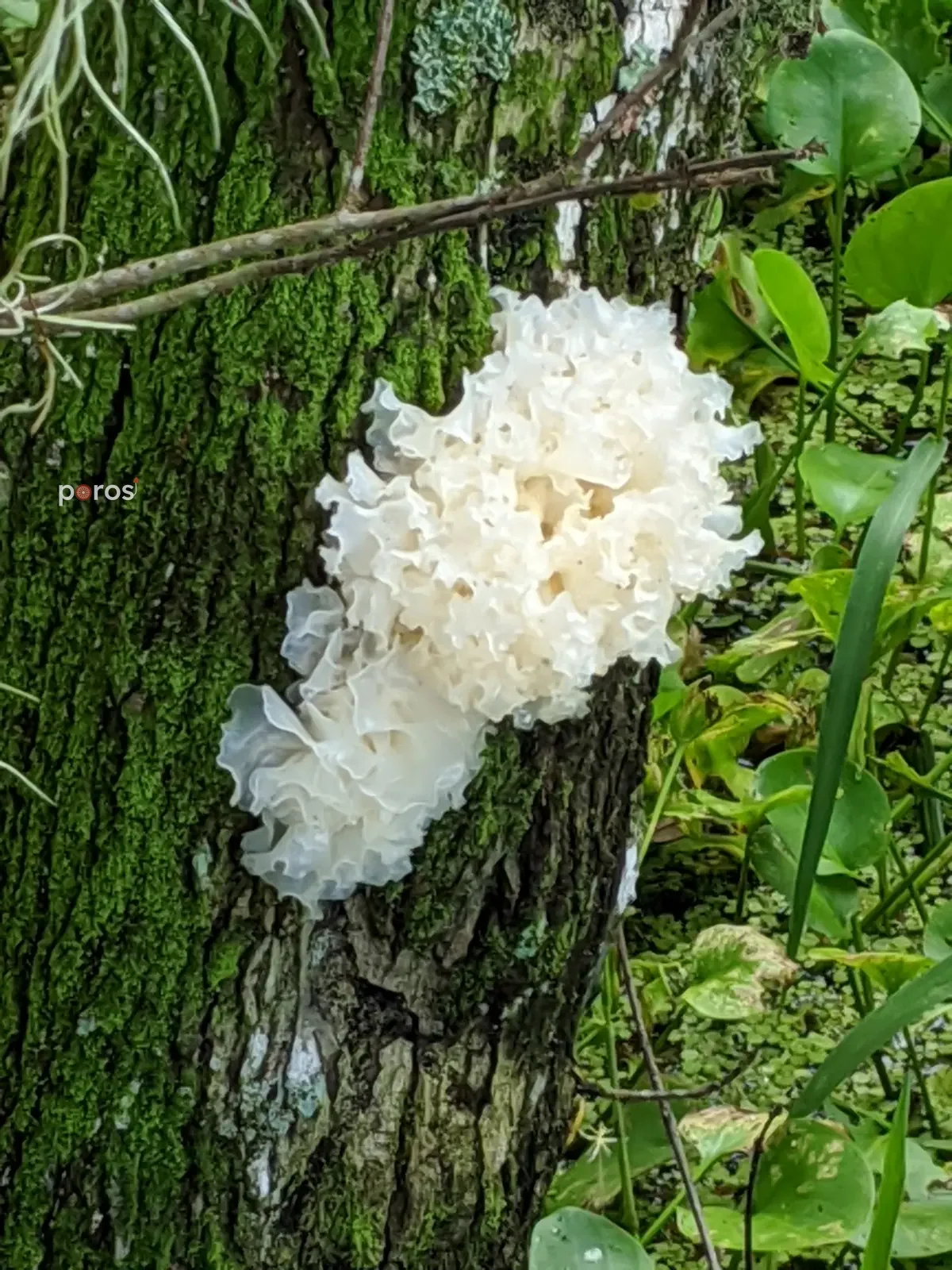
In habitat© James Weaver · CC BY 4.0
-

© John P. Friel · CC BY 4.0
-

In habitat© Kurt Miller · CC BY-SA 4.0
-

Cap© Wes Gapp · CC BY 4.0


These are licensed records of this species; photos alone are not enough to identify a mushroom.
Is the snow fungus poisonous?
The snow fungus is not listed as poisonous in our sources. The dried fungus is soaked and cooked; keep soaked fungus in the fridge and do not leave it for long. Even so, never eat a wild one without certain identification.
Is the snow fungus edible?
The snow fungus is listed as edible in our sources and is cultivated; even so, never eat a wild one without certain identification. Do not eat it without an expert's approval. The dried fungus is soaked and cooked; keep soaked fungus in the fridge and do not leave it for long. Its traditional use does not mean it is a treatment; ask your doctor if you have an illness or take medicines.
How to recognise it
Appearance of snow fungus
No ring or volva Spore print: White Not distinctive.
When and where
When to find snow fungus
All year
In tropical and warm regions it appears after rain all year round. The dried product on sale is cultivated.
Where does snow fungus grow?
It grows in tropical and subtropical forests on recently dead broadleaf branches, on Annulohypoxylon fungi living in the wood. In cultivation it is grown in sawdust bags together with its host fungus.
In Turkey
No record from Turkey: GBIF and iNaturalist hold no Turkish records. It ranges through the tropics and subtropics of Asia, the Americas, Africa and Oceania; in Turkey it is sold dried in Asian grocery shops.
Our map has no observations of snow fungus from Turkey yet.
Look-alikes
What could it be confused with?
Snow fungus can be mistaken for the species below. Each comparison shows Snow fungus on the left, the look-alike on the right, and how to tell them apart.
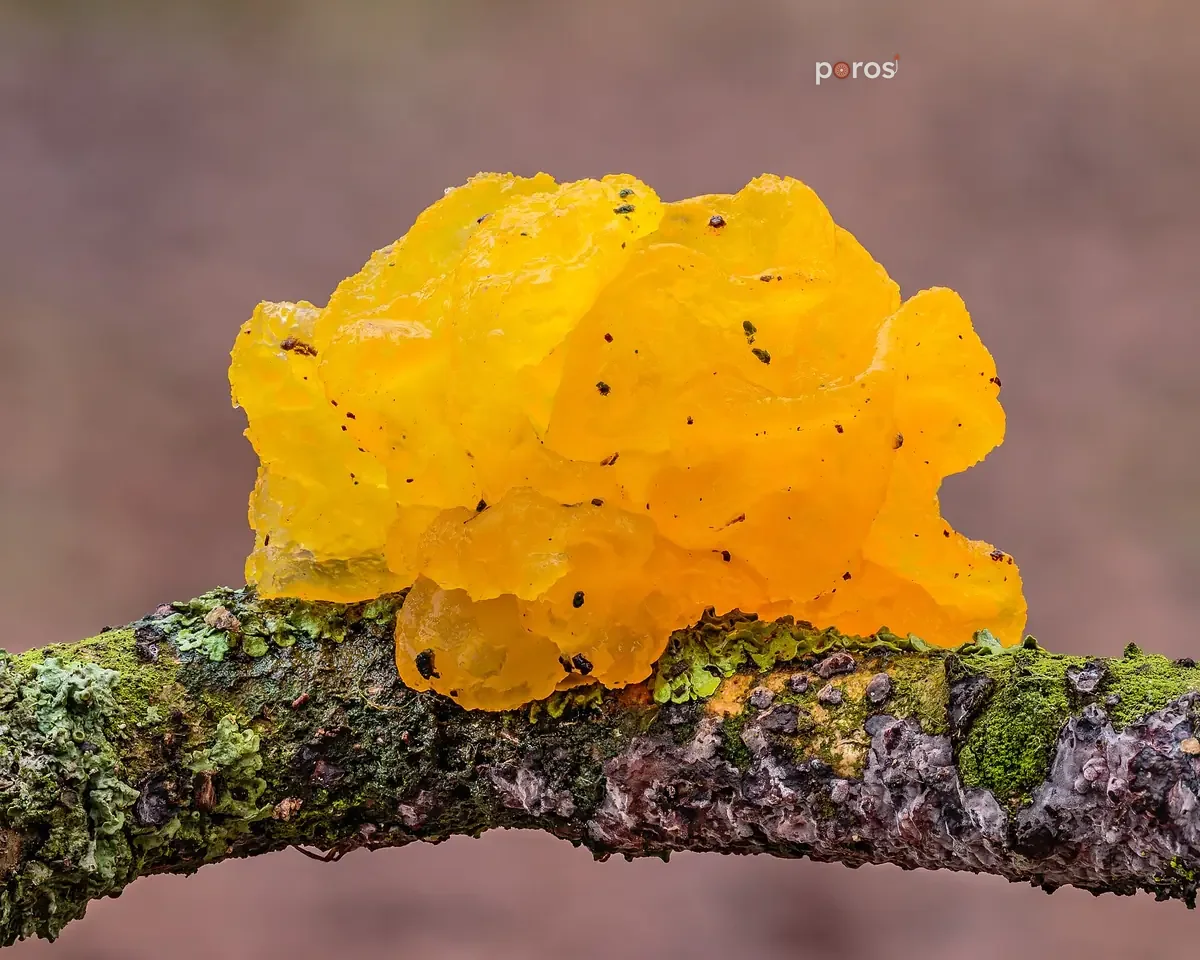
Yellow brain Tremella mesenterica
How to tell Its shape is similar, but it is bright yellow to orange; in Turkey it is common on dead broadleaf branches.
White brain Exidia thuretiana
How to tell It is whitish and jelly-like, but it does not form lobes; it spreads as a thin, wrinkled layer on branches and is not eaten.
How to cook and eat snow fungus
Safety first. The dried fungus is soaked and cooked; keep soaked fungus in the fridge and do not leave it for long. Its traditional use does not mean it is a treatment; ask your doctor if you have an illness or take medicines.
What goes with it?
- snow fungus
- Asian pear or another juicy pear (300–400 g)
- rock sugar or granulated sugar
- goji berries
- jujubes (Chinese red dates)
Recipe
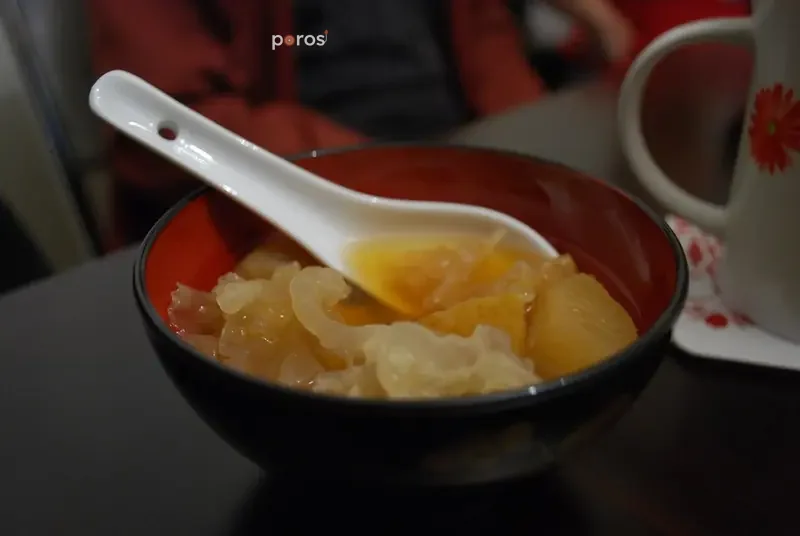
How to store snow fungus
What it contains
Tremella fuciformis polysaccharides are being researched for cosmetic and food uses; no therapeutic effect has been proven.
General information, not a health claim.
Grow it, buy it
Snow fungus price list
| Product | Poros Mantar | Market |
|---|---|---|
| Fresh snow fungus | Made to order · ask | — |
| Dried snow fungus | Made to order · ask | — |
| Snow fungus tea | Made to order · ask | — |
| Snow fungus capsules (food supplement) | Made to order · ask | — |
We make our snow fungus products in small batches, to order; send a request and we email you the price and delivery date. The market column shows prices seen on other sellers' pages on the date given; they are not our prices and may have changed.
Frequently asked questions
Is the snow fungus poisonous?
The snow fungus is not listed as poisonous in our sources. The dried fungus is soaked and cooked; keep soaked fungus in the fridge and do not leave it for long. Even so, never eat a wild one without certain identification.
Is the snow fungus edible?
The snow fungus is listed as edible in our sources and is cultivated; even so, never eat a wild one without certain identification. Do not eat it without an expert's approval. The dried fungus is soaked and cooked; keep soaked fungus in the fridge and do not leave it for long. Its traditional use does not mean it is a treatment; ask your doctor if you have an illness or take medicines.
What is snow fungus (Tremella fuciformis)?
It is a translucent white, jelly-like fungus made of wavy lobes. It parasitises another fungus living in wood and is used in sweet soups in Chinese cooking.
Why is it called snow fungus?
Its white, translucent, softly wavy look gave it the English name snow fungus and the Chinese name yin er (silver ear); the Turkish trade name comes from these.
Is it the same as yellow brain?
No. Both are Tremella species with a similar shape, but yellow brain (T. mesenterica) is bright yellow to orange and common in the wild in Turkey.
What is its traditional use?
It has been used for centuries in traditional Chinese medicine and cooking. This use is not a treatment; its polysaccharides are being researched.
Where does snow fungus grow, and is it found in Turkey?
There is no Turkish record. It is a tropical and subtropical species; in Turkey it is sold dried.
How is snow fungus cultivated?
It is grown in sawdust bags or on logs together with its host fungus Annulohypoxylon; it cannot develop on its own.
When is snow fungus season in Turkey?
In our calendar, snow fungus is recorded all year. In tropical and warm regions it appears after rain all year round. The dried product on sale is cultivated.
Where does snow fungus grow?
It grows in tropical and subtropical forests on recently dead broadleaf branches, on Annulohypoxylon fungi living in the wood. In cultivation it is grown in sawdust bags together with its host fungus.
Where is snow fungus found in Turkey?
No record from Turkey: GBIF and iNaturalist hold no Turkish records. It ranges through the tropics and subtropics of Asia, the Americas, Africa and Oceania; in Turkey it is sold dried in Asian grocery shops.
What can snow fungus be confused with?
Snow fungus can be confused with yellow brain (Tremella mesenterica, inedible) and white brain (Exidia thuretiana, inedible). Look-alikes are compared on this page.
What is snow fungus called in Turkish?
In Turkish, snow fungus (Tremella fuciformis) is called Tremella fuciformis; other local names include kar mantarı.
Related species
-
Yellow brainTremella mesentericaInedible
-
 Almond mushroomAgaricus subrufescensEdible species
-
 Anatolian matsutakeTricholoma anatolicumEdible species
-
 Aniseed funnelClitocybe odoraEdible species
-
 Bay boleteImleria badiaEdible species
-
 Beefsteak fungusFistulina hepaticaEdible species
-
 Black morelMorchella elataEdible species
-
 Black trumpetCraterellus cornucopioidesEdible species
Sources
- Wikipedia (EN): Tremella fuciformis en.wikipedia.org
- iNaturalist: Tremella fuciformis (Türkçe ad ve Türkiye gözlemleri) inaturalist.org
- GBIF: Türkiye kayıtları gbif.org
Photo credits (10)
- Tremella fuciformis · iNaturalist #62367956 · Alex Abair · CC BY 4.0
- Tremella fuciformis · iNaturalist #35479286 · Cheongweei Gan · CC BY-SA 4.0
- Tremella fuciformis · iNaturalist #57824821 · Mati Aristeguieta P. · CC BY 4.0
- Tremella fuciformis · iNaturalist #19295788 · Grey Smith · CC BY 4.0
- Tremella fuciformis · iNaturalist #57824821 · Mati Aristeguieta P. · CC BY 4.0
- Tremella fuciformis · iNaturalist #156396513 · corunastylis · CC0
- File:Tremella fuciformis 92662924.jpg · James Weaver · CC BY 4.0
- File:Tremella fuciformis 86771710.jpg · John P. Friel · CC BY 4.0
- Tremella fuciformis · iNaturalist #254298477 · Kurt Miller · CC BY-SA 4.0
- Tremella fuciformis · iNaturalist #179907826 · Wes Gapp · CC BY 4.0

