
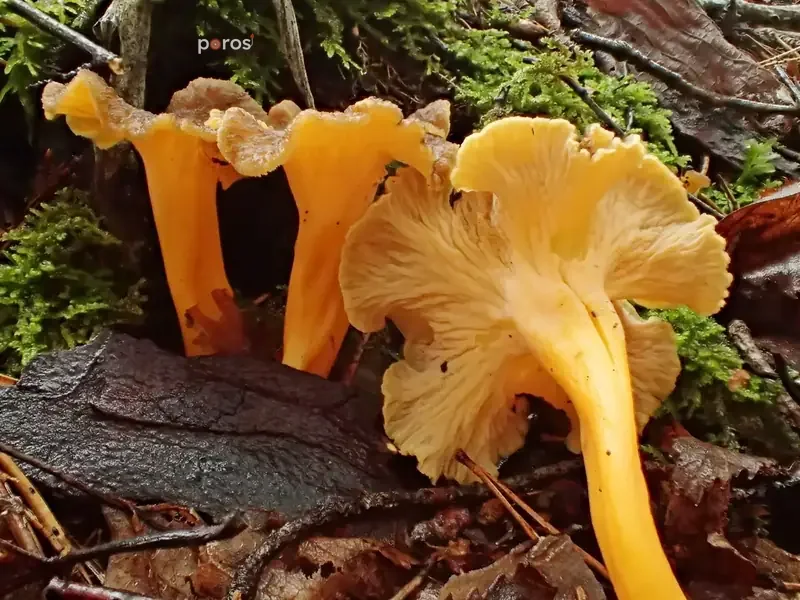


Yellow foot chanterelle
Craterellus lutescens · Cantharellaceae
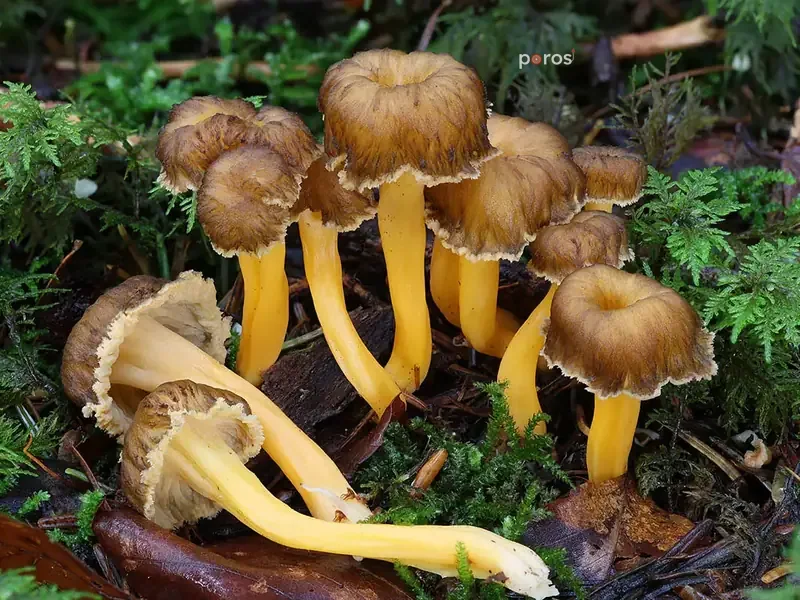
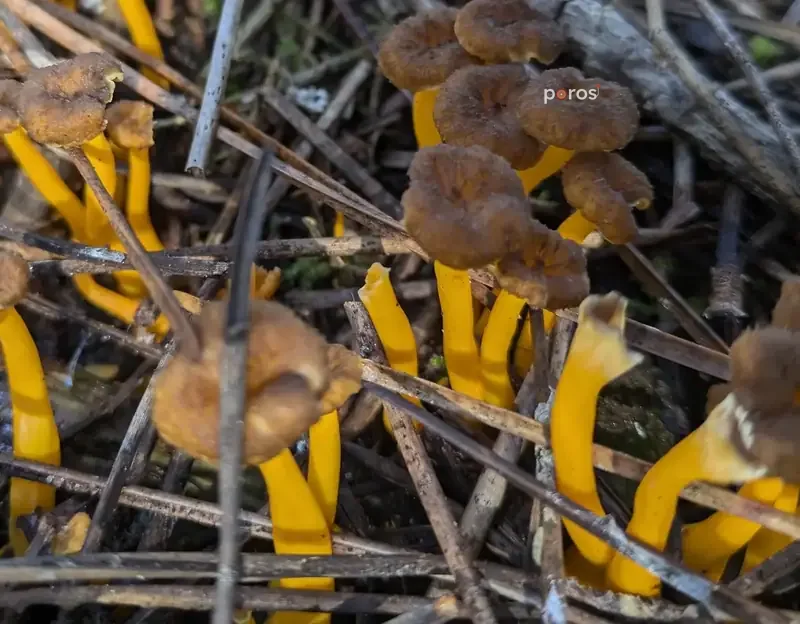
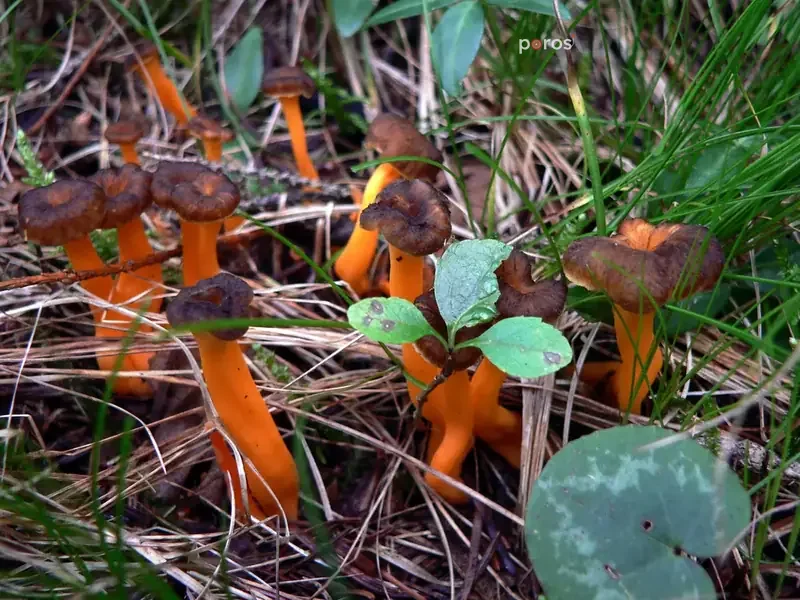
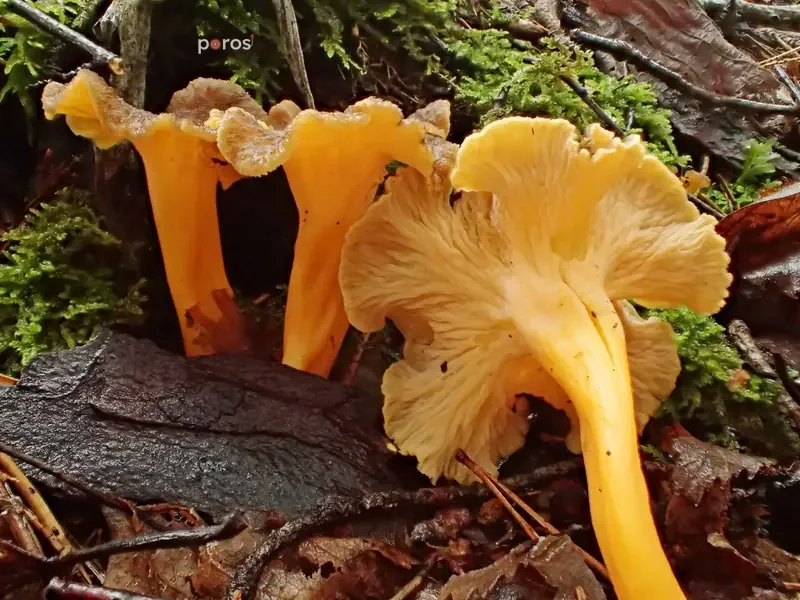
A slender woodland mushroom with a brown, funnel-shaped cap, a bright yellow-orange hollow stem and, instead of gills, an almost smooth, pale orange underside with faint wrinkles.
Last updated: Prepared by the Poros Mantar editorial team5 sources checkedReport a correction
A slender woodland mushroom with a brown, funnel-shaped cap, a bright yellow-orange hollow stem and, instead of gills, an almost smooth, pale orange underside with faint wrinkles. It is a relative of the black trumpet and the chanterelle. It is known as an edible species, but it is never eaten without an expert's identification.
Also called: golden chanterelle, yellow foot Turkish: Sarı saplı craterellus
How to recognise it
Yellow foot chanterelle, part by part
No ring or volva Spore print: White to pale pinkish cream Pleasant, fruity smell; thin, elastic flesh.

When and where
Sep–Feb
- Janin season
- Febin season
- Mar
- Apr
- May
- Jun
- Jul
- Aug
- Sepin season
- Octin season
- Novin season
- Decin season
In Europe it fruits from autumn into early winter; Turkish GBIF records run from September to February, mostly in November and January.
Type Edible
In season SeptemberOctoberNovemberDecemberJanuaryFebruary
Regions Black Sea RegionMarmara RegionSinopTrabzonKocaeliIstanbul
Where do yellow foot chanterelles grow?
It grows in large groups in damp, mossy woods, often under conifers and along streams, forming a mycorrhizal partnership with the trees.
Where is yellow foot chanterelles found in Turkey?
Turkish records come mostly from İstanbul's Belgrad Forest and the Aydos area, with others from Kocaeli, Sinop and Trabzon.
Which months
- Jan4
- Feb3
- Mar0
- Apr0
- May0
- Jun0
- Jul0
- Aug0
- Sep2
- Oct2
- Nov5
- Dec0
yellow foot chanterelle map of Turkey: all provinces and months →
4 provinces, 16 observations (GBIF, iNaturalist); months from observation dates. Record density also reflects where observers work.
Latest yellow foot chanterelle observations
-
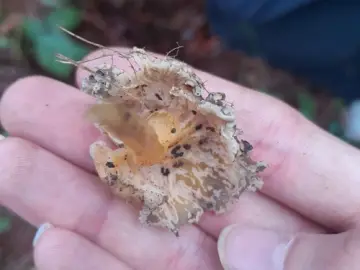 İstanbul17 Feb 2024 · iNaturalist© Güneş Bodur · CC BY
-
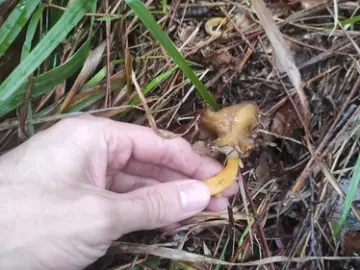 İstanbul10 Jan 2024 · iNaturalist© Umut Nuri Erdoğan · CC BY
-
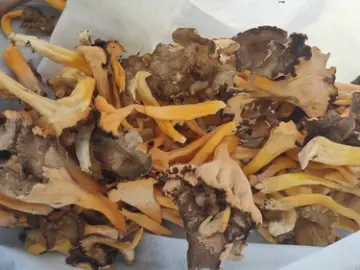 İstanbul30 Oct 2022 · iNaturalist© Umut Nuri Erdoğan · CC BY
-
 Illustrative
İstanbul23 Nov 2025 · iNaturalist
-
 Illustrative
İstanbul10 Jan 2024 · iNaturalist
-
 Illustrative
İstanbul30 Nov 2023 · iNaturalist
-
 Illustrative
Kocaeli6 Feb 2022 · iNaturalist
-
 Illustrative
İstanbul10 Nov 2019 · GBIF
- See on the map
On "illustrative" cards the image is a photo of the species; the observation photo cannot be shown here because of its licence, but can be seen at the source.
Look-alikes
What could it be confused with?
Yellow foot chanterelle can be mistaken for the species below. Each card shows the look-alike and how it differs from Yellow foot chanterelle.
 Edible species
not Yellow foot chanterelle
Winter chanterelle Craterellus tubaeformis
Has distinct, forked vein-like ridges underneath and a duller yellow-grey stem.
 Edible species
not Yellow foot chanterelle
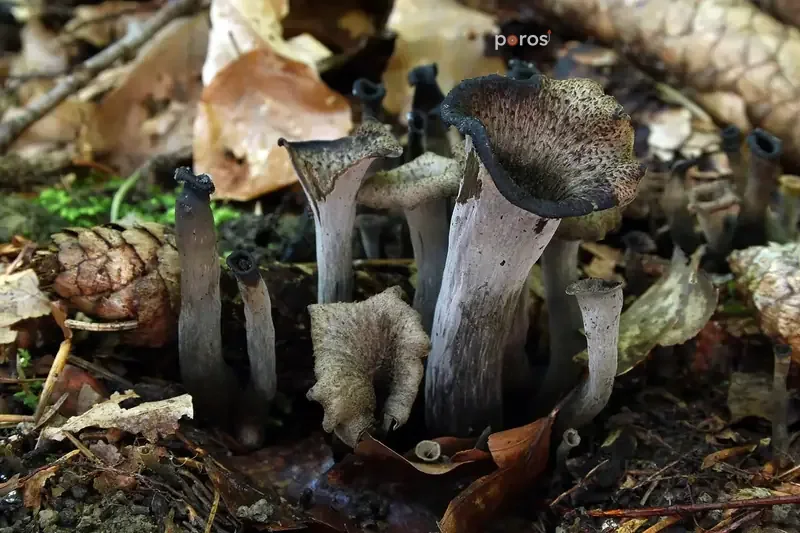
Black trumpet Craterellus cornucopioides
Entirely grey-black, with no yellow stem.
 Inedible
not Yellow foot chanterelle
False chanterelle Hygrophoropsis aurantiaca
Entirely orange, with true, thin forked gills and a solid stem.
 Deadly
not Yellow foot chanterelle
Fool’s webcap Cortinarius orellanus
Has an orange-brown cap but true rusty gills and a rusty-brown spore print; it is a deadly species that damages the kidneys.
How to cook and eat yellow foot chanterelles
Safety first. Some funnel-shaped orange-brown mushrooms are deadly webcaps with true gills, so this species is only gathered once its smooth or faintly wrinkled, gill-less underside has been confirmed. It is eaten only after an expert's identification and thorough cooking.
How to prepare it
Check the underside of each one: it should be smooth or slightly wrinkled, with no true gills. Rinse quickly in cold water if soily and pat dry.
How to cook it
Eat it only well cooked; our recipe turns it into a pasta sauce.
What goes with it?
- garlic
- extra virgin olive oil
- flat-leaf parsley
- tagliatelle or spaghetti
Source: Wikipedia · practical details from our recipes.
Recipe
How to store yellow foot chanterelles
Grow it, buy it
Yellow foot chanterelle price list
| Product | Us | Market (sourced, dated) |
|---|---|---|
| Fresh yellow foot chanterelles | Made to order · ask | — |
| Dried yellow foot chanterelles | Made to order · ask | — |
We make our yellow foot chanterelles products in small batches, to order; send a request and we email you the price and delivery date. The market column shows prices seen on other sellers' pages on the date given; they are not our prices and may have changed.
Frequently asked questions
Is Craterellus lutescens edible?
It is known as an edible species. Never eat it without an expert's identification.
Does it have a Turkish name?
We found no established, sourced Turkish folk name; on this page we use the descriptive name sarı saplı craterellus.
How do you identify it?
Look for a brown funnel-shaped cap, a bright yellow-orange hollow stem and an almost smooth, pale orange underside instead of gills.
How is it told apart from the winter chanterelle?
The winter chanterelle (Craterellus tubaeformis) has distinct forked ridges and a duller stem; this species is almost smooth underneath with a bright yellow stem.
Does it have poisonous look-alikes?
The orange-brown fool's webcap (Cortinarius orellanus) can be confused with it; it has true rusty gills underneath.
Where and when does it appear in Turkey?
In damp, mossy woods. GBIF records come mostly from İstanbul, plus Kocaeli, Sinop and Trabzon, from September to February.
Are yellow foot chanterelles edible?
Yes, the yellow foot chanterelle is an edible species. Eat a wild one only after an expert has identified it with certainty: it can be confused with Fool's webcap (Cortinarius orellanus). Some funnel-shaped orange-brown mushrooms are deadly webcaps with true gills, so this species is only gathered once its smooth or faintly wrinkled, gill-less underside has been confirmed. It is eaten only after an expert's identification and thorough cooking.
When is yellow foot chanterelle season in Turkey?
In our calendar, yellow foot chanterelle season runs Sep–Feb. In Europe it fruits from autumn into early winter; Turkish GBIF records run from September to February, mostly in November and January.
Where do yellow foot chanterelles grow?
It grows in large groups in damp, mossy woods, often under conifers and along streams, forming a mycorrhizal partnership with the trees.
Where are yellow foot chanterelles found in Turkey?
Turkish records come mostly from İstanbul's Belgrad Forest and the Aydos area, with others from Kocaeli, Sinop and Trabzon.
What can the yellow foot chanterelle be confused with?
The yellow foot chanterelle can be confused with winter chanterelle (Craterellus tubaeformis, edible species), black trumpet (Craterellus cornucopioides, edible species), false chanterelle (Hygrophoropsis aurantiaca, inedible) and Fool's webcap (Cortinarius orellanus, deadly). Look-alikes are compared on this page.
What is the yellow foot chanterelle called in Turkish?
In Turkish, the yellow foot chanterelle (Craterellus lutescens) is called Sarı saplı craterellus.
Related species
-
Black trumpetCraterellus cornucopioidesEdible species
-
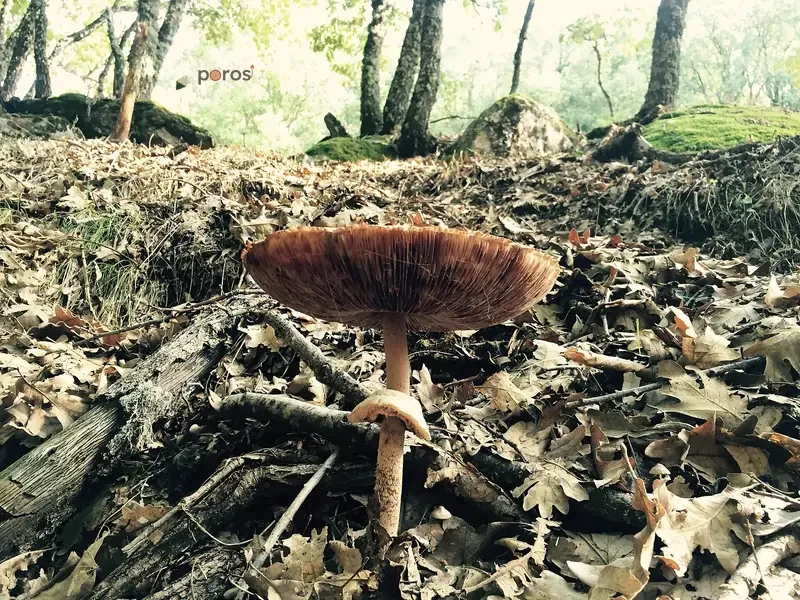 Anatolian matsutakeTricholoma anatolicumEdible species
-
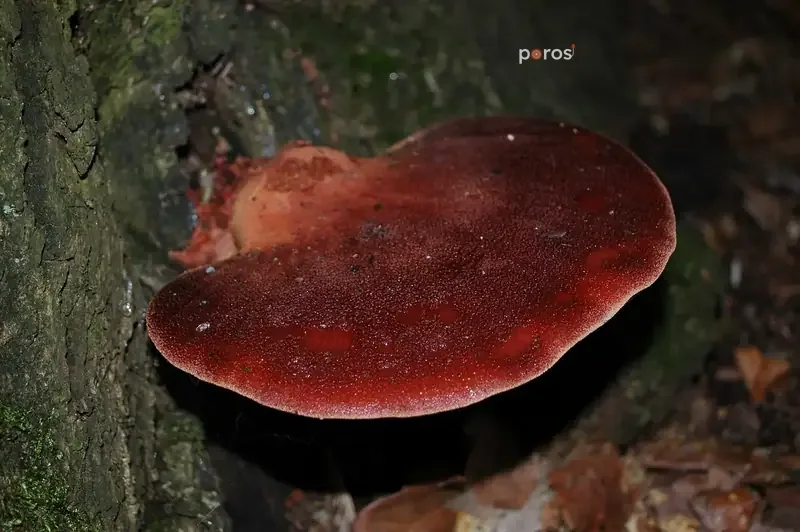 Beefsteak fungusFistulina hepaticaEdible species
-
 Bloody milk capLactarius sanguifluusEdible species
-
 Button mushroomAgaricus bisporusEdible species
-
 Caesar’s mushroomAmanita caesareaEdible species
-
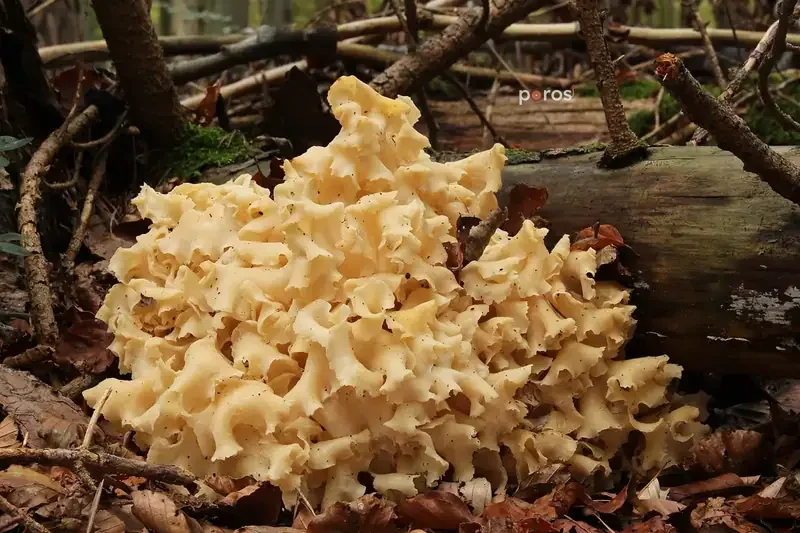 Cauliflower mushroomSparassis crispaEdible species
-
 ChanterelleCantharellus cibariusEdible species
Sources
- Huang ve ark. (2017), Journal of Agricultural and Food Chemistry: Craterellus lutescens'ten asetilenik asitler pubmed.ncbi.nlm.nih.gov
- Wikipedia (EN): Craterellus lutescens en.wikipedia.org
- GBIF: Türkiye kayıtları gbif.org
All sources (5)
- iNaturalist: Türkiye gözlemleri inaturalist.org
- MushroomExpert: Craterellus lutescens mushroomexpert.com
Photo credits (11)
- File:Craterellus lutescens 097cbd5f-d72a-446f-9022-1cd6db6dee40.jpg · Svein Olav B. Drangeid · CC BY-SA 4.0
- File:Craterellus lutescens collection.jpg · mycobel · CC BY 4.0
- File:Craterellus lutescens.jpg · mycobel · CC BY 4.0
- File:Craterellus lutescens 01.jpg · Lucian Clanet · CC BY 4.0
- Craterellus lutescens · iNaturalist #322813183 · Jamie O'Neill · CC BY 4.0
- File:2016-09-15 Craterellus lutescens Fr. (Fr.) 692587.jpg · Igor (Igor_Yevdokimov) at Mushroom Observer, a source for mycological · CC BY-SA 3.0
- Craterellus lutescens · iNaturalist #252073985 · Darío Estraviz López · CC BY 4.0
- Craterellus lutescens · iNaturalist #145843637 · Mario Bassini · CC BY 4.0
- iNaturalist: İstanbul, 17 Feb 2024 · Güneş Bodur · CC BY
- iNaturalist: İstanbul, 10 Jan 2024 · Umut Nuri Erdoğan · CC BY
- iNaturalist: İstanbul, 30 Oct 2022 · Umut Nuri Erdoğan · CC BY


