
Buna-shimeji (beech mushroom, brown beech mushroom)
Hypsizygus tessulatus · Lyophyllaceae

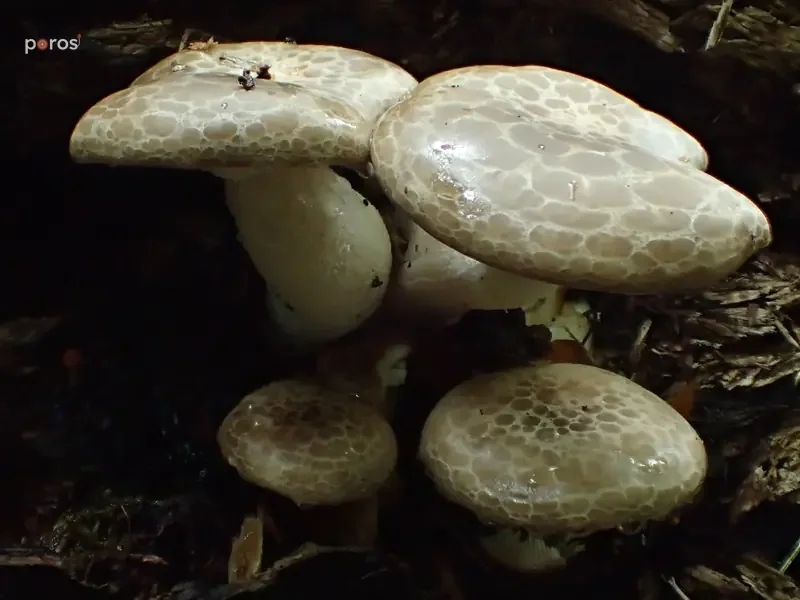
Buna-shimeji (Hypsizygus tessulatus) is the small Japanese mushroom that grows in tight clusters. Its cap is grey-brown with pale, marbled spots, and a white strain is also grown. It tastes bitter raw and becomes crunchy and slightly nutty when cooked. Almost all of it on sale is cultivated; in the wild it can be confused with poisonous clustered wood mushrooms.
Also called: beech mushroom, brown beech mushroom, white beech mushroom, bunapi Turkish: Şimeji, buna şimeji, kahverengi şimeji, beyaz şimeji Synonyms: Hypsizygus marmoreus, Agaricus tessulatus
Last updated: Prepared by the Poros Mantar editorial team3 sources checkedReport a correction
Buna-shimeji photos
-
© Claude PAGE · CC BY-SA 4.0
-

Cap© Марина Давлетшина · CC BY 4.0
-

© Claude PAGE · CC BY-SA 4.0
-

Gills© Sigrid Jakob · CC0
-

Stem© kedgehog · CC BY 4.0
-
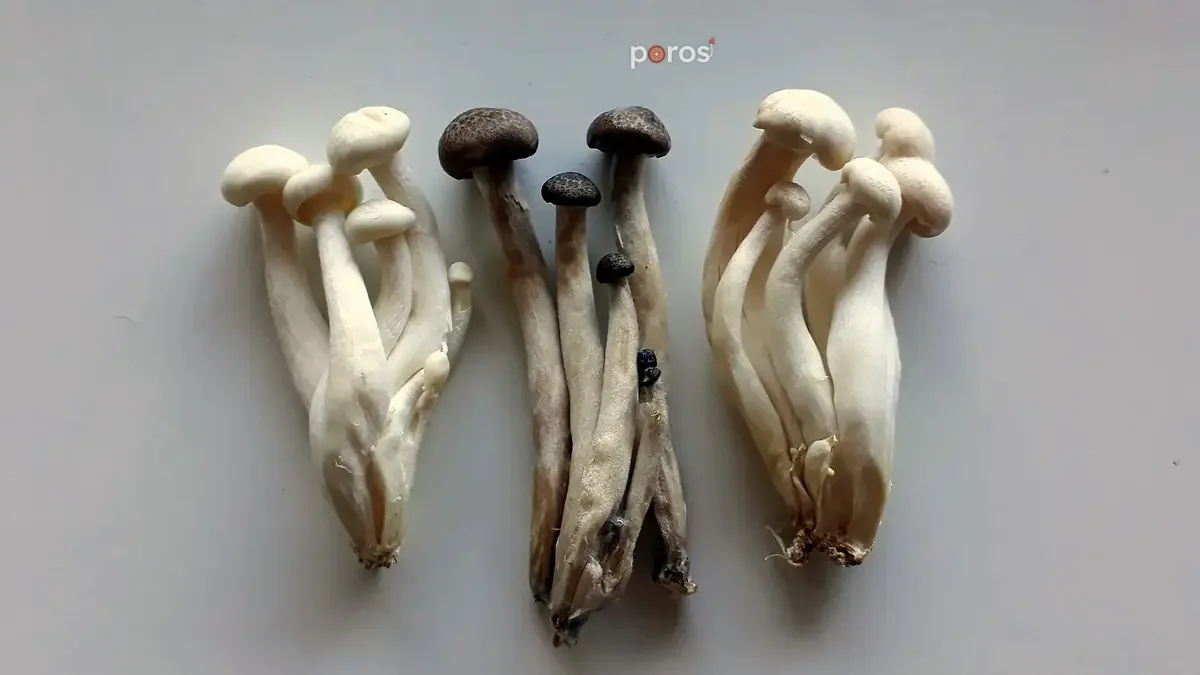
In cultivation© Tomasz Sienicki [user: tsca, mail: tomasz.sienicki at gmail.com] · CC BY 4.0
-
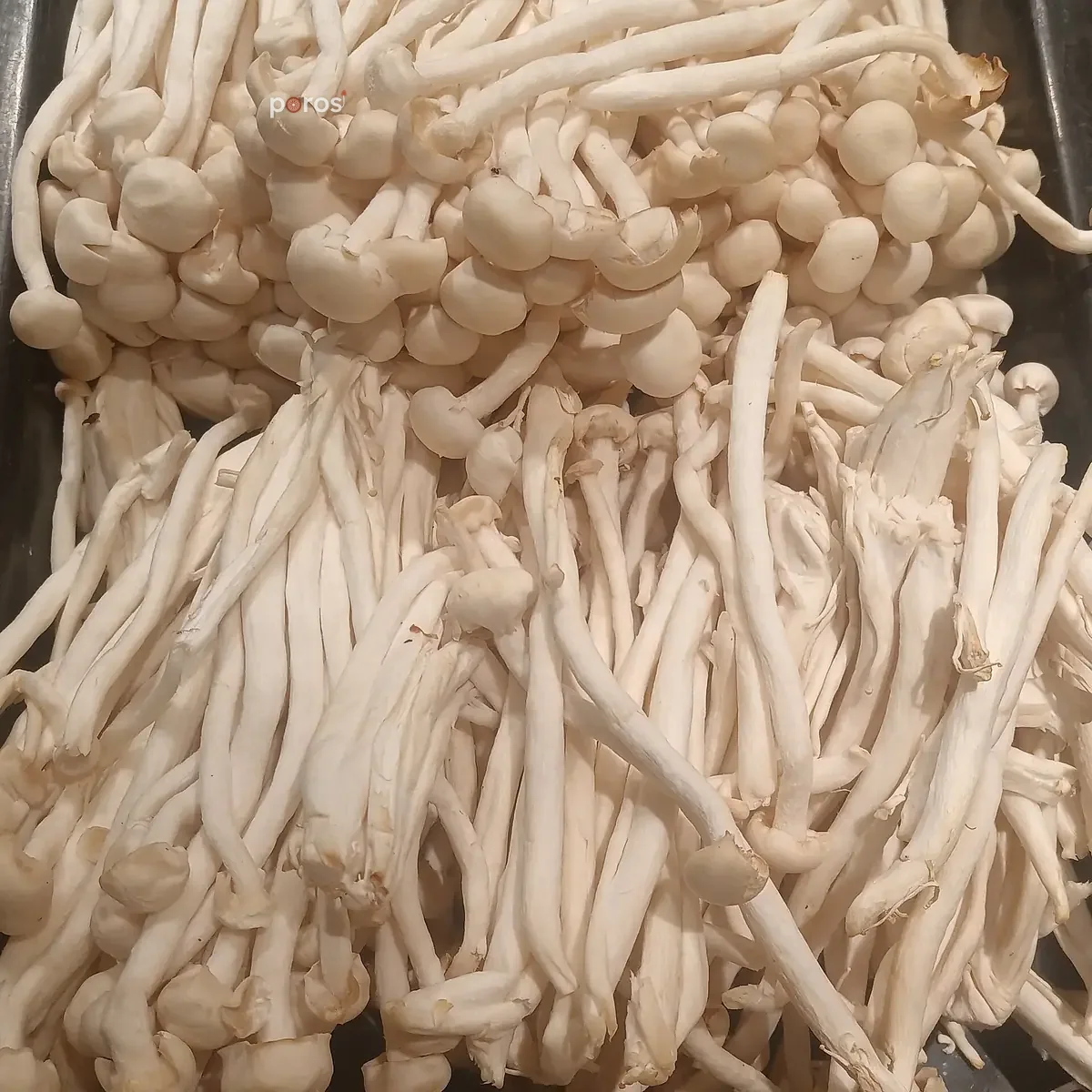
In cultivation© Fumikas Sagisavas · CC0
-

In cultivation© frankenstoen from Portland, Oregon · CC BY 2.0
These are licensed records of this species; photos alone are not enough to identify a mushroom.
Is the buna-shimeji poisonous?
The buna-shimeji is not listed as poisonous in our sources. Shop-bought shimeji is cultivated and safe to cook; it is bitter and hard to digest raw, so cook it for at least a few minutes. The real risk is confusing it with sulphur tuft (Hypholoma fasciculare) and deadly galerina (Galerina marginata), so never eat a wild one without certain identification. If poisoning is suspected, call 112 at once (Turkish poison centre: 114) and keep any leftover mushroom.
Is the buna-shimeji edible?
The buna-shimeji is listed as edible in our sources and is cultivated; even so, never eat a wild one without certain identification: it has poisonous look-alikes, such as sulphur tuft (Hypholoma fasciculare) and deadly galerina (Galerina marginata). Do not eat it without an expert's approval. Shop-bought shimeji is cultivated and safe to cook; it is bitter and hard to digest raw, so cook it for at least a few minutes. Do not pick clustered wood mushrooms in the wild as shimeji: sulphur tuft and the deadly Galerina grow in the same places.
How to recognise it
Appearance of buna-shimeji
No ring or volva Spore print: White Mild, mealy or nutty.
Where does buna-shimeji grow?
In the wild it grows in clusters on dead or wounded trunks of beech, elm and other broadleaf trees, often high up. In cultivation it is grown in bottles filled with sawdust and grain.
In Turkey
No record from Turkey: GBIF and iNaturalist hold no wild Turkish records. It grows wild in the cool forests of Japan, China, Korea, North America and northern Europe; in Turkey it is only met as a cultivated product in shops.
Our map has no observations of buna-shimeji from Turkey yet.
Look-alikes
What could it be confused with?
Buna-shimeji can be mistaken for the species below. Each comparison shows Buna-shimeji on the left, the look-alike on the right, and how to tell them apart.
Take care when foraging: Poisonous look-alikes of Buna-shimeji come first. If in doubt, leave it.

Deadly galerina Galerina marginata
How to tell A small, honey-brown wood mushroom with a thin ring on the stem; its spore print is rusty brown and it contains amatoxins.

Sulphur tuft Hypholoma fasciculare
How to tell Its cap is sulphur yellow, the gills turn from yellow-green to purplish brown, the spore print is purple-brown and it tastes very bitter.
Other look-alikes (1)
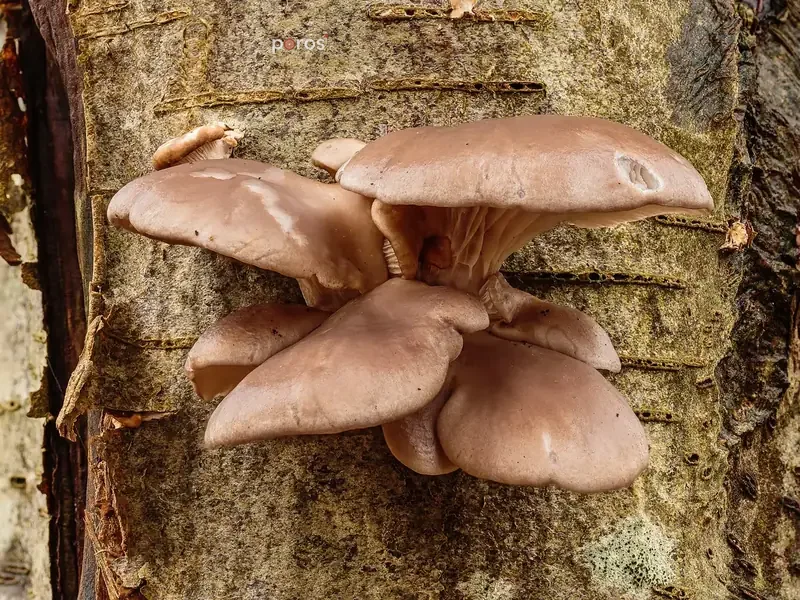 Edible species
not Buna-shimeji
Oyster mushroom Pleurotus ostreatus
Its cap is shaped like an oyster shell opening sideways, the stem is short and off-centre, and the gills run down onto it.
Buna-shimeji and its look-alikes compared
| Species | Status | Underside | Spore print | Season |
|---|---|---|---|---|
| Buna-shimejiHypsizygus tessulatus | Edible species | White to cream, crowded gills attached to the stem | White | Sep–Nov |
| Sulphur tuftHypholoma fasciculare | Poisonous | Crowded, adnate gills | Purple-brown | Feb–Apr, Jun, Aug, Oct–Dec |
| Deadly galerinaGalerina marginata | Deadly poisonous | Crowded, pale brown when young, tawny when mature | Rusty (snuff) brown | Aug–Nov |
| Oyster mushroomPleurotus ostreatus | Edible species | Gills whitish, sometimes yellowing | White to pale lilac-grey | Oct–Mar |
The table is compiled from each species page. The status column is a guide only; do not eat a wild mushroom unless an expert has seen it in person. Compare look-alikes side by side
How to cook and eat buna-shimeji
Safety first. Shop-bought shimeji is cultivated and safe to cook; it is bitter and hard to digest raw, so cook it for at least a few minutes. Do not pick clustered wood mushrooms in the wild as shimeji: sulphur tuft and the deadly Galerina grow in the same places. If poisoning is suspected, call 112 (Turkish poison centre UZEM: 114) and keep any leftover mushroom.
What goes with it?
- shimeji (brown, white or mixed)
- unsalted butter
- olive oil
- shallots (or a quarter of an onion)
- garlic
- Italian herbs
- light soy sauce
- dry white wine
- flat-leaf parsley
Recipe
How to store buna-shimeji
Grow it, buy it
Buna-shimeji price list

Shimeji (Hypsizygus tessulatus) liquid culture in a sterile syringe. An elegant clustering species with a long colonisation time.
510 ₺
| Product | Poros Mantar | Market |
|---|---|---|
| Fresh buna-shimeji | Made to order · ask | — |
| Dried buna-shimeji | Made to order · ask | — |
We make our buna-shimeji products in small batches, to order; send a request and we email you the price and delivery date. The market column shows prices seen on other sellers' pages on the date given; they are not our prices and may have changed.
Frequently asked questions
Is the buna-shimeji poisonous?
The buna-shimeji is not listed as poisonous in our sources. Shop-bought shimeji is cultivated and safe to cook; it is bitter and hard to digest raw, so cook it for at least a few minutes. The real risk is confusing it with sulphur tuft (Hypholoma fasciculare) and deadly galerina (Galerina marginata), so never eat a wild one without certain identification. If poisoning is suspected, call 112 at once (Turkish poison centre: 114) and keep any leftover mushroom.
Is the buna-shimeji edible?
The buna-shimeji is listed as edible in our sources and is cultivated; even so, never eat a wild one without certain identification: it has poisonous look-alikes, such as sulphur tuft (Hypholoma fasciculare) and deadly galerina (Galerina marginata). Do not eat it without an expert's approval. Shop-bought shimeji is cultivated and safe to cook; it is bitter and hard to digest raw, so cook it for at least a few minutes. Do not pick clustered wood mushrooms in the wild as shimeji: sulphur tuft and the deadly Galerina grow in the same places.
What is shimeji?
Shimeji is the Japanese name for small-capped, long-stemmed mushrooms sold in clusters; the most common is buna-shimeji, Hypsizygus tessulatus.
Can you eat shimeji raw?
It is not recommended. Raw it is bitter and hard to digest; the bitterness goes after a few minutes of sautéing or simmering in soup.
What is the difference between white and brown shimeji?
Both are cultivated forms of the same species. The white form (also sold as bunapi) stays white through strain selection and growing conditions; it tastes slightly milder than the brown.
How do you cook shimeji?
Cut off the shared base, pull the cluster apart and wipe rather than wash it. Sauté it over high heat in butter or sesame oil for a few minutes, or add it to miso soup, noodles and stir-fries.
Does shimeji grow wild in Turkey?
There is no wild record from Turkey. Its natural range is the cool forests of East Asia, North America and northern Europe; shimeji in Turkey is a cultivated product.
Is shimeji the same as the elm oyster?
No. Both belong to the same genus (Hypsizygus), but the elm oyster (H. ulmarius) is larger, grows singly or in loose groups and lacks the marbled cap.
What can shimeji be confused with in the wild?
Sulphur tuft, which also clusters on wood, and the small, ringed, deadly Galerina are the most dangerous look-alikes. Checking for a white spore print is a first step, but it is not enough on its own.
When is buna-shimeji season in Turkey?
In our calendar, buna-shimeji season runs Sep–Nov. In the wild it fruits in autumn on dead or ageing broadleaf trunks. The shimeji in shops is grown indoors and is available all year.
Where does buna-shimeji grow?
In the wild it grows in clusters on dead or wounded trunks of beech, elm and other broadleaf trees, often high up. In cultivation it is grown in bottles filled with sawdust and grain.
Where is buna-shimeji found in Turkey?
No record from Turkey: GBIF and iNaturalist hold no wild Turkish records. It grows wild in the cool forests of Japan, China, Korea, North America and northern Europe; in Turkey it is only met as a cultivated product in shops.
What can buna-shimeji be confused with?
Buna-shimeji can be confused with sulphur tuft (Hypholoma fasciculare, poisonous), deadly galerina (Galerina marginata, deadly) and oyster mushroom (Pleurotus ostreatus, edible species). Look-alikes are compared on this page.
What is buna-shimeji called in Turkish?
In Turkish, buna-shimeji (Hypsizygus tessulatus) is called Şimeji; other local names include buna şimeji, kahverengi şimeji and beyaz şimeji.
Related species
-
 Elm oysterHypsizygus ulmariusEdible species
-
 Fried chicken mushroomLyophyllum decastesEdible species
-
 St George’s mushroomCalocybe gambosaEdible species
-
 Almond mushroomAgaricus subrufescensEdible species
-
 Anatolian matsutakeTricholoma anatolicumEdible species
-
 Aniseed funnelClitocybe odoraEdible species
-
 Bay boleteImleria badiaEdible species
-
 Beefsteak fungusFistulina hepaticaEdible species
Sources
- Wikipedia (EN): Hypsizygus tessulatus en.wikipedia.org
- iNaturalist: Hypsizygus tessulatus (Türkçe ad ve Türkiye gözlemleri) inaturalist.org
- GBIF: Türkiye kayıtları gbif.org
Photo credits (8)
- File:Hypsizygus tessulatus (52431029776).jpg · Claude PAGE · CC BY-SA 4.0
- Hypsizygus tessulatus · iNaturalist #138011306 · Марина Давлетшина · CC BY 4.0
- File:Hypsizygus tessulatus (52431303264).jpg · Claude PAGE · CC BY-SA 4.0
- Hypsizygus tessulatus · iNaturalist #33954842 · Sigrid Jakob · CC0
- Hypsizygus tessulatus · iNaturalist #230415730 · kedgehog · CC BY 4.0
- File:Bøgehattene (Hypsizygus tessulatus) 2023-08-20 ubt.jpg · Tomasz Sienicki [user: tsca, mail: tomasz.sienicki at gmail.com] · CC BY 4.0
- File:Hypsizygus tessulatus (2).jpg · Fumikas Sagisavas · CC0
- File:Hypsizygus tessulatus.jpg · frankenstoen from Portland, Oregon · CC BY 2.0


