
Fried chicken mushroom (clustered domecap)
Lyophyllum decastes · Lyophyllaceae

Lyophyllum decastes, the fried chicken mushroom, grows in dense clusters on the ground and has a smooth, greasy-looking grey-brown to dark brown cap and white gills. It often appears on roadsides, in parks and on disturbed soil. Cooked, it stays firm and slightly crisp, which gives it its English name. It is edible, but it can be confused with poisonous clustered mushrooms.
Also called: fried chicken mushroom, clustered domecap, hon-shimeji (Japonca, tartışmalı) Turkish: Lyophyllum decastes Synonyms: Lyophyllum aggregatum
Last updated: Prepared by the Poros Mantar editorial team3 sources checkedReport a correction
Fried chicken mushroom photos
-
© Erwin Sieben · CC0
-

Gills© Erwin Sieben · CC0
-

© Gail A Baker · CC BY 4.0
-

Gills© Gail A Baker · CC BY 4.0
-

© Adrien BENOIT à la GUILLAUME · CC BY-SA 4.0
-

© Леонид Савельев · CC BY 4.0
-

© Jerzy Opioła · CC BY-SA 3.0
-

© りなべる · CC BY 4.0
-

Cap© Glaurent · CC BY 4.0
-

Stem© Julian Pietragalla · CC BY 4.0
-
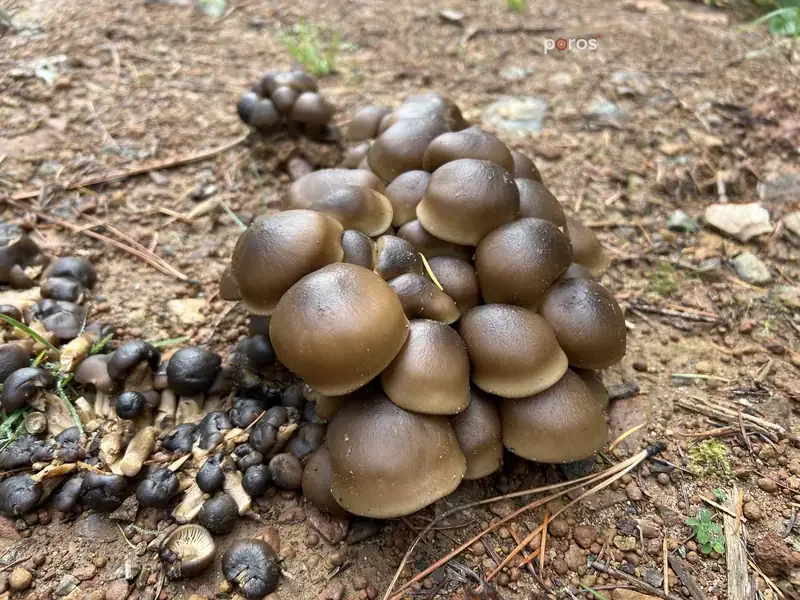
In habitat© calibas · CC0


These are licensed records of this species; photos alone are not enough to identify a mushroom.
Are fried chicken mushrooms poisonous?
Fried chicken mushrooms are not listed as poisonous in our sources. Lyophyllum decastes is edible when well cooked; stomach upsets have been reported in some people, so try a small amount first. The real risk is confusing them with livid pinkgill (Entoloma sinuatum), so never eat wild ones without certain identification. If poisoning is suspected, call 112 at once (Turkish poison centre: 114) and keep any leftover mushroom.
Are fried chicken mushrooms edible?
Fried chicken mushrooms are listed as edible in our sources and are cultivated; even so, never eat wild ones without certain identification: they have poisonous look-alikes, such as livid pinkgill (Entoloma sinuatum). Do not eat them without an expert's approval. Lyophyllum decastes is edible when well cooked; stomach upsets have been reported in some people, so try a small amount first. The margin for error with clustered brown mushrooms is high; make sure the spore print is white and there is no ring. Do not eat a wild one an expert has not checked.
How to recognise it
Appearance of fried chicken mushrooms
No ring or volva Spore print: White Mild and pleasant.
When and where
When to find fried chicken mushrooms
Jun–Nov
It fruits from early summer to late autumn after rain.
Where do fried chicken mushrooms grow?
It grows in dense clusters on roadsides, in parks, meadows, woodland edges and disturbed soil, often over buried wood or root debris.
Where is fried chicken mushrooms found in Turkey?
Our map data holds 10 Turkish GBIF records (five from Istanbul, four from Ankara and one from Karaman) and 9 research-grade iNaturalist observations. Worldwide it ranges through temperate Europe, Asia and North America.
Which months
- Jan1
- Feb0
- Mar2
- Apr0
- May1
- Jun0
- Jul0
- Aug0
- Sep0
- Oct4
- Nov1
- Dec1
4 provinces, 10 observations (GBIF, iNaturalist); months from observation dates. Record density also reflects where observers work.
Latest fried chicken mushroom observations
-
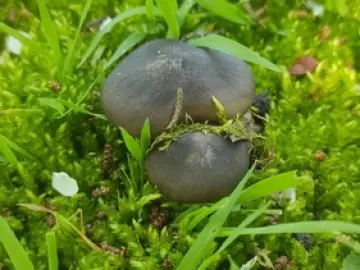 İstanbul31 Mar 2024 · iNaturalist© Umut Nuri Erdoğan · CC BY
-
 Illustrative
Kırklareli31 Oct 2026 · iNaturalist
-
 Illustrative
İstanbul2 Mar 2026 · iNaturalist
-
 Illustrative
İstanbul14 Dec 2025 · iNaturalist
-
 Illustrative
Ankara27 Oct 2024 · iNaturalist
-
 Illustrative
İstanbul10 Jan 2024 · Mushroom Observer
-
 Illustrative
Ankara3 Nov 2019 · iNaturalist
-
 Illustrative
Karaman3 May 2011 · iNaturalist
- See on the map
On "illustrative" cards the image is a photo of the species; the observation photo cannot be shown here because of its licence, but can be seen at the source.
Look-alikes
What could it be confused with?
Fried chicken mushroom can be mistaken for the species below. Each comparison shows Fried chicken mushroom on the left, the look-alike on the right, and how to tell them apart.
Take care when foraging: Poisonous look-alikes of Fried chicken mushroom come first. If in doubt, leave it.

Livid pinkgill Entoloma sinuatum
How to tell It grows singly or in small groups rather than dense clusters; its gills turn pink when mature and its spore print is pink. It is poisonous.
Other look-alikes (2)
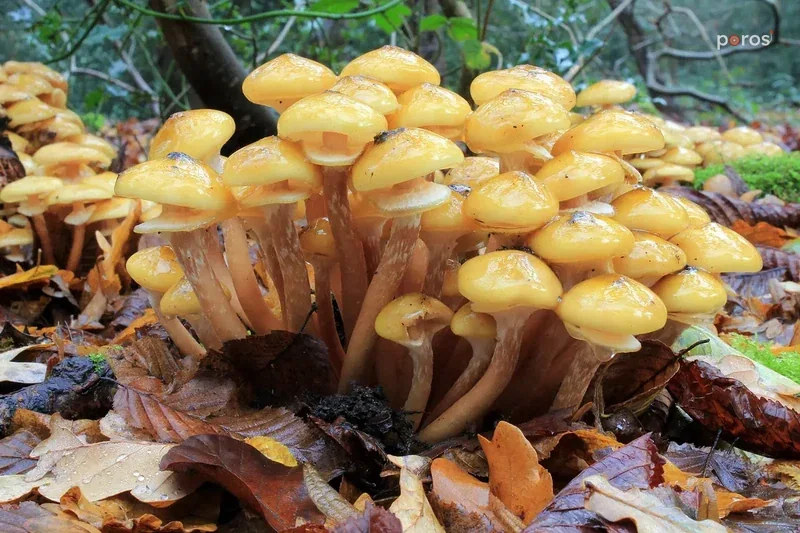 Edible species
not Fried chicken mushroom
Honey fungus Armillaria mellea
It also clusters, but its cap is honey-yellow with small dark scales, it has a distinct white ring, and it usually grows on wood.
 Inedible
not Fried chicken mushroom
Clouded funnel Clitocybe nebularis
It is larger and grey, grows singly or in rings, has a sharp smell and its gills run down the stem.
Fried chicken mushroom and its look-alikes compared
| Species | Status | Underside | Spore print | Season |
|---|---|---|---|---|
| Fried chicken mushroomLyophyllum decastes | Edible species | White to pale grey, close, attached or slightly notched | White | Jun–Nov |
| Livid pinkgillEntoloma sinuatum | Poisonous | Distant, notched at the stem | Pink (reddish brown) | Aug–Dec |
| Honey fungusArmillaria mellea | Edible species | Whitish to cream gills, slightly decurrent | White | Sep–Jan |
| Clouded funnelClitocybe nebularis | Inedible | Gills crowded, cream to pale yellowish, slightly decurrent and easily scraped off with a finger | Cream to pale yellow | Oct–Jan |
The table is compiled from each species page. The status column is a guide only; do not eat a wild mushroom unless an expert has seen it in person. Compare look-alikes side by side
How to cook and eat fried chicken mushrooms
Safety first. Lyophyllum decastes is edible when well cooked; stomach upsets have been reported in some people, so try a small amount first. The margin for error with clustered brown mushrooms is high; make sure the spore print is white and there is no ring. Do not eat a wild one an expert has not checked. If poisoning is suspected, call 112 (Turkey poison centre: 114) and keep any leftover mushroom.
How to store fried chicken mushrooms
Grow it, buy it
Fried chicken mushroom price list
| Product | Poros Mantar | Market |
|---|---|---|
| Fresh fried chicken mushrooms | Made to order · ask | — |
| Dried fried chicken mushrooms | Made to order · ask | — |
We make our fried chicken mushrooms products in small batches, to order; send a request and we email you the price and delivery date. The market column shows prices seen on other sellers' pages on the date given; they are not our prices and may have changed.
Frequently asked questions
Are fried chicken mushrooms poisonous?
Fried chicken mushrooms are not listed as poisonous in our sources. Lyophyllum decastes is edible when well cooked; stomach upsets have been reported in some people, so try a small amount first. The real risk is confusing them with livid pinkgill (Entoloma sinuatum), so never eat wild ones without certain identification. If poisoning is suspected, call 112 at once (Turkish poison centre: 114) and keep any leftover mushroom.
Are fried chicken mushrooms edible?
Fried chicken mushrooms are listed as edible in our sources and are cultivated; even so, never eat wild ones without certain identification: they have poisonous look-alikes, such as livid pinkgill (Entoloma sinuatum). Do not eat them without an expert's approval. Lyophyllum decastes is edible when well cooked; stomach upsets have been reported in some people, so try a small amount first. The margin for error with clustered brown mushrooms is high; make sure the spore print is white and there is no ring. Do not eat a wild one an expert has not checked.
Why is it called the fried chicken mushroom?
Cooked, its texture stays firm and fibrous, which gives it its English name. It has no established Turkish name, so we use the Latin one.
Where has it been recorded in Turkey?
GBIF holds 10 records from Istanbul, Ankara and Karaman, and iNaturalist has 9 research-grade observations.
Where does it grow?
On roadsides, in parks, meadows and woodland edges, often over buried wood debris, in dense clusters from the ground.
What are its poisonous look-alikes?
The livid pinkgill (Entoloma sinuatum) has pink gills and a pink spore print; some clustered Clitocybe and Hypholoma species can also be confused with it. Taking a spore print is the first step.
Is it the same as hon-shimeji?
In Japan the name hon-shimeji is mostly used for Lyophyllum shimeji, although L. decastes is sometimes called that too. The two are close relatives.
When does it fruit?
From early summer to late autumn, after rain.
When is fried chicken mushroom season in Turkey?
In our calendar, fried chicken mushroom season runs Jun–Nov. It fruits from early summer to late autumn after rain.
Where do fried chicken mushrooms grow?
It grows in dense clusters on roadsides, in parks, meadows, woodland edges and disturbed soil, often over buried wood or root debris.
Where are fried chicken mushrooms found in Turkey?
Our map data holds 10 Turkish GBIF records (five from Istanbul, four from Ankara and one from Karaman) and 9 research-grade iNaturalist observations. Worldwide it ranges through temperate Europe, Asia and North America.
What can the fried chicken mushroom be confused with?
The fried chicken mushroom can be confused with livid pinkgill (Entoloma sinuatum, poisonous), honey fungus (Armillaria mellea, edible species) and clouded funnel (Clitocybe nebularis, inedible). Look-alikes are compared on this page.
What is the fried chicken mushroom called in Turkish?
In Turkish, the fried chicken mushroom (Lyophyllum decastes) is called Lyophyllum decastes.
Related species
-
 Buna-shimejiHypsizygus tessulatusEdible species
-
 Elm oysterHypsizygus ulmariusEdible species
-
 St George’s mushroomCalocybe gambosaEdible species
-
 Almond mushroomAgaricus subrufescensEdible species
-
 Anatolian matsutakeTricholoma anatolicumEdible species
-
 Aniseed funnelClitocybe odoraEdible species
-
 Bay boleteImleria badiaEdible species
-
 Beefsteak fungusFistulina hepaticaEdible species
Sources
- Wikipedia (EN): Lyophyllum decastes en.wikipedia.org
- iNaturalist: Lyophyllum decastes (Türkçe ad ve Türkiye gözlemleri) inaturalist.org
- GBIF: Türkiye kayıtları gbif.org
Photo credits (12)
- Lyophyllum decastes · iNaturalist #188519411 · Erwin Sieben · CC0
- Lyophyllum decastes · iNaturalist #188519411 · Erwin Sieben · CC0
- Lyophyllum decastes · iNaturalist #34987061 · Gail A Baker · CC BY 4.0
- Lyophyllum decastes · iNaturalist #34987061 · Gail A Baker · CC BY 4.0
- File:Lyophyllum decastes (Haute-Loire, France) 03.jpg · Adrien BENOIT à la GUILLAUME · CC BY-SA 4.0
- File:Sporocarp of lyophyllum decastes, 3.1 pound.jpg · Леонид Савельев · CC BY 4.0
- File:Lyophyllum decastes G7.JPG · Jerzy Opioła · CC BY-SA 3.0
- Lyophyllum decastes · iNaturalist #190058062 · りなべる · CC BY 4.0
- File:Lyophyllum decastes gl.JPG · Glaurent · CC BY 4.0
- Lyophyllum decastes · iNaturalist #31192811 · Julian Pietragalla · CC BY 4.0
- Lyophyllum decastes · iNaturalist #190527098 · calibas · CC0
- iNaturalist: İstanbul, 31 Mar 2024 · Umut Nuri Erdoğan · CC BY


