
Elm oyster (elm leech)
Hypsizygus ulmarius · Lyophyllaceae

The elm oyster (Hypsizygus ulmarius) is a large, whitish wood mushroom that grows on elm, maple, beech and other broadleaf trunks, often well above the ground. Despite the name it is not a true oyster mushroom (Pleurotus): its stem is more distinct and its gills do not run down the stem. It is firm and mildly sweet when cooked, and it is also cultivated.
Also called: elm oyster, elm leech Turkish: Karaağaç istiridye mantarı Synonyms: Pleurotus ulmarius, Lyophyllum ulmarium
Last updated: Prepared by the Poros Mantar editorial team3 sources checkedReport a correction
Elm oyster photos
-
© Repina Tatyana · CC BY 4.0
-

© Repina Tatyana · CC BY 4.0
-

Gills© Bernie Paquette · CC BY 4.0
-

© Bernie Paquette · CC BY 4.0
-

© naturalist charlie · CC BY 4.0
-

Gills© Erica Tava Johnson · CC BY 4.0
-
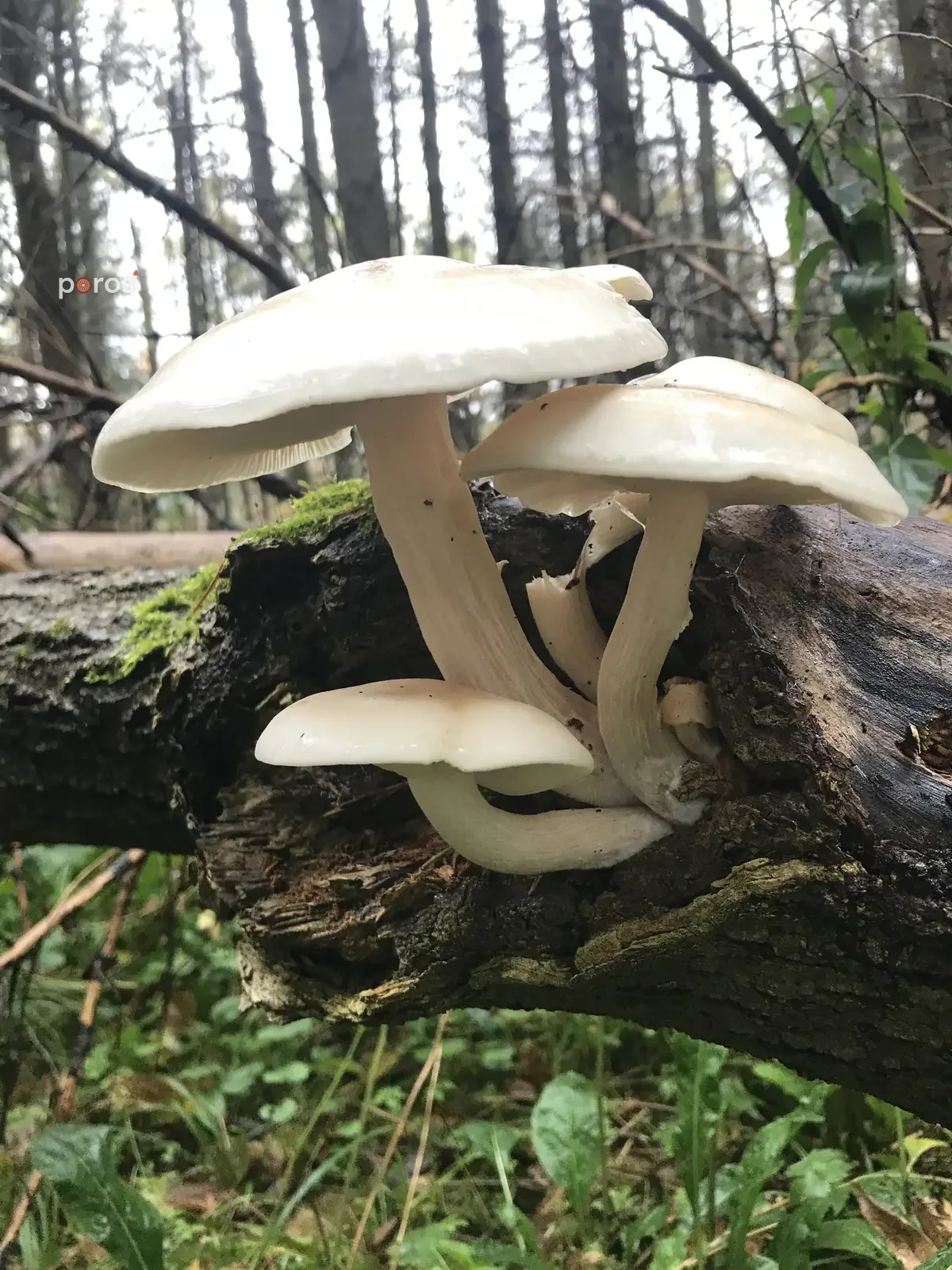
In habitat© Dustin Minialoff · CC0
-

© Repina Tatyana · CC BY 4.0
-

Cap© pinonbistro · CC BY-SA 4.0
-

Stem© Shirley Zundell · CC BY 4.0
-
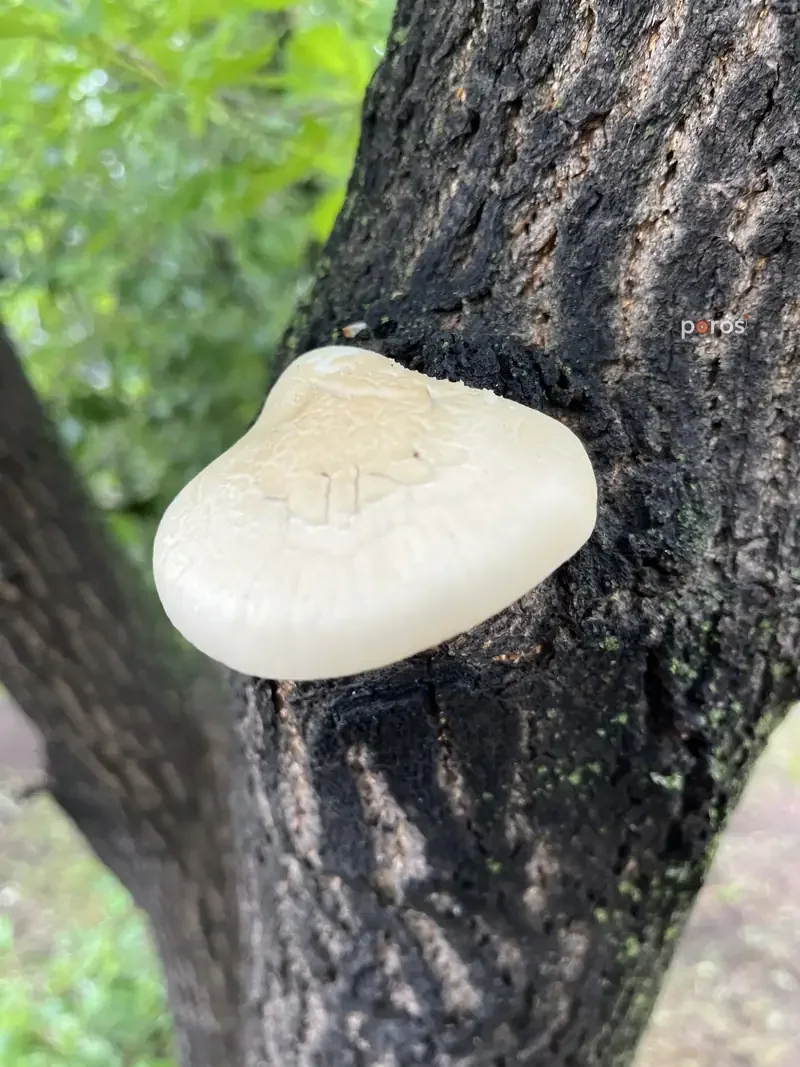
In habitat© Stefka5 · CC0


These are licensed records of this species; photos alone are not enough to identify a mushroom.
Is the elm oyster poisonous?
The elm oyster is not listed as poisonous in our sources. The elm oyster is edible when well cooked; do not eat a wild one an expert has not checked. The real risk is confusing it with jack-o'-lantern mushroom (Omphalotus olearius) and angel wing (Pleurocybella porrigens), so never eat a wild one without certain identification. If poisoning is suspected, call 112 at once (Turkish poison centre: 114) and keep any leftover mushroom.
Is the elm oyster edible?
The elm oyster is listed as edible in our sources and is cultivated; even so, never eat a wild one without certain identification: it has poisonous look-alikes, such as jack-o'-lantern mushroom (Omphalotus olearius) and angel wing (Pleurocybella porrigens). Do not eat it without an expert's approval. The elm oyster is edible when well cooked; do not eat a wild one an expert has not checked. The orange jack-o'-lantern and the thin white angel wing (Pleurocybella porrigens), both found on wood, are poisonous.
How to recognise it
Appearance of elm oyster
No ring or volva Spore print: White Mild and pleasant.
Where does elm oyster grow?
It grows singly or in loose groups on old or wounded broadleaf trunks, especially elm, maple (box elder) and beech, often at wounds and pruning scars, causing a white rot inside the tree.
Where is elm oyster found in Turkey?
Turkish records are very scarce: GBIF holds a single Turkish record without a province, and iNaturalist has no research-grade Turkish observation. Worldwide it ranges through the temperate forests of North America, Europe and East Asia.
Which months
- Jan1
- Feb0
- Mar0
- Apr0
- May0
- Jun0
- Jul0
- Aug0
- Sep0
- Oct0
- Nov0
- Dec0
1 provinces, 1 observations (GBIF, iNaturalist); months from observation dates. Record density also reflects where observers work.
Latest elm oyster observations
 Illustrative
On "illustrative" cards the image is a photo of the species; the observation photo cannot be shown here because of its licence, but can be seen at the source.
Look-alikes
What could it be confused with?
Elm oyster can be mistaken for the species below. Each comparison shows Elm oyster on the left, the look-alike on the right, and how to tell them apart.
Take care when foraging: Poisonous look-alikes of Elm oyster come first. If in doubt, leave it.

Jack-o'-lantern mushroom Omphalotus olearius
How to tell It is bright orange and grows in dense clusters at the base of trees or on buried roots; it is poisonous.
Angel wing Pleurocybella porrigens
How to tell It is small, thin, pure white and ear-shaped, growing on conifer wood. In Japan it has been linked to fatal brain damage in people with kidney disease.
Other look-alikes (1)
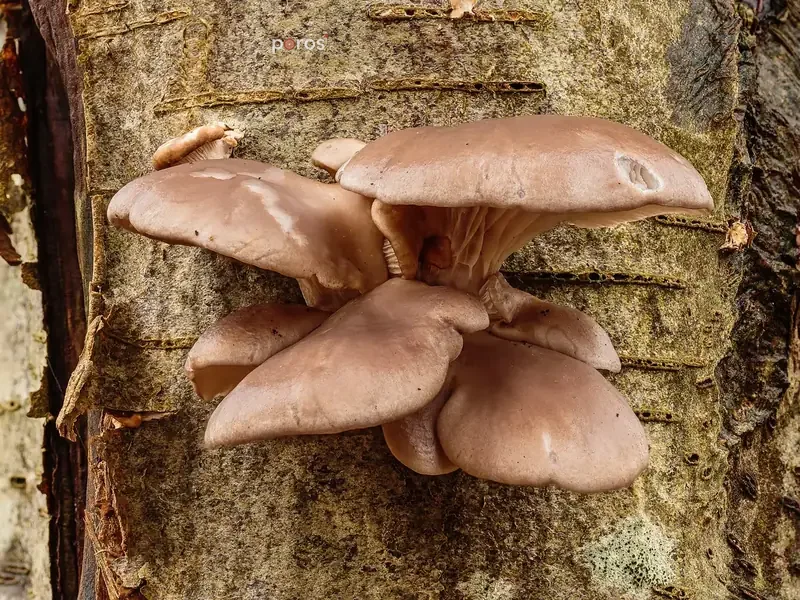 Edible species
not Elm oyster
Oyster mushroom Pleurotus ostreatus
Its stem is very short and off-centre, the gills run down onto it, and it usually forms overlapping shelves.
Elm oyster and its look-alikes compared
| Species | Status | Underside | Spore print | Season |
|---|---|---|---|---|
| Elm oysterHypsizygus ulmarius | Edible species | White to cream and close | White | Aug–Nov |
| Oyster mushroomPleurotus ostreatus | Edible species | Gills whitish, sometimes yellowing | White to pale lilac-grey | Oct–Mar |
| Jack-o’-lantern mushroomOmphalotus olearius | Poisonous | Crowded, thin, true gills running down the stem (decurrent), the same orange as the cap | Creamy white | Oct–Jan |
The table is compiled from each species page. The status column is a guide only; do not eat a wild mushroom unless an expert has seen it in person. Compare look-alikes side by side
How to cook and eat elm oyster
Safety first. The elm oyster is edible when well cooked; do not eat a wild one an expert has not checked. The orange jack-o'-lantern and the thin white angel wing (Pleurocybella porrigens), both found on wood, are poisonous. If poisoning is suspected, call 112 (Turkey poison centre: 114) and keep any leftover mushroom.
How to store elm oyster
Grow it, buy it
Elm oyster price list
| Product | Poros Mantar | Market |
|---|---|---|
| Fresh elm oyster | Made to order · ask | — |
| Dried elm oyster | Made to order · ask | — |
We make our elm oyster products in small batches, to order; send a request and we email you the price and delivery date. The market column shows prices seen on other sellers' pages on the date given; they are not our prices and may have changed.
Frequently asked questions
Is the elm oyster poisonous?
The elm oyster is not listed as poisonous in our sources. The elm oyster is edible when well cooked; do not eat a wild one an expert has not checked. The real risk is confusing it with jack-o'-lantern mushroom (Omphalotus olearius) and angel wing (Pleurocybella porrigens), so never eat a wild one without certain identification. If poisoning is suspected, call 112 at once (Turkish poison centre: 114) and keep any leftover mushroom.
Is the elm oyster edible?
The elm oyster is listed as edible in our sources and is cultivated; even so, never eat a wild one without certain identification: it has poisonous look-alikes, such as jack-o'-lantern mushroom (Omphalotus olearius) and angel wing (Pleurocybella porrigens). Do not eat it without an expert's approval. The elm oyster is edible when well cooked; do not eat a wild one an expert has not checked. The orange jack-o'-lantern and the thin white angel wing (Pleurocybella porrigens), both found on wood, are poisonous.
How is it different from the oyster mushroom?
The oyster mushroom's gills run down its very short, off-centre stem. The elm oyster's gills stop at the stem, and its stem is more distinct and nearer the centre.
Why is it called the elm oyster?
Elm is one of the trees it is most often found on and its cap resembles an oyster mushroom, but it also grows on maple, beech and other broadleaf trees.
When does it fruit?
From late summer to late autumn, often high up on the trunk.
Does it grow in Turkey?
Records are very scarce: GBIF holds a single Turkish record without a province, and there is no Turkish observation on iNaturalist.
Can it be cultivated?
Yes. It is grown on sawdust and straw mixes and is cultivated in North America and Asia.
Which white wood mushroom is dangerous?
The thin, pure white angel wing (Pleurocybella porrigens), found on conifer wood, has been linked to deaths in Japan; it is much thinner and smaller than the elm oyster.
When is elm oyster season in Turkey?
In our calendar, elm oyster season runs Aug–Nov. It fruits from late summer to late autumn on old or wounded trunks.
Where does elm oyster grow?
It grows singly or in loose groups on old or wounded broadleaf trunks, especially elm, maple (box elder) and beech, often at wounds and pruning scars, causing a white rot inside the tree.
Where is elm oyster found in Turkey?
Turkish records are very scarce: GBIF holds a single Turkish record without a province, and iNaturalist has no research-grade Turkish observation. Worldwide it ranges through the temperate forests of North America, Europe and East Asia.
What can elm oyster be confused with?
Elm oyster can be confused with oyster mushroom (Pleurotus ostreatus, edible species), jack-o'-lantern mushroom (Omphalotus olearius, poisonous) and angel wing (Pleurocybella porrigens, poisonous). Look-alikes are compared on this page.
What is elm oyster called in Turkish?
In Turkish, elm oyster (Hypsizygus ulmarius) is called Karaağaç istiridye mantarı.
Related species
-
 Buna-shimejiHypsizygus tessulatusEdible species
-
 Fried chicken mushroomLyophyllum decastesEdible species
-
 St George’s mushroomCalocybe gambosaEdible species
-
 Almond mushroomAgaricus subrufescensEdible species
-
 Anatolian matsutakeTricholoma anatolicumEdible species
-
 Aniseed funnelClitocybe odoraEdible species
-
 Bay boleteImleria badiaEdible species
-
 Beefsteak fungusFistulina hepaticaEdible species
Sources
- Wikipedia (EN): Hypsizygus ulmarius en.wikipedia.org
- iNaturalist: Hypsizygus ulmarius (Türkçe ad ve Türkiye gözlemleri) inaturalist.org
- GBIF: Türkiye kayıtları gbif.org
Photo credits (11)
- Hypsizygus ulmarius · iNaturalist #33691288 · Repina Tatyana · CC BY 4.0
- Hypsizygus ulmarius · iNaturalist #33691288 · Repina Tatyana · CC BY 4.0
- Hypsizygus ulmarius · iNaturalist #189606037 · Bernie Paquette · CC BY 4.0
- Hypsizygus ulmarius · iNaturalist #189606037 · Bernie Paquette · CC BY 4.0
- Hypsizygus ulmarius · iNaturalist #33567594 · naturalist charlie · CC BY 4.0
- Hypsizygus ulmarius · iNaturalist #315255529 · Erica Tava Johnson · CC BY 4.0
- Hypsizygus ulmarius · iNaturalist #17318337 · Dustin Minialoff · CC0
- Hypsizygus ulmarius · iNaturalist #33691288 · Repina Tatyana · CC BY 4.0
- Hypsizygus ulmarius · iNaturalist #16343850 · pinonbistro · CC BY-SA 4.0
- Hypsizygus ulmarius · iNaturalist #144274116 · Shirley Zundell · CC BY 4.0
- Hypsizygus ulmarius · iNaturalist #227077142 · Stefka5 · CC0