
Hygrophorus latitabundus (llenega negra)
Hygrophorus latitabundus · Hygrophoraceae

Hygrophorus latitabundus is a large pinewood mushroom with an olive-brown to grey, darker-centred cap coated in thick slime, and thick, widely spaced white waxy gills. Its stem is slimy too, with the slime ending in a ring-like zone just below the cap. In Kastamonu it is known as sümüklüce and sümük mantarı ("slimy one"). It is a sought-after edible in Europe, especially in Spain, but its olive cap and white gills can recall the deadly death cap, so never eat it without an expert's identification.
Also called: llenega negra Turkish: Sümüklüce mantarı, sümüklüce, sümük mantarı Synonyms: Hygrophorus limacinus
Caution: the name “sümüklüce” is also used for another species: Stubble rosegill (inedible)
Last updated: Prepared by the Poros Mantar editorial team5 sources checkedReport a correction
Hygrophorus latitabundus photos
-

© Paffka · CC BY-SA 3.0
-
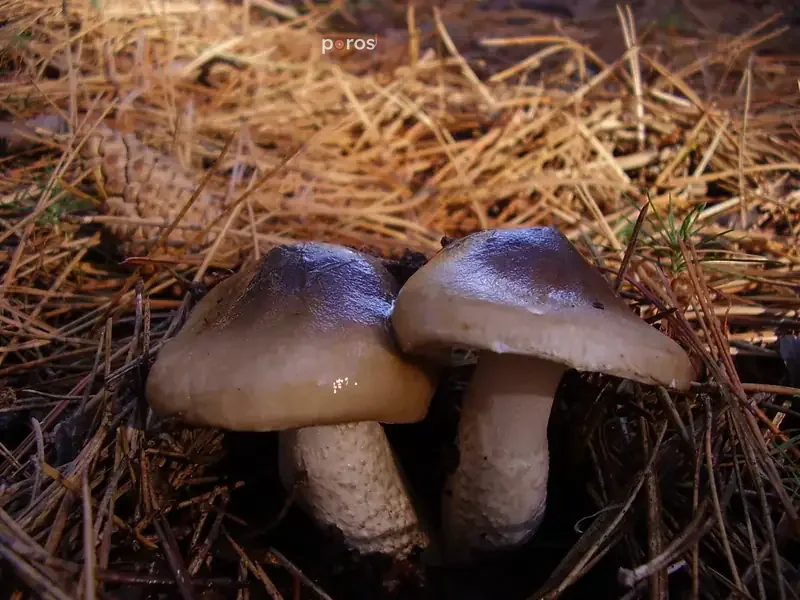
In habitat© Paffka · CC BY-SA 3.0
-

Gills© Pau Cabot · CC BY-SA 3.0
-

Stem© Holger Krisp · CC BY 4.0
-

Stem© Claude PAGE · CC BY-SA 4.0


These are licensed records of this species; photos alone are not enough to identify a mushroom.
Is Hygrophorus latitabundus poisonous?
Hygrophorus latitabundus is not listed as poisonous in our sources. The real risk is confusing it with death cap (Amanita phalloides), so never eat a wild one without certain identification. If poisoning is suspected, call 112 at once (Turkish poison centre: 114) and keep any leftover mushroom.
Is Hygrophorus latitabundus edible?
Hygrophorus latitabundus is listed as edible in our sources; even so, never eat a wild one without certain identification: it has poisonous look-alikes, such as death cap (Amanita phalloides). Do not eat it without an expert's approval. This woodwax is known in Europe as a good edible. The real danger is that its olive cap and white gills can recall the deadly death cap, which has no slime but does have a membranous ring and a volva. The similarly named sümüklü mantar (Lactarius scrobiculatus in Giresun) causes digestive problems. Never eat it without an expert's identification.
How to recognise it
Appearance of hygrophorus latitabundus
No volva Spore print: White Smells mushroomy and tastes pleasant; the flesh is thick, firm and white.
Where does hygrophorus latitabundus grow?
This woodwax forms a mycorrhizal partnership only with pines (Pinus) and mostly grows in pine woods on chalky soil; it is rare, but plentiful where it occurs.
Where is hygrophorus latitabundus found in Turkey?
There are few Turkish records: the names sümük mantarı and sümüklüce are recorded for it in Daday and İhsangazi in Kastamonu (Acar, 2018), Wikipedia notes that it has been reported from Turkey, and iNaturalist has a research-grade observation from Osmaniye. GBIF does not yet list a Turkish record.
Which months
- Jan1
- Feb0
- Mar0
- Apr0
- May0
- Jun0
- Jul0
- Aug0
- Sep0
- Oct0
- Nov0
- Dec0
1 provinces, 1 observations (GBIF, iNaturalist); months from observation dates. Record density also reflects where observers work.
Latest hygrophorus latitabundus observations
 Illustrative
On "illustrative" cards the image is a photo of the species; the observation photo cannot be shown here because of its licence, but can be seen at the source.
Look-alikes
What could it be confused with?
Hygrophorus latitabundus can be mistaken for the species below. Each comparison shows Hygrophorus latitabundus on the left, the look-alike on the right, and how to tell them apart.
Take care when foraging: Poisonous look-alikes of Hygrophorus latitabundus come first. If in doubt, leave it.

Death cap Amanita phalloides
How to tell It also has an olive cap and white gills, but the cap is not slimy, the stem has a hanging membranous ring and a sack-like volva at the base, and the gills are thin and crowded. Always dig up the stem base.
Other look-alikes (3)
not Hygrophorus latitabundus
Dark-belted woodwax Hygrophorus persoonii
Grows under oak and beech, not pine; its flesh turns greenish with ammonia.
not Hygrophorus latitabundus
Olive wax cap Hygrophorus olivaceoalbus
Smaller and slenderer, often with a dark, banded stem, usually growing among moss under spruce.
not Hygrophorus latitabundus
Spotted milkcap Lactarius scrobiculatus
Its cap is yellow and slimy, its stem has pitted spots, and it releases white milk that turns yellow; in Giresun it is called sümüklü mantar and it can cause severe digestive upsets.
How to cook and eat hygrophorus latitabundus
Safety first. This woodwax is known in Europe as a good edible. The real danger is that its olive cap and white gills can recall the deadly death cap, which has no slime but does have a membranous ring and a volva. The similarly named sümüklü mantar (Lactarius scrobiculatus in Giresun) causes digestive problems. Never eat it without an expert's identification; if poisoning is suspected, call 112 (Turkey poison centre: 114).
How to store hygrophorus latitabundus
Grow it, buy it
Hygrophorus latitabundus price list
| Product | Poros Mantar | Market |
|---|---|---|
| Fresh hygrophorus latitabundus | Made to order · ask | — |
| Dried hygrophorus latitabundus | Made to order · ask | — |
We make our hygrophorus latitabundus products in small batches, to order; send a request and we email you the price and delivery date. The market column shows prices seen on other sellers' pages on the date given; they are not our prices and may have changed.
Frequently asked questions
Is Hygrophorus latitabundus poisonous?
Hygrophorus latitabundus is not listed as poisonous in our sources. The real risk is confusing it with death cap (Amanita phalloides), so never eat a wild one without certain identification. If poisoning is suspected, call 112 at once (Turkish poison centre: 114) and keep any leftover mushroom.
Is Hygrophorus latitabundus edible?
Hygrophorus latitabundus is listed as edible in our sources; even so, never eat a wild one without certain identification: it has poisonous look-alikes, such as death cap (Amanita phalloides). Do not eat it without an expert's approval. This woodwax is known in Europe as a good edible. The real danger is that its olive cap and white gills can recall the deadly death cap, which has no slime but does have a membranous ring and a volva. The similarly named sümüklü mantar (Lactarius scrobiculatus in Giresun) causes digestive problems. Never eat it without an expert's identification.
Which other mushroom is called “sümüklüce” in Turkey?
Warning: the name “sümüklüce” covers both edible and inedible species; never eat a mushroom on the strength of its name. Besides the species on this page (Hygrophorus latitabundus), the name “sümüklüce” is also used for Stubble rosegill (Volvopluteus gloiocephalus, inedible). Turkish folk names shift from region to region, so tell species apart by the Latin name and the identification features, not by the local name.
Which mushroom is sümüklüce?
In the dialects of Kastamonu, sümüklüce and sümük mantarı ("slimy one") are names for Hygrophorus latitabundus, from its slippery, slimy cap (Acar, 2018). In Giresun, however, sümüklü mantar is used for the yellow-capped, milky spotted milkcap (Lactarius scrobiculatus) (Karakayalı et al., 2022); they are different species.
Can it be confused with the death cap?
It can: both have olive-toned caps and white gills. The death cap's cap is not slimy, its stem has a hanging membranous ring and a sack (volva) buried at the base, and its gills are thin and crowded. This woodwax has thick, widely spaced waxy gills and a slimy stem.
Where and when does it appear?
In autumn after rain, only under pines and mostly on chalky soil. In Turkey it is known from Kastamonu by its local name and from Osmaniye through an iNaturalist observation.
When is hygrophorus latitabundus season in Turkey?
In our calendar, hygrophorus latitabundus season runs Oct–Jan. This woodwax fruits in autumn after rain in pine woods; the single Turkish iNaturalist record is from January.
Where does hygrophorus latitabundus grow?
This woodwax forms a mycorrhizal partnership only with pines (Pinus) and mostly grows in pine woods on chalky soil; it is rare, but plentiful where it occurs.
Where is hygrophorus latitabundus found in Turkey?
There are few Turkish records: the names sümük mantarı and sümüklüce are recorded for it in Daday and İhsangazi in Kastamonu (Acar, 2018), Wikipedia notes that it has been reported from Turkey, and iNaturalist has a research-grade observation from Osmaniye. GBIF does not yet list a Turkish record.
What can hygrophorus latitabundus be confused with?
Hygrophorus latitabundus can be confused with death cap (Amanita phalloides, deadly), dark-belted woodwax (Hygrophorus persoonii, edible species), olive wax cap (Hygrophorus olivaceoalbus, edible species) and spotted milkcap (Lactarius scrobiculatus, inedible). Look-alikes are compared on this page.
What is hygrophorus latitabundus called in Turkish?
In Turkish, hygrophorus latitabundus (Hygrophorus latitabundus) is called Sümüklüce mantarı; other local names include sümüklüce and sümük mantarı.
Related species
-
 March mushroomHygrophorus marzuolusEdible species
-
 Pinkmottle woodwaxHygrophorus russulaEdible species
-
 Almond mushroomAgaricus subrufescensEdible species
-
 Anatolian matsutakeTricholoma anatolicumEdible species
-
 Aniseed funnelClitocybe odoraEdible species
-
 Bay boleteImleria badiaEdible species
-
 Beefsteak fungusFistulina hepaticaEdible species
-
 Black morelMorchella elataEdible species
Sources
- Acar, E. (2018), International Journal of Humanities and Education: Kastamonu ve yöresi ağızlarında mantar adları (266 ad, Latince karşılıklarıyla tablo) dergipark.org.tr
- Karakayalı, Z., Enes, K. ve Kanca, B. (2022), ODÜ Sosyal Bilimler Araştırmaları Dergisi: Giresun'da doğal olarak yetişen yenilebilir mantarların gastronomik değeri (yöresel adlar; Türkçe adlar Sesli vd. 2020 Türkiye Mantarları Listesi'nden) dergipark.org.tr
- Wikipedia (EN): Hygrophorus latitabundus en.wikipedia.org
All sources (5)
- iNaturalist: Türkiye gözlemi (Osmaniye, 2024) inaturalist.org
- GBIF: Hygrophorus latitabundus gbif.org
Photo credits (5)
- File:Hygrophorus latitabundus1.JPG · Paffka · CC BY-SA 3.0
- File:Hygrophorus latitabundus2.JPG · Paffka · CC BY-SA 3.0
- File:Hygrophorus latitabundus.JPG · Pau Cabot · CC BY-SA 3.0
- File:Große Kiefern-Schneckling Hygrophorus latitabundus.jpg · Holger Krisp · CC BY 4.0
- File:Hygrophorus latitabundus (15658194927).jpg · Claude PAGE · CC BY-SA 4.0


