
March mushroom (March waxcap, marzuolo)
Hygrophorus marzuolus · Hygrophoraceae
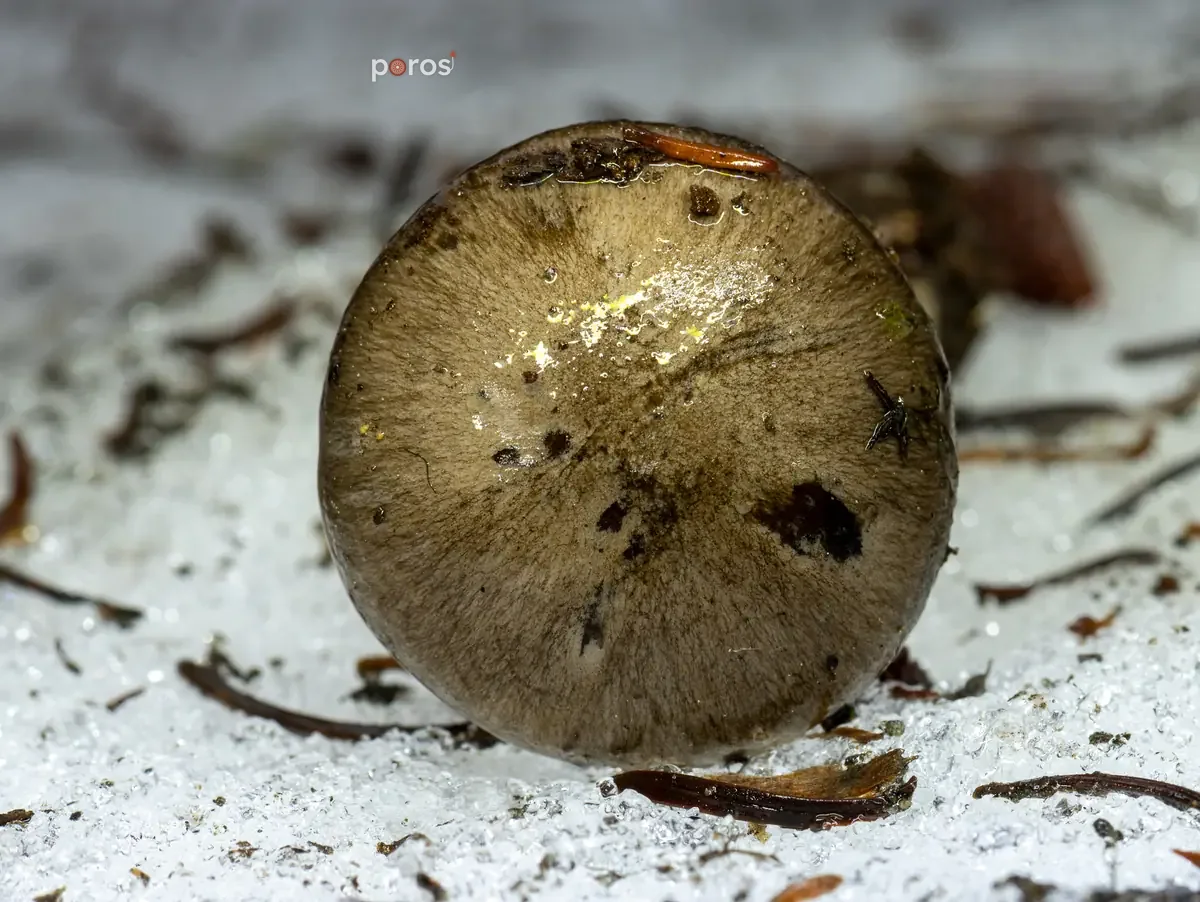
The March mushroom (Hygrophorus marzuolus) is a large, fleshy waxcap with a grey to blackish cap and white to grey gills that appears as the snow melts. Because it often stays half-buried under leaf and needle litter, it is hard to find. In the mountains of Europe it is gathered as a prized spring mushroom.
Also called: March mushroom, March waxcap, marzuolo Turkish: Mart mantarı
Last updated: Prepared by the Poros Mantar editorial team3 sources checkedReport a correction
March mushroom photos
-
In habitat© Alan Rockefeller · CC BY 4.0
-

© Alan Rockefeller · CC BY 4.0
-

Gills© Alan Rockefeller · CC BY 4.0
-

© vuikaan · CC BY 4.0
-

© vuikaan · CC BY 4.0
-

Gills© Amirosław · CC BY-SA 4.0
-

© Sporulator · CC BY-SA 3.0
-

© GLJIVARSKO DRUSTVO NIS from Serbia · CC BY 2.0
-

Cap© LukeEmski · CC BY-SA 4.0
-

Stem© Lucian Clanet · CC BY 4.0


These are licensed records of this species; photos alone are not enough to identify a mushroom.
Are march mushrooms poisonous?
March mushrooms are not listed as poisonous in our sources. The March mushroom is edible when well cooked. The real risk is confusing them with tiger tricholoma (Tricholoma pardinum), so never eat wild ones without certain identification. If poisoning is suspected, call 112 at once (Turkish poison centre: 114) and keep any leftover mushroom.
Are march mushrooms edible?
March mushrooms are listed as edible in our sources; even so, never eat wild ones without certain identification: they have poisonous look-alikes, such as tiger tricholoma (Tricholoma pardinum). Do not eat them without an expert's approval. The March mushroom is edible when well cooked. There is room for error with grey, fleshy mushrooms: Tricholoma pardinum, which fruits in autumn, causes severe poisoning. Check the season and the thick, waxy, widely spaced gills. Do not eat a wild one an expert has not checked.
How to recognise it
Appearance of march mushrooms
No ring or volva Spore print: White Mild and pleasant.
Where do march mushrooms grow?
It grows in mountain conifer and mixed forests, especially under silver fir, sometimes spruce and Scots pine, where the snow is melting.
Where is march mushrooms found in Turkey?
Our map data holds 8 Turkish GBIF records (six of them DNA records from 2016 soil samples, two mushroom sightings from Istanbul) and 4 research-grade iNaturalist observations. Its Turkish name comes from iNaturalist Turkey. Worldwide it ranges through the mountains of Europe (from the Pyrenees to the Prague region) and western North America, and it has also been reported from Pakistan.
Which months
- Jan0
- Feb1
- Mar0
- Apr1
- May0
- Jun0
- Jul0
- Aug0
- Sep0
- Oct0
- Nov0
- Dec0
1 provinces, 2 observations (GBIF, iNaturalist); months from observation dates. Record density also reflects where observers work.
Latest march mushroom observations
-
 Illustrative
İstanbul12 Feb 2022 · iNaturalist
-
 Illustrative
İstanbul5 Apr 2020 · Mushroom Observer
- See on the map
On "illustrative" cards the image is a photo of the species; the observation photo cannot be shown here because of its licence, but can be seen at the source.
Look-alikes
What could it be confused with?
March mushroom can be mistaken for the species below. Each comparison shows March mushroom on the left, the look-alike on the right, and how to tell them apart.
Take care when foraging: Poisonous look-alikes of March mushroom come first. If in doubt, leave it.

Tiger tricholoma Tricholoma pardinum
How to tell It is grey-scaled, large and fleshy, but it fruits in autumn, its gills are close and not waxy and it smells of flour. It causes severe stomach poisoning.
Other look-alikes (2)
 Inedible
not March mushroom
Grey knight Tricholoma terreum
Its cap is grey and felty-scaled, but it is smaller and fruits in autumn under pine; its gills are close and not waxy.
 Inedible
not March mushroom
Clouded funnel Clitocybe nebularis
It is grey-capped and fleshy, but it fruits in autumn, its gills are close and decurrent and its smell is sharp.
March mushroom and its look-alikes compared
| Species | Status | Underside | Spore print | Season |
|---|---|---|---|---|
| March mushroomHygrophorus marzuolus | Edible species | Widely spaced, thick and waxy | White | Feb–May |
| Grey knightTricholoma terreum | Inedible | White to pale grey, fairly distant gills, notched where they meet the stem | White | Oct–Mar |
| Tiger tricholomaTricholoma pardinum | Poisonous | Notched, crowded, whitish-cream gills, sometimes with yellowish-greenish tints, which may weep droplets | White | Aug–Nov |
| Clouded funnelClitocybe nebularis | Inedible | Gills crowded, cream to pale yellowish, slightly decurrent and easily scraped off with a finger | Cream to pale yellow | Oct–Jan |
The table is compiled from each species page. The status column is a guide only; do not eat a wild mushroom unless an expert has seen it in person. Compare look-alikes side by side
How to cook and eat march mushrooms
Safety first. The March mushroom is edible when well cooked. There is room for error with grey, fleshy mushrooms: Tricholoma pardinum, which fruits in autumn, causes severe poisoning. Check the season and the thick, waxy, widely spaced gills. Do not eat a wild one an expert has not checked. If poisoning is suspected, call 112 (Turkey poison centre: 114) and keep any leftover mushroom.
How to store march mushrooms
Grow it, buy it
March mushroom price list
| Product | Poros Mantar | Market |
|---|---|---|
| Fresh march mushrooms | Made to order · ask | — |
| Dried march mushrooms | Made to order · ask | — |
We make our march mushrooms products in small batches, to order; send a request and we email you the price and delivery date. The market column shows prices seen on other sellers' pages on the date given; they are not our prices and may have changed.
Frequently asked questions
Are march mushrooms poisonous?
March mushrooms are not listed as poisonous in our sources. The March mushroom is edible when well cooked. The real risk is confusing them with tiger tricholoma (Tricholoma pardinum), so never eat wild ones without certain identification. If poisoning is suspected, call 112 at once (Turkish poison centre: 114) and keep any leftover mushroom.
Are march mushrooms edible?
March mushrooms are listed as edible in our sources; even so, never eat wild ones without certain identification: they have poisonous look-alikes, such as tiger tricholoma (Tricholoma pardinum). Do not eat them without an expert's approval. The March mushroom is edible when well cooked. There is room for error with grey, fleshy mushrooms: Tricholoma pardinum, which fruits in autumn, causes severe poisoning. Check the season and the thick, waxy, widely spaced gills. Do not eat a wild one an expert has not checked.
Why is it called the March mushroom?
Because it appears as the snow melts, mostly in March and April; its Latin name marzuolus also comes from the Italian word for March.
How do you find it?
It often stays half-buried under leaf and needle litter; look for small bumps in the litter.
Where has it been recorded in Turkey?
GBIF holds 8 records (six DNA records from soil samples, two mushroom sightings from Istanbul), and iNaturalist has 4 research-grade observations.
Does it have a poisonous look-alike?
The grey, fleshy Tricholoma pardinum causes severe stomach poisoning, but it fruits in autumn and its gills are close and not waxy.
What are waxy gills?
Hygrophorus and its relatives have thick, widely spaced gills that feel slippery like wax when rubbed; this is an important identification clue.
When does it fruit?
From late February to May, as the snow melts or just after.
When is march mushroom season in Turkey?
In our calendar, march mushroom season runs Feb–May. It fruits as the snow melts or just after, from late February to May, often half-buried in leaf or needle litter.
Where do march mushrooms grow?
It grows in mountain conifer and mixed forests, especially under silver fir, sometimes spruce and Scots pine, where the snow is melting.
Where are march mushrooms found in Turkey?
Our map data holds 8 Turkish GBIF records (six of them DNA records from 2016 soil samples, two mushroom sightings from Istanbul) and 4 research-grade iNaturalist observations. Its Turkish name comes from iNaturalist Turkey. Worldwide it ranges through the mountains of Europe (from the Pyrenees to the Prague region) and western North America, and it has also been reported from Pakistan.
What can the march mushroom be confused with?
The march mushroom can be confused with grey knight (Tricholoma terreum, inedible), tiger tricholoma (Tricholoma pardinum, poisonous) and clouded funnel (Clitocybe nebularis, inedible). Look-alikes are compared on this page.
What is the march mushroom called in Turkish?
In Turkish, the march mushroom (Hygrophorus marzuolus) is called Mart mantarı.
Related species
-
 Hygrophorus latitabundusHygrophorus latitabundusEdible species
-
 Pinkmottle woodwaxHygrophorus russulaEdible species
-
 Almond mushroomAgaricus subrufescensEdible species
-
 Anatolian matsutakeTricholoma anatolicumEdible species
-
 Aniseed funnelClitocybe odoraEdible species
-
 Bay boleteImleria badiaEdible species
-
 Beefsteak fungusFistulina hepaticaEdible species
-
 Black morelMorchella elataEdible species
Sources
- Wikipedia (EN): Hygrophorus marzuolus en.wikipedia.org
- iNaturalist: Hygrophorus marzuolus (Türkçe ad ve Türkiye gözlemleri) inaturalist.org
- GBIF: Türkiye kayıtları gbif.org
Photo credits (10)
- Hygrophorus marzuolus · iNaturalist #63752560 · Alan Rockefeller · CC BY 4.0
- Hygrophorus marzuolus · iNaturalist #63752560 · Alan Rockefeller · CC BY 4.0
- Hygrophorus marzuolus · iNaturalist #63752560 · Alan Rockefeller · CC BY 4.0
- Hygrophorus marzuolus · iNaturalist #250215875 · vuikaan · CC BY 4.0
- Hygrophorus marzuolus · iNaturalist #250215875 · vuikaan · CC BY 4.0
- File:Hygrophorus marzuolus-6.jpg · Amirosław · CC BY-SA 4.0
- File:Hygrophorus marzuolus (3).jpg · Sporulator · CC BY-SA 3.0
- File:HYGROPHORUS MARZUOLUS (F. Fr.)Bresadola (5731126499).jpg · GLJIVARSKO DRUSTVO NIS from Serbia · CC BY 2.0
- File:Hygrophorus marzuolus 01.jpg · LukeEmski · CC BY-SA 4.0
- Hygrophorus marzuolus · iNaturalist #271723160 · Lucian Clanet · CC BY 4.0


