
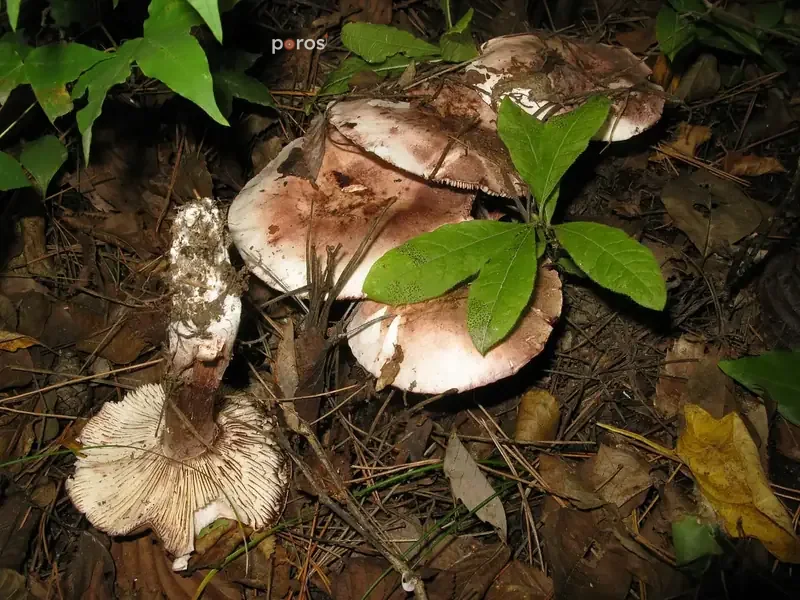


Pinkmottle woodwax
Hygrophorus russula · Hygrophoraceae
A large, fleshy oakwood mushroom whose white cap is mottled and streaked with wine-red and pink, with waxy gills.
Last updated: Prepared by the Poros Mantar editorial team5 sources checkedReport a correction
A large, fleshy oakwood mushroom whose white cap is mottled and streaked with wine-red and pink, with waxy gills. Its look and firm flesh resemble a Russula, hence its name. It is known as an edible species, but it is never eaten without an expert's identification.
Also called: false russula, russula-like waxy cap Turkish: Şarap renkli hygrophorus
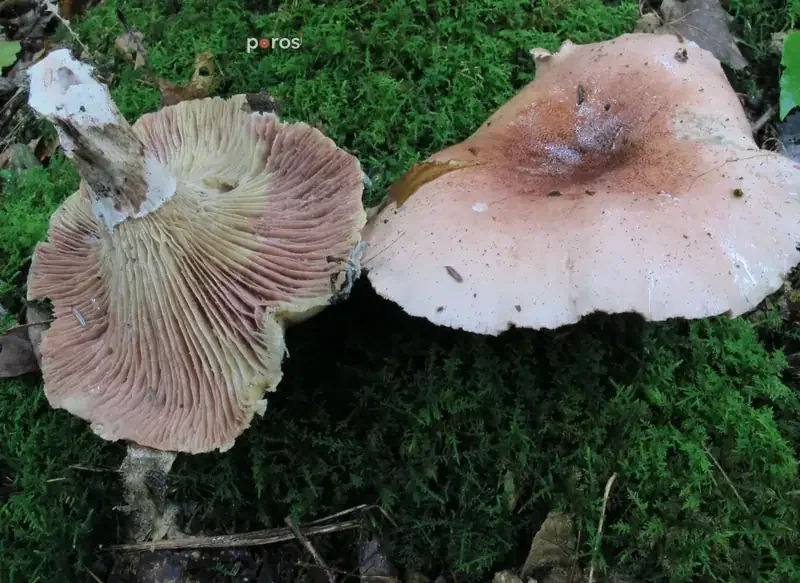
How to recognise it
Pinkmottle woodwax, part by part
No ring or volva Spore print: White No distinctive smell; firm white flesh that may slowly turn pinkish when cut, mild to slightly bitter taste.


When and where
Aug–Dec
- Jan
- Feb
- Mar
- Apr
- May
- Jun
- Jul
- Augin season
- Sepin season
- Octin season
- Novin season
- Decin season
In Europe this species fruits from late summer to late autumn; Turkish GBIF records are from August and December.
Where does pinkmottle woodwax grow?
It grows in broadleaf woods, especially under oak and beech, often on chalky soil and sometimes in rings or rows, forming a mycorrhizal partnership with the trees.
Where is pinkmottle woodwax found in Turkey?
Turkish records are few and come from an arboretum in İstanbul and from İzmir.
Which months
- Jan0
- Feb0
- Mar0
- Apr0
- May0
- Jun0
- Jul0
- Aug0
- Sep0
- Oct0
- Nov0
- Dec2
1 provinces, 2 observations (GBIF, iNaturalist); months from observation dates. Record density also reflects where observers work.
Latest pinkmottle woodwax observations
 Illustrative
On "illustrative" cards the image is a photo of the species; the observation photo cannot be shown here because of its licence, but can be seen at the source.
Look-alikes
What could it be confused with?
Pinkmottle woodwax can be mistaken for the species below. Each card shows the look-alike and how it differs from Pinkmottle woodwax.
 Edible species
not Pinkmottle woodwax
Blotched woodwax Hygrophorus erubescens
More slender, grows under conifers and its flesh turns noticeably yellow; it often tastes bitter.
 Poisonous
not Pinkmottle woodwax
The sickener Russula emetica
Has a uniformly bright red cap, brittle gills that are not waxy and a very peppery taste; it causes gastrointestinal upset.
 Deadly
not Pinkmottle woodwax
Deadly fibrecap Inosperma erubescens
Its whitish cap is fibrous and splits at the margin, reddening when bruised; the gills are not waxy, the spore print is brown, and it appears in spring to early summer.
How to cook and eat pinkmottle woodwax
Safety first. Some white mushrooms with red markings are poisonous fibrecaps or bitter russulas, so this species is only gathered once its waxy gills, white spore print and thick stem have all been confirmed. It is eaten only after an expert's identification and thorough cooking.
How to prepare it
Check the waxy gills and thick stem on each one. Brush off the soil, trim the stem base and slice thinly.
How to cook it
Eat it only well cooked; our recipe sautés it with butter, olive oil and garlic. Sources differ on how good it tastes.
What goes with it?
- pinkmottle woodwaxes
- butter
- extra virgin olive oil (about 3 tbsp)
- garlic
- flat-leaf parsley
Source: Wikipedia · practical details from our recipes.
Recipe
How to store pinkmottle woodwax
Grow it, buy it
Pinkmottle woodwax price list
| Product | Us | Market (sourced, dated) |
|---|---|---|
| Fresh pinkmottle woodwax | Made to order · ask | — |
| Dried pinkmottle woodwax | Made to order · ask | — |
We make our pinkmottle woodwax products in small batches, to order; send a request and we email you the price and delivery date. The market column shows prices seen on other sellers' pages on the date given; they are not our prices and may have changed.
Frequently asked questions
Is Hygrophorus russula edible?
It is known as an edible species, with a mild to slightly bitter taste. Never eat it without an expert's identification.
Does it have a Turkish name?
We found no established, sourced Turkish folk name; on this page we use the descriptive name şarap renkli hygrophorus.
How do you identify it?
Look for a large, fleshy white cap mottled with wine-red and pink, thick waxy white gills, a stout stem and a white spore print together.
How is it told apart from Russula species?
Russula gills are brittle and crumble when rubbed, whereas Hygrophorus gills are thick, flexible and waxy to the touch.
Does it have poisonous look-alikes?
The sickener (Russula emetica) and the deadly fibrecap (Inosperma erubescens), which reddens when bruised, can be confused with it; the latter has a brown spore print and appears in spring.
Where and when is it found in Turkey?
Records are few: from an arboretum in İstanbul in August and from İzmir in December. In Europe it fruits from late summer to late autumn.
Is pinkmottle woodwax edible?
Yes, pinkmottle woodwax is an edible species. Eat a wild one only after an expert has identified it with certainty: it can be confused with the sickener (Russula emetica) and deadly fibrecap (Inosperma erubescens). Some white mushrooms with red markings are poisonous fibrecaps or bitter russulas, so this species is only gathered once its waxy gills, white spore print and thick stem have all been confirmed. It is eaten only after an expert's identification and thorough cooking.
When is pinkmottle woodwax season in Turkey?
In our calendar, pinkmottle woodwax season runs Aug–Dec. In Europe this species fruits from late summer to late autumn; Turkish GBIF records are from August and December.
Where does pinkmottle woodwax grow?
It grows in broadleaf woods, especially under oak and beech, often on chalky soil and sometimes in rings or rows, forming a mycorrhizal partnership with the trees.
Where is pinkmottle woodwax found in Turkey?
Turkish records are few and come from an arboretum in İstanbul and from İzmir.
What can pinkmottle woodwax be confused with?
Pinkmottle woodwax can be confused with blotched woodwax (Hygrophorus erubescens, edible species), the sickener (Russula emetica, poisonous) and deadly fibrecap (Inosperma erubescens, deadly). Look-alikes are compared on this page.
What is pinkmottle woodwax called in Turkish?
In Turkish, pinkmottle woodwax (Hygrophorus russula) is called Şarap renkli hygrophorus.
Related species
-
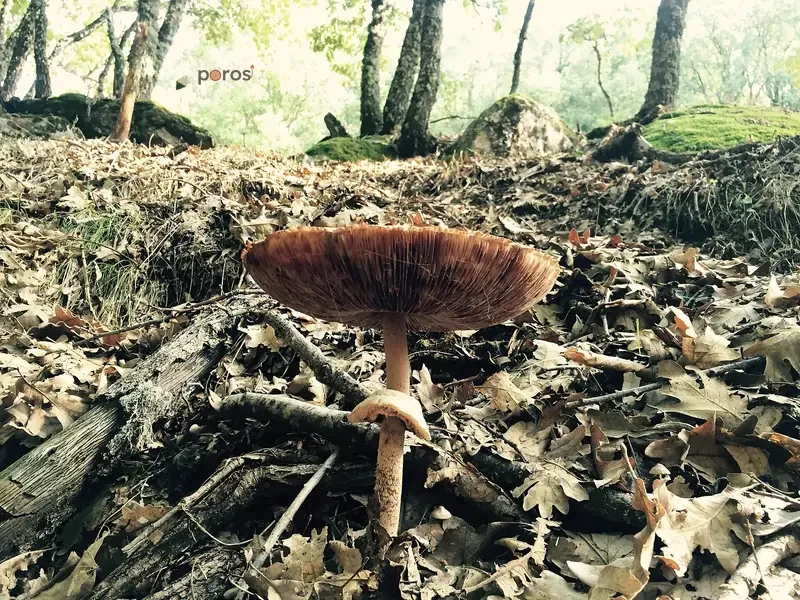 Anatolian matsutakeTricholoma anatolicumEdible species
-
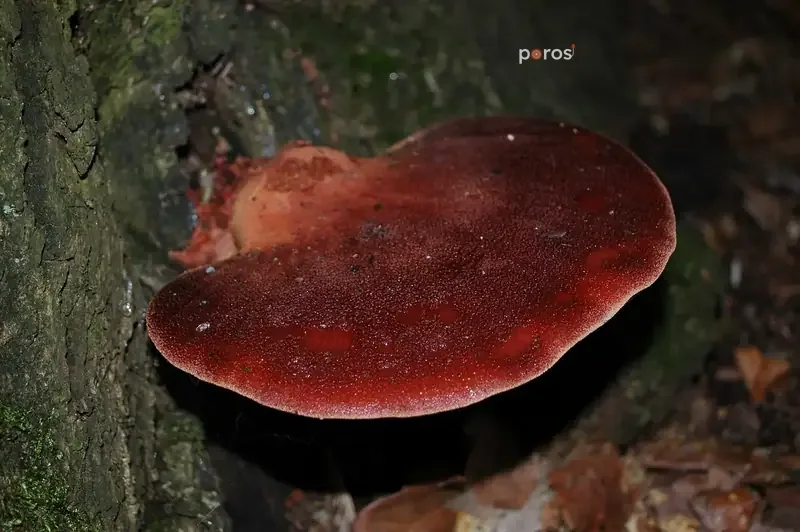 Beefsteak fungusFistulina hepaticaEdible species
-
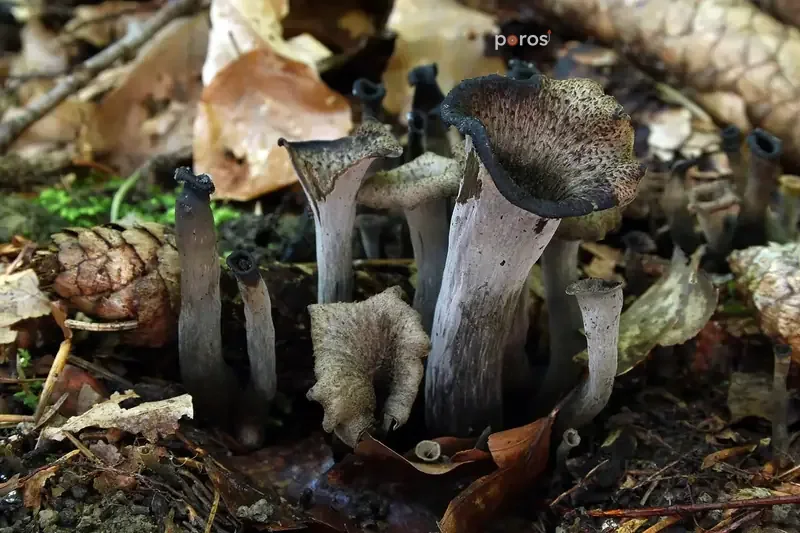 Black trumpetCraterellus cornucopioidesEdible species
-
 Bloody milk capLactarius sanguifluusEdible species
-
 Button mushroomAgaricus bisporusEdible species
-
 Caesar’s mushroomAmanita caesareaEdible species
-
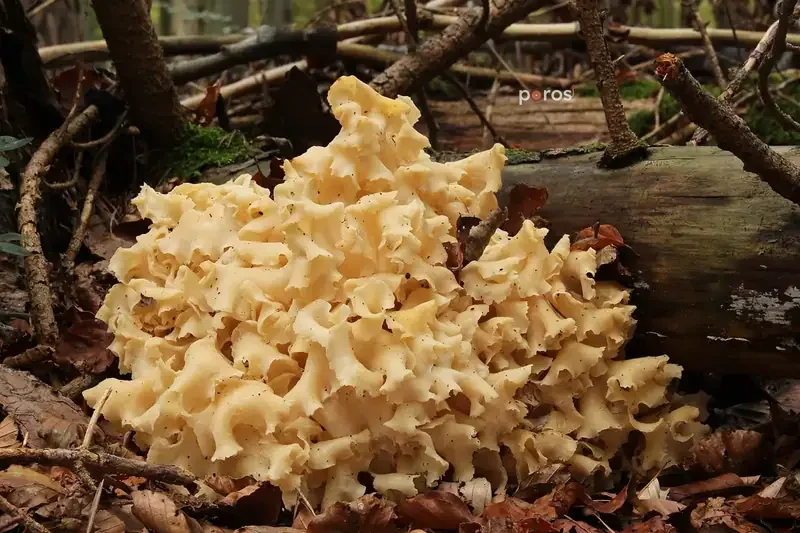 Cauliflower mushroomSparassis crispaEdible species
-
 ChanterelleCantharellus cibariusEdible species
Sources
- Suzuki ve ark. (2012), Glycobiology: Hygrophorus russula mannoz bağlayan lektin pubmed.ncbi.nlm.nih.gov
- Wikipedia (EN): Hygrophorus russula en.wikipedia.org
- GBIF: Türkiye kayıtları gbif.org
All sources (5)
- iNaturalist: Türkiye gözlemleri inaturalist.org
- MushroomExpert: Hygrophorus russula mushroomexpert.com
Photo credits (8)
- File:Hygrophorus russula, Japan 3.JPG · Qwert1234 · CC0
- Hygrophorus russula · iNaturalist #9577985 · mycowalt · CC BY-SA 4.0
- File:2011-10-09 Hygrophorus russula (Schaeff.) Kauffman 175022.jpg · Matt Sherman (Shermanii) at Mushroom Observer, a source for mycologic · CC BY-SA 3.0
- Hygrophorus russula · iNaturalist #311534825 · jonnas___ · CC0
- Hygrophorus russula · iNaturalist #4747407 · Alan Rockefeller · CC BY 4.0
- File:Hygrophorus russula (Schaeff.) Kauffman. (15893727805).jpg · GLJIVARSKO DRUSTVO NIS from Serbia · CC BY 2.0
- Hygrophorus russula · iNaturalist #33920481 · aarongunnar · CC BY 4.0
- Hygrophorus russula · iNaturalist #58404875 · Repina Tatyana · CC BY 4.0


