
Sandy stilt puffball (scaly-stalked puffball)
Battarrea phalloides · Agaricaceae

The sandy stilt puffball (Battarrea phalloides) hatches from an underground egg in dry, sandy soil and carries a rusty-brown spore head on top of a scaly, fibrous, woody stem 10–30 cm tall, with the egg sac (volva) left at the base. It is far too hard and dry to eat. It is rare and protected in several European countries; in Turkey most records come from Istanbul.
Also called: sandy stilt puffball, scaly-stalked puffball Turkish: Battarrea phalloides Synonyms: Lycoperdon phalloides, Battarrea stevenii
Last updated: Prepared by the Poros Mantar editorial team5 sources checkedReport a correction
Sandy stilt puffball photos
-
© distinguished_orca · CC BY 4.0
-

© naturewatchwidow · CC BY 4.0
-

© zhangshen · CC BY 4.0
-

© Martjie Fia Fourie · CC BY 4.0
-

© dirt_tan949 · CC0
-

© Quinn Campbell · CC0
-

© June Mire · CC0
-

© David Rankin · CC BY 4.0
-

Inside (gleba)© victor laborde · CC BY 4.0
-

Stem© Lukas from London, England · CC BY-SA 2.0
-
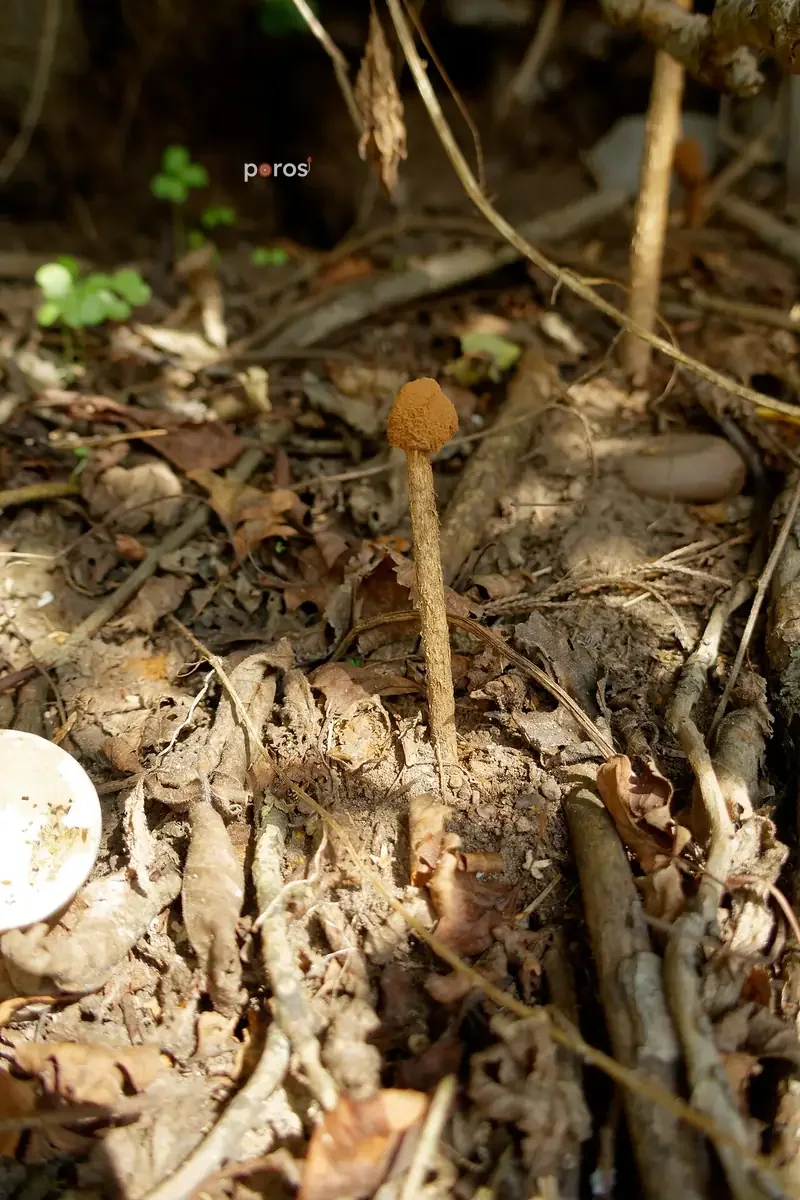
In habitat© Lukas from London, England · CC BY-SA 2.0


These are licensed records of this species; photos alone are not enough to identify a mushroom.
Are sandy stilt puffballs poisonous?
The sandy stilt puffball is not known to be poisonous, but it is far too hard and dry to eat. If poisoning is suspected, call 112 at once (Turkish poison centre: 114) and keep any leftover mushroom.
Are sandy stilt puffballs edible?
No. It is far too hard and dry to eat; it is not known to be poisonous.
How to recognise it
Appearance of sandy stilt puffballs
No ring Spore print: Rusty brown, powdery Not distinctive.
When and where
When to find sandy stilt puffballs
Nov–Apr
Dry fruit bodies persist for months; our Turkish records spread from late autumn to early spring, November to April.
Where do sandy stilt puffballs grow?
It grows on dry, sandy or dusty soil along roadsides, at the base of old stumps, under hedges and in dry scrub, and is widespread in the world's arid and semi-arid regions.
Where is sandy stilt puffballs found in Turkey?
Our map data (GBIF and iNaturalist) holds 12 Turkish records: Istanbul (8), Ankara (2), Aydın (1), Yalova (1). The records are from January, February, March, April, November, December.
Which months
- Jan1
- Feb1
- Mar3
- Apr1
- May0
- Jun0
- Jul0
- Aug0
- Sep0
- Oct0
- Nov1
- Dec2
4 provinces, 9 observations (GBIF, iNaturalist); months from observation dates. Record density also reflects where observers work.
Latest sandy stilt puffball observations
-
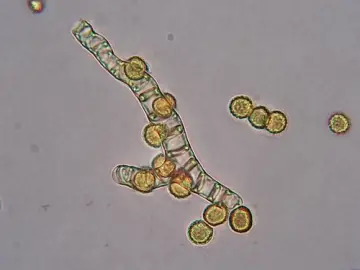 İstanbul27 Apr 2024 · iNaturalist© Umut Nuri Erdoğan · CC BY
-
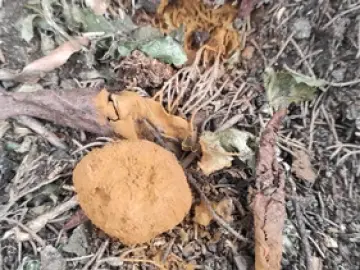 İstanbul20 Mar 2024 · iNaturalist© Umut Nuri Erdoğan · CC BY
-
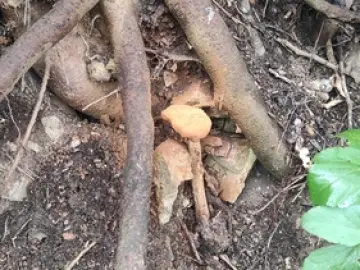 İstanbul20 Mar 2024 · iNaturalist© Umut Nuri Erdoğan · CC BY
-
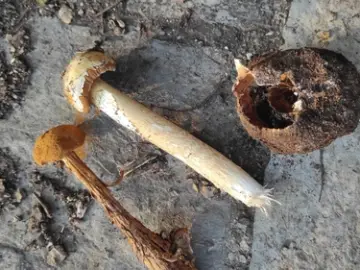 İstanbul21 Feb 2024 · iNaturalist© Umut Nuri Erdoğan · CC BY
-
 Illustrative
Ankara27 Jan 2022 · iNaturalist
-
 Illustrative
Ankara7 Nov 2021 · iNaturalist
-
 Illustrative
Aydın12 Dec 2019 · INSDC Sequences
-
 Illustrative
Yalova3 Dec 2017 · INSDC Sequences
- See on the map
On "illustrative" cards the image is a photo of the species; the observation photo cannot be shown here because of its licence, but can be seen at the source.
Look-alikes
What could it be confused with?
Sandy stilt puffball can be mistaken for the species below. Each comparison shows Sandy stilt puffball on the left, the look-alike on the right, and how to tell them apart.

Common stinkhorn Phallus impudicus
How to tell The common stinkhorn has a white, spongy stem and a slimy, foul-smelling olive-brown head.
Winter stalkball Tulostoma brumale
How to tell The winter stalkball is also a stalked puffball, but much smaller (head about 1 cm, stem 2–5 cm) with a small tube-like mouth on top.
The sandy stilt puffball is not known to be poisonous, but it is far too hard and dry to eat. It is protected in several European countries; photograph it rather than pick it. If poisoning is suspected, call 112 or the Turkish poison centre (114).
Frequently asked questions
Are sandy stilt puffballs poisonous?
The sandy stilt puffball is not known to be poisonous, but it is far too hard and dry to eat. If poisoning is suspected, call 112 at once (Turkish poison centre: 114) and keep any leftover mushroom.
Are sandy stilt puffballs edible?
No. It is far too hard and dry to eat; it is not known to be poisonous.
How do you identify it?
On dry sandy soil, a woody, scaly stem 10–30 cm tall topped by a rusty-brown powdery head, with an egg sac buried at the base.
What can it be confused with?
The main look-alikes are: Common stinkhorn, Winter stalkball. The differences are listed in the look-alikes section; with poisonous look-alikes, always check the cross-section and habitat.
Where does it grow?
It grows on dry, sandy or dusty soil along roadsides, at the base of old stumps, under hedges and in dry scrub, and is widespread in the world's arid and semi-arid regions.
When does it appear?
Dry fruit bodies persist for months; our Turkish records spread from late autumn to early spring, November to April.
Why is it considered rare?
Its dry, sandy habitats are shrinking in Europe, so it is seen rarely; it is legally protected in Britain and on the red lists of several countries.
Where is it found in Turkey?
Our map data holds 12 records: 8 from Istanbul, 2 from Ankara and one each from Aydın and Yalova.
When is sandy stilt puffball season in Turkey?
In our calendar, sandy stilt puffball season runs Nov–Apr. Dry fruit bodies persist for months; our Turkish records spread from late autumn to early spring, November to April.
Where do sandy stilt puffballs grow?
It grows on dry, sandy or dusty soil along roadsides, at the base of old stumps, under hedges and in dry scrub, and is widespread in the world's arid and semi-arid regions.
Where are sandy stilt puffballs found in Turkey?
Our map data (GBIF and iNaturalist) holds 12 Turkish records: Istanbul (8), Ankara (2), Aydın (1), Yalova (1). The records are from January, February, March, April, November, December.
What can the sandy stilt puffball be confused with?
The sandy stilt puffball can be confused with common stinkhorn (Phallus impudicus, inedible) and winter stalkball (Tulostoma brumale, inedible). Look-alikes are compared on this page.
What is the sandy stilt puffball called in Turkish?
In Turkish, the sandy stilt puffball (Battarrea phalloides) is called Battarrea phalloides.
Related species
-
 Brown shaggy parasolChlorophyllum brunneumInedible
-
 Common bird’s nest fungusCrucibulum laeveInedible
-
 Shaggy parasolChlorophyllum rhacodesInedible
-
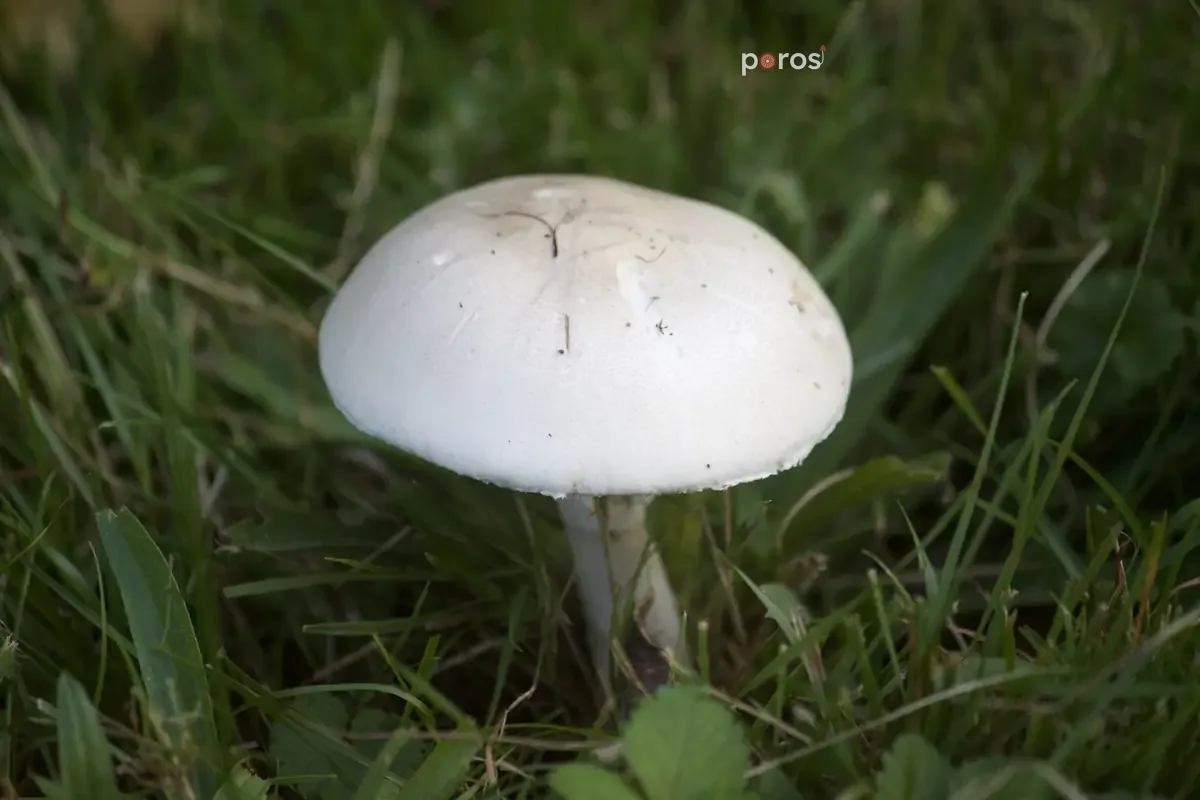 White dapperlingLeucocoprinus leucothitesInedible
-
 Almond mushroomAgaricus subrufescensEdible species
-
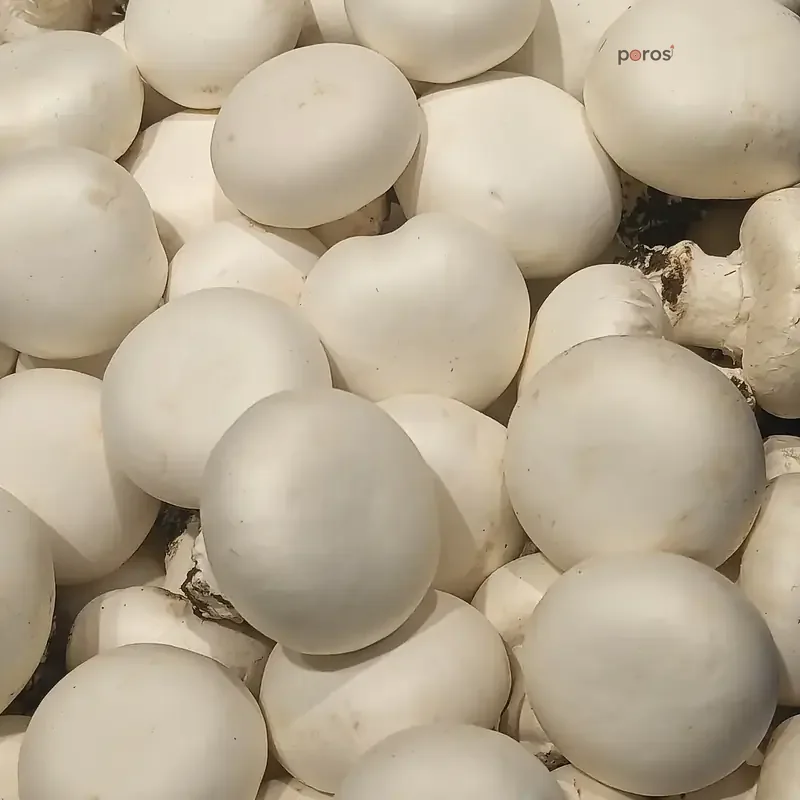 Button mushroomAgaricus bisporusEdible species
-
 Chestnut dapperlingLepiota castaneaDeadly poisonous
-
 Deadly dapperlingLepiota brunneoincarnataDeadly poisonous
Sources
- Wikipedia (EN): Battarrea phalloides en.wikipedia.org
- iNaturalist: Battarrea phalloides (takson, adlar ve fotoğraflar) inaturalist.org
- GBIF: Battarrea phalloides gbif.org
All sources (5)
- GBIF: Türkiye kayıtları gbif.org
- iNaturalist: Türkiye gözlemleri (araştırma düzeyi) inaturalist.org
Photo credits (15)
- Battarrea phalloides · iNaturalist #151160441 · distinguished_orca · CC BY 4.0
- Battarrea phalloides · iNaturalist #6147843 · naturewatchwidow · CC BY 4.0
- Battarrea phalloides · iNaturalist #67245075 · zhangshen · CC BY 4.0
- Battarrea phalloides · iNaturalist #345461293 · Martjie Fia Fourie · CC BY 4.0
- Battarrea phalloides · iNaturalist #292671452 · dirt_tan949 · CC0
- Battarrea phalloides · iNaturalist #58444431 · Quinn Campbell · CC0
- Battarrea phalloides · iNaturalist #241264756 · June Mire · CC0
- Battarrea phalloides · iNaturalist #101311729 · David Rankin · CC BY 4.0
- Battarrea phalloides · iNaturalist #193599499 · victor laborde · CC BY 4.0
- File:Battarrea phalloides (30539588688).jpg · Lukas from London, England · CC BY-SA 2.0
- File:Battarrea phalloides (43695581114).jpg · Lukas from London, England · CC BY-SA 2.0
- iNaturalist: İstanbul, 27 Apr 2024 · Umut Nuri Erdoğan · CC BY
- iNaturalist: İstanbul, 20 Mar 2024 · Umut Nuri Erdoğan · CC BY
- iNaturalist: İstanbul, 20 Mar 2024 · Umut Nuri Erdoğan · CC BY
- iNaturalist: İstanbul, 21 Feb 2024 · Umut Nuri Erdoğan · CC BY

