
Scaly earthball
Scleroderma verrucosum · Sclerodermataceae

Scleroderma verrucosum, the scaly earthball, is a 2–6 cm yellowish-brown, finely scaly ball sitting on a thick, root-like stem. Its interior is whitish at first but soon turns into a purple-black spore mass. It is confused with puffballs and small truffles, and eating it causes gastrointestinal poisoning. In Turkey GBIF holds 19 records from Erzurum and Istanbul.
Turkish: Scleroderma verrucosum
Last updated: Prepared by the Poros Mantar editorial team4 sources checkedReport a correction
POISONOUS — do not eat.
Scleroderma verrucosum is poisonous. According to sources, eating it causes nausea, vomiting, abdominal pain and sweating within 30 minutes to 3 hours; large amounts have caused dizziness and confusion. No ball-shaped fungus that is not pure white inside should be taken for a puffball. If poisoning is suspected, call 112 (Turkish poison centre UZEM: 114) and keep any leftover mushroom.
Scaly earthball photos
-
© Grzegorz "Spike" Rendchen · CC BY-SA 4.0
-

© Toffel · CC BY-SA 3.0
-

Cross-section© David Whyte · CC BY-SA 4.0
-

Stem© Carminda Santos · CC BY 4.0
-

© Piermario Maculan · CC0
-

Cross-section© Carminda Santos · CC BY 4.0
-

Spore print© David Whyte · CC BY-SA 4.0
-
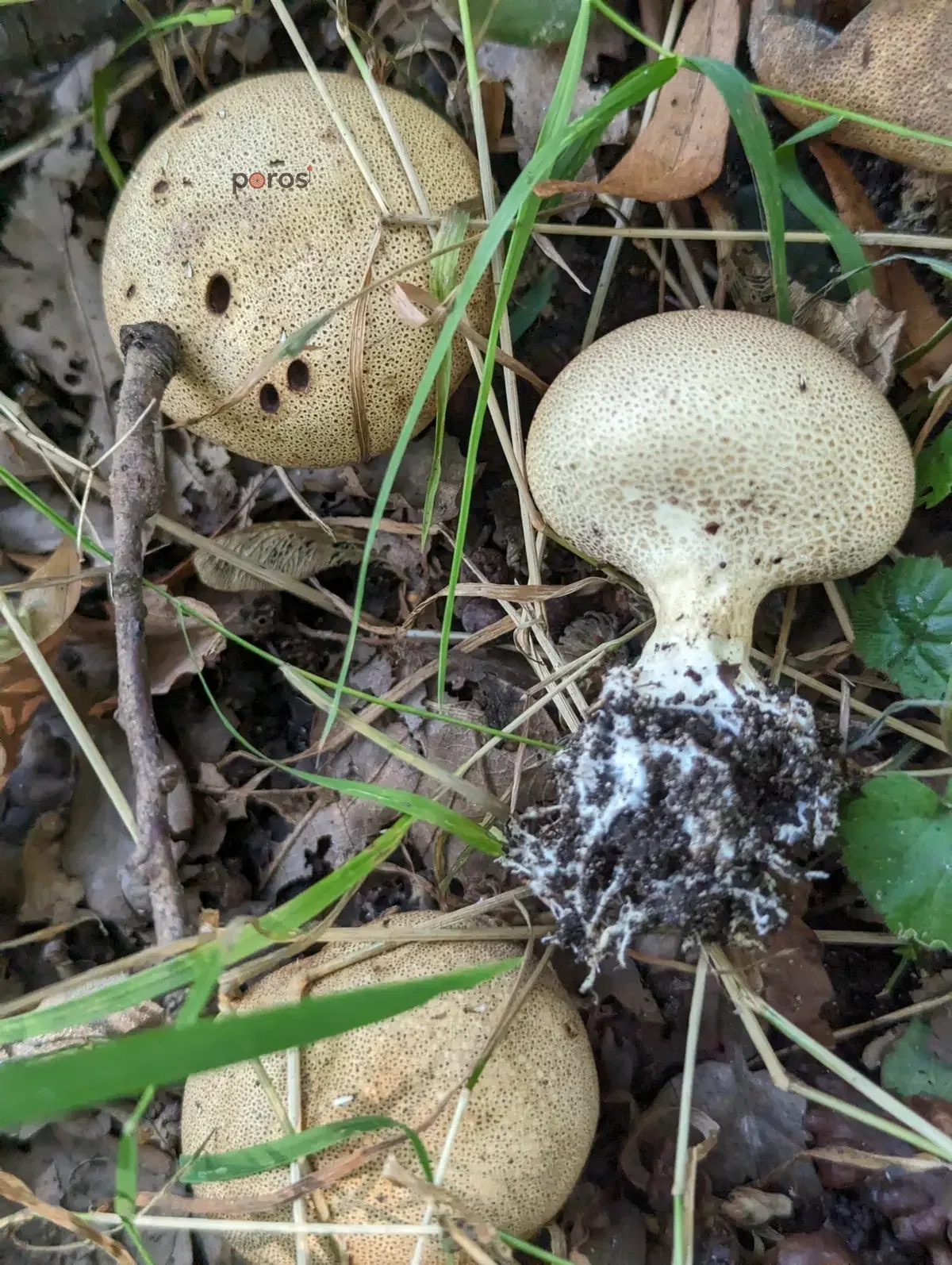
In habitat© Piermario Maculan · CC0
-

Cap© Peter Gabler · CC0
-

Stem© yellowplant · CC BY 4.0


These are licensed records of this species; photos alone are not enough to identify a mushroom.
Is the scaly earthball poisonous?
Yes, the scaly earthball is poisonous and must not be eaten. It causes gastrointestinal poisoning. If poisoning is suspected, call 112 at once (Turkish poison centre: 114) and keep any leftover mushroom.
Is the scaly earthball edible?
No, the scaly earthball must not be eaten; it is poisonous. It can be picked by mistake for common puffball (Lycoperdon perlatum), summer truffle (Tuber aestivum) and desert truffle (Terfezia spp.). If poisoning is suspected, call 112 at once (Turkish poison centre: 114) and keep any leftover mushroom.
How to recognise it
Appearance of scaly earthball
No ring or volva Spore print: Dark brown to black spore powder Faintly metallic or not distinctive.
Where does scaly earthball grow?
Mycorrhizal with broadleaf trees; grows on sandy and bare soil at woodland edges, along paths and in parks and gardens.
Where is scaly earthball found in Turkey?
Our map data holds 19 GBIF records from Turkey (Erzurum, Istanbul) and no research-grade iNaturalist observations. Its relative Scleroderma citrinum is better known in Turkey.
Which months
- Jan1
- Feb0
- Mar0
- Apr0
- May0
- Jun0
- Jul0
- Aug0
- Sep0
- Oct0
- Nov0
- Dec1
1 provinces, 2 observations (GBIF, iNaturalist); months from observation dates. Record density also reflects where observers work.
Latest scaly earthball observations
-
 Illustrative
İstanbul3 Jan 2024 · Mushroom Observer
-
 Illustrative
İstanbul30 Dec 2023 · Mushroom Observer
- See on the map
On "illustrative" cards the image is a photo of the species; the observation photo cannot be shown here because of its licence, but can be seen at the source.
Look-alikes
What is it mistaken for?
Scaly earthball can be mistaken for the species below. Each comparison shows Scaly earthball on the left, the look-alike on the right, and how to tell them apart.
Poisoning risk: Scaly earthball gets picked by people who think they have found one of the edible species below. If even one feature does not match, do not eat it.
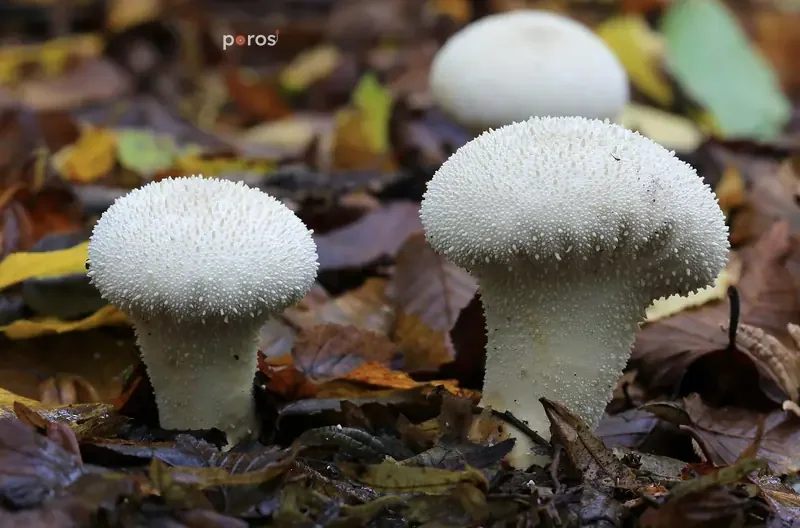
Common puffball Lycoperdon perlatum
How to tell The puffball is pure white and soft inside when young and releases spores through a hole at the top. An earthball's interior turns purple-black early.

Summer truffle Tuber aestivum
How to tell Truffles grow underground, with a black, warty skin, a marbled interior and a strong aroma.

Desert truffle Terfezia spp.
How to tell Desert truffles form underground in steppe, have no stem and a thin smooth skin, and stay pale and marbled inside, never turning to powder. The scaly earthball sits on the soil on a root-like stem and turns into purple-black powder inside.
Other look-alikes (1)
 Poisonous
not Scaly earthball
Common earthball Scleroderma citrinum
The common earthball has a thick, coarsely scaled skin and almost no stem.
Scaly earthball and its look-alikes compared
| Species | Status | Underside | Spore print | Season |
|---|---|---|---|---|
| Scaly earthballScleroderma verrucosum | Poisonous | Interior (gleba) whitish grey when young, then purple-black and powdery | Dark brown to black spore powder | Jul–Nov |
| Common puffballLycoperdon perlatum | Edible species | No gills or pores | Olive-brown powder | Aug–Jan |
| Common earthballScleroderma citrinum | Poisonous | No gills or pores | Olive-brown to blackish brown (as a powder) | Mar, Aug–Nov |
| Summer truffleTuber aestivum | Edible species | The interior goes from whitish to pale brown, beige or hazel, marbled with fine, white, branching veins | Spores form inside, in sacs with a net pattern | May–Dec |
| Desert truffleTerfezia spp. | Edible species | The inside (gleba) is cream, pale pink or pale brown, marbled with fine pale veins | None; spores stay in asci | Mar–May |
The table is compiled from each species page. The status column is a guide only; do not eat a wild mushroom unless an expert has seen it in person. Compare look-alikes side by side
Frequently asked questions
Is the scaly earthball poisonous?
Yes, the scaly earthball is poisonous and must not be eaten. It causes gastrointestinal poisoning. If poisoning is suspected, call 112 at once (Turkish poison centre: 114) and keep any leftover mushroom.
Is the scaly earthball edible?
No, the scaly earthball must not be eaten; it is poisonous. It can be picked by mistake for common puffball (Lycoperdon perlatum), summer truffle (Tuber aestivum) and desert truffle (Terfezia spp.). If poisoning is suspected, call 112 at once (Turkish poison centre: 114) and keep any leftover mushroom.
How do you tell it from a puffball?
Cut it in half: a puffball is pure white and soft throughout. This species turns purple-black inside early, has a firmer skin and a thick stem.
Is it found in Turkey?
Yes. GBIF holds 19 records from Erzurum and Istanbul.
How does it differ from the common earthball?
Its skin is thinner and finely scaled, with a distinct root-like stem. The common earthball has a thick, coarsely scaled skin.
When do symptoms start?
According to sources within 30 minutes to 3 hours. If in doubt, call 112.
Can it be mistaken for a truffle?
Yes, especially young, half-buried specimens. Truffles grow underground with a marbled, strongly scented interior; an earthball is plain purple-black inside.
Where does it grow?
On sandy and bare soil at woodland and path edges, in parks and gardens.
When is scaly earthball season in Turkey?
In our calendar, scaly earthball season runs Jul–Nov. Fruits from July to November, mostly in late summer and autumn.
Where does scaly earthball grow?
Mycorrhizal with broadleaf trees; grows on sandy and bare soil at woodland edges, along paths and in parks and gardens.
Where is scaly earthball found in Turkey?
Our map data holds 19 GBIF records from Turkey (Erzurum, Istanbul) and no research-grade iNaturalist observations. Its relative Scleroderma citrinum is better known in Turkey.
What can scaly earthball be confused with?
Scaly earthball can be confused with common puffball (Lycoperdon perlatum, edible species), common earthball (Scleroderma citrinum, poisonous), summer truffle (Tuber aestivum, edible species) and desert truffle (Terfezia spp., edible species). Look-alikes are compared on this page.
What is scaly earthball called in Turkish?
In Turkish, scaly earthball (Scleroderma verrucosum) is called Scleroderma verrucosum.
Related species
-
Common earthballScleroderma citrinumPoisonous
-
 Cinnamon bracketHapalopilus rutilansPoisonous
-
 Common ink capCoprinopsis atramentariaPoisonous
-
 Devil’s boleteRubroboletus satanasPoisonous
-
 Eastern jack-o’-lanternOmphalotus illudensPoisonous
-
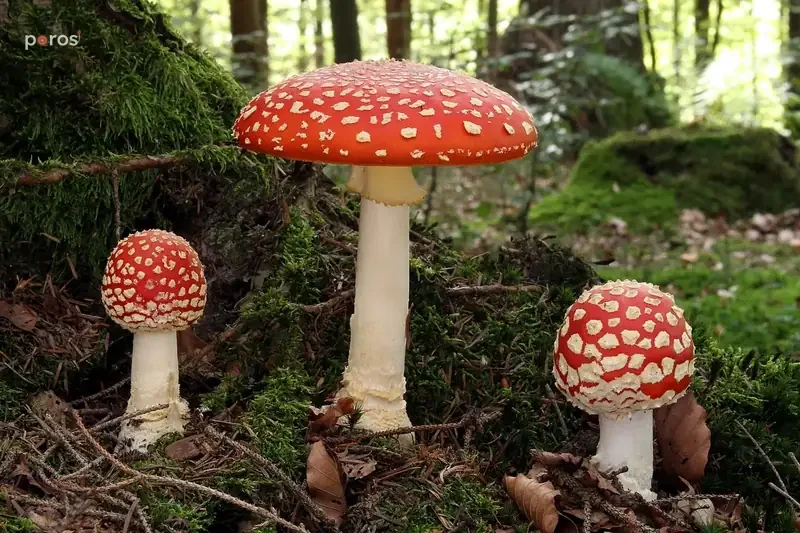 Fly agaricAmanita muscariaPoisonous
-
 Freckled dapperlingEchinoderma asperumPoisonous
-
 Ghost fungusOmphalotus nidiformisPoisonous
Sources
- Wikipedia (EN): Scleroderma verrucosum en.wikipedia.org
- First Nature: Scleroderma verrucosum, Scaly Earthball first-nature.com
- iNaturalist: Scleroderma verrucosum inaturalist.org
All sources (4)
- GBIF: Türkiye kayıtları gbif.org
Photo credits (10)
- File:Scleroderma verrucosum 01.JPG · Grzegorz "Spike" Rendchen · CC BY-SA 4.0
- File:Scleroderma verrucosum 2011.JPG · Toffel · CC BY-SA 3.0
- Scleroderma verrucosum · iNaturalist #66762634 · David Whyte · CC BY-SA 4.0
- Scleroderma verrucosum · iNaturalist #320422271 · Carminda Santos · CC BY 4.0
- Scleroderma verrucosum · iNaturalist #177269390 · Piermario Maculan · CC0
- Scleroderma verrucosum · iNaturalist #320422271 · Carminda Santos · CC BY 4.0
- Scleroderma verrucosum · iNaturalist #75149553 · David Whyte · CC BY-SA 4.0
- Scleroderma verrucosum · iNaturalist #185035250 · Piermario Maculan · CC0
- Scleroderma verrucosum · iNaturalist #63162502 · Peter Gabler · CC0
- Scleroderma verrucosum · iNaturalist #303778799 · yellowplant · CC BY 4.0

