
Split fibrecap (straw fibrecap)
Pseudosperma rimosum · Inocybaceae

Pseudosperma rimosum (formerly Inocybe rimosa), the split fibrecap, has a 3–8 cm conical cap, straw-yellow to brown, radially fibrous and splitting at the margin. It carries muscarine and, when eaten, causes sweating, salivation and a slowed heartbeat. Its conical cap and summer-to-autumn season let it be mistaken for edible species. In Turkey there are GBIF records from Istanbul, Bolu and Isparta.
Also called: straw fibrecap Turkish: Pseudosperma rimosum Synonyms: Inocybe rimosa, Inocybe fastigiata
Last updated: Prepared by the Poros Mantar editorial team3 sources checkedReport a correction
POISONOUS — do not eat.
Pseudosperma rimosum is poisonous. According to sources it carries muscarine; 15 minutes to 2 hours after eating it causes heavy sweating, salivation, tears, blurred vision, abdominal cramps, diarrhoea and a slowed heartbeat. If poisoning is suspected, call 112 (Turkish poison centre UZEM: 114) and keep any leftover mushroom.
Split fibrecap photos
-
© Sigrid Jakob · CC0
-

Cap© Jose Castro · CC BY 4.0
-

Gills© Michal Honskus · CC BY 4.0
-

Stem© Tom Sisan · CC BY-SA 4.0
-
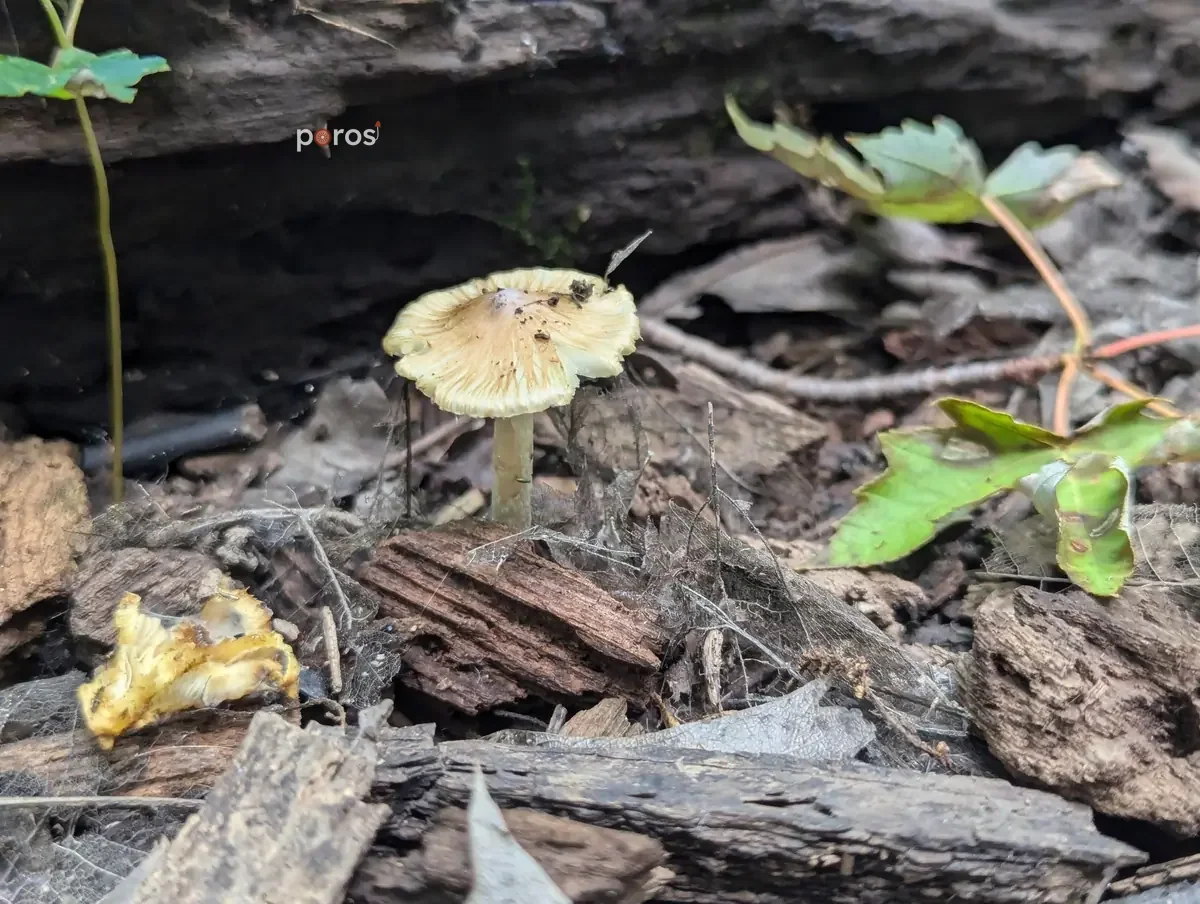
In habitat© Tom Sisan · CC BY-SA 4.0
-

Cap© Michal Honskus · CC BY 4.0
-

© Jerzy Opioła · CC BY-SA 4.0
-

Cap© John Thomlinson · CC BY 4.0
These are licensed records of this species; photos alone are not enough to identify a mushroom.
Are split fibrecaps poisonous?
Yes, split fibrecaps are poisonous and must not be eaten. It carries muscarine. If poisoning is suspected, call 112 at once (Turkish poison centre: 114) and keep any leftover mushroom.
Are split fibrecaps edible?
No, split fibrecaps must not be eaten; they are poisonous. They can be picked by mistake for fairy ring champignon (Marasmius oreades). If poisoning is suspected, call 112 at once (Turkish poison centre: 114) and keep any leftover mushroom.
How to recognise it
Appearance of split fibrecaps
No ring or volva Spore print: Brown Spermatic or earthy.
Where do split fibrecaps grow?
Mycorrhizal with broadleaf and conifer trees; grows at woodland edges, under park trees and along verges, often on calcareous soil.
Where is split fibrecaps found in Turkey?
Our map data holds 10 GBIF records from Turkey (Istanbul, Bolu, Isparta) and two research-grade iNaturalist observations.
Which months
- Jan0
- Feb0
- Mar1
- Apr0
- May0
- Jun2
- Jul1
- Aug1
- Sep0
- Oct1
- Nov0
- Dec1
2 provinces, 7 observations (GBIF, iNaturalist); months from observation dates. Record density also reflects where observers work.
Latest split fibrecap observations
-
 Illustrative
Bolu24 Jun 2026 · iNaturalist
-
 Illustrative
İstanbul25 Dec 2025 · Mushroom Observer
-
 Illustrative
İstanbul5 Oct 2024 · Mushroom Observer
-
 Illustrative
İstanbul28 Mar 2024 · Mushroom Observer
-
 Illustrative
İstanbul19 Jul 1981 · Agaricales externi
-
 Illustrative
Bolu30 Aug 1972 · Agaricales externi
- See on the map
On "illustrative" cards the image is a photo of the species; the observation photo cannot be shown here because of its licence, but can be seen at the source.
Look-alikes
What is it mistaken for?
Split fibrecap can be mistaken for the species below. Each comparison shows Split fibrecap on the left, the look-alike on the right, and how to tell them apart.
Poisoning risk: Split fibrecap gets picked by people who think they have found one of the edible species below. If even one feature does not match, do not eat it.

Fairy ring champignon Marasmius oreades
How to tell The fairy ring champignon forms rings in grass, has a smooth cap and a white spore print.
Other look-alikes (2)
 Deadly
not Split fibrecap
Deadly fibrecap Inosperma erubescens
The deadly fibrecap reddens with age and when damaged; the split fibrecap does not. Both carry muscarine.
 Poisonous
not Split fibrecap
White fibrecap Inocybe geophylla
The white fibrecap is smaller and silky white; it also carries muscarine.
Split fibrecap and its look-alikes compared
| Species | Status | Underside | Spore print | Season |
|---|---|---|---|---|
| Split fibrecapPseudosperma rimosum | Poisonous | Crowded gills, pale olive-grey when young, then olive-brown | Brown | Jun–Nov |
| Deadly fibrecapInosperma erubescens | Deadly poisonous | Reddish-pink, adnexed | Brown | Apr–Jul |
| Fairy ring champignonMarasmius oreades | Edible species | Gills widely spaced, thick and whitish to cream, free or only just touching the stem, with short gills in between | White to pale cream | Apr–May, Sep–Dec |
| White fibrecapInocybe geophylla | Poisonous | Crowded gills, pale grey-cream when young, later earthy brown | Earth brown | Jul–Nov |
The table is compiled from each species page. The status column is a guide only; do not eat a wild mushroom unless an expert has seen it in person. Compare look-alikes side by side
Frequently asked questions
Are split fibrecaps poisonous?
Yes, split fibrecaps are poisonous and must not be eaten. It carries muscarine. If poisoning is suspected, call 112 at once (Turkish poison centre: 114) and keep any leftover mushroom.
Are split fibrecaps edible?
No, split fibrecaps must not be eaten; they are poisonous. They can be picked by mistake for fairy ring champignon (Marasmius oreades). If poisoning is suspected, call 112 at once (Turkish poison centre: 114) and keep any leftover mushroom.
Is it the same as Inocybe rimosa?
Yes. Inocybe rimosa and Inocybe fastigiata are older names of the same species, now placed in Pseudosperma.
Is it found in Turkey?
Yes. GBIF holds 10 records from Istanbul, Bolu and Isparta.
How do you recognise it?
A sharply conical, straw-yellow to brown, radially fibrous cap that splits at the edge, olive-brown gills and a brown spore print.
When do symptoms start?
According to sources within 15 minutes to 2 hours. If in doubt, call 112.
How does it differ from the deadly fibrecap?
The deadly fibrecap reddens when damaged; this species does not. The distinction does not matter in practice: neither is edible.
When does it appear?
From late June to November; its summer fruiting is a risk for summer foragers.
When is split fibrecap season in Turkey?
In our calendar, split fibrecap season runs Jun–Nov. Fruits from late June to November; a fibrecap that also appears in summer.
Where do split fibrecaps grow?
Mycorrhizal with broadleaf and conifer trees; grows at woodland edges, under park trees and along verges, often on calcareous soil.
Where are split fibrecaps found in Turkey?
Our map data holds 10 GBIF records from Turkey (Istanbul, Bolu, Isparta) and two research-grade iNaturalist observations.
What can the split fibrecap be confused with?
The split fibrecap can be confused with deadly fibrecap (Inosperma erubescens, deadly), fairy ring champignon (Marasmius oreades, edible species) and white fibrecap (Inocybe geophylla, poisonous). Look-alikes are compared on this page.
What is the split fibrecap called in Turkish?
In Turkish, the split fibrecap (Pseudosperma rimosum) is called Pseudosperma rimosum.
Related species
-
White fibrecapInocybe geophyllaPoisonous
-
Deadly fibrecapInosperma erubescensDeadly poisonous
-
 Cinnamon bracketHapalopilus rutilansPoisonous
-
 Common earthballScleroderma citrinumPoisonous
-
 Common ink capCoprinopsis atramentariaPoisonous
-
 Devil’s boleteRubroboletus satanasPoisonous
-
 Eastern jack-o’-lanternOmphalotus illudensPoisonous
-
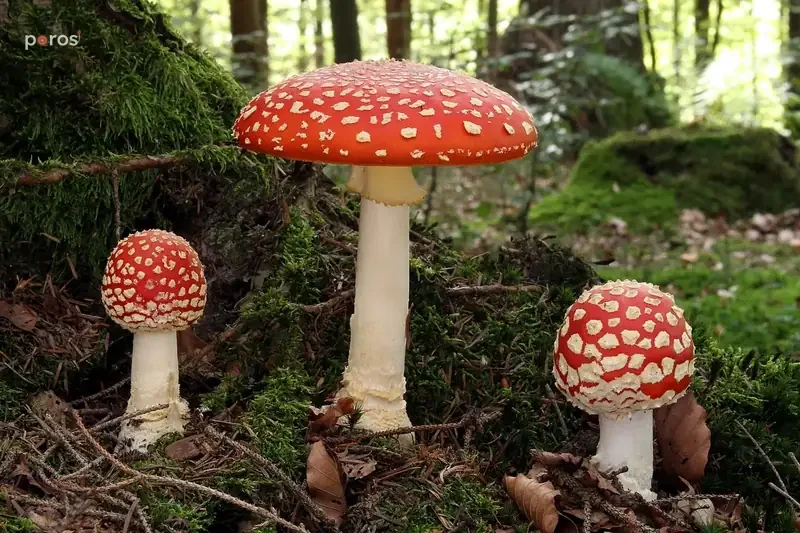 Fly agaricAmanita muscariaPoisonous
Sources
- Wikipedia (EN): Inocybe rimosa en.wikipedia.org
- iNaturalist: Pseudosperma rimosum inaturalist.org
- GBIF: Türkiye kayıtları gbif.org
Photo credits (8)
- Pseudosperma rimosum · iNaturalist #89270075 · Sigrid Jakob · CC0
- Pseudosperma rimosum · iNaturalist #246897181 · Jose Castro · CC BY 4.0
- Pseudosperma rimosum · iNaturalist #249481736 · Michal Honskus · CC BY 4.0
- Pseudosperma rimosum · iNaturalist #229306303 · Tom Sisan · CC BY-SA 4.0
- Pseudosperma rimosum · iNaturalist #229306303 · Tom Sisan · CC BY-SA 4.0
- Pseudosperma rimosum · iNaturalist #249481736 · Michal Honskus · CC BY 4.0
- File:Pseudosperma rimosum a3 (1).jpg · Jerzy Opioła · CC BY-SA 4.0
- Pseudosperma rimosum · iNaturalist #353017802 · John Thomlinson · CC BY 4.0
