
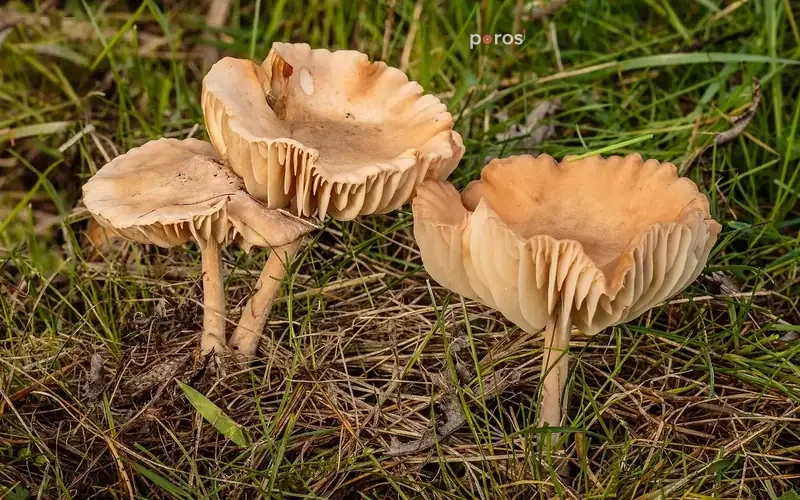


Fairy ring champignon
Marasmius oreades · Marasmiaceae
The fairy ring champignon (Marasmius oreades) is a small tan to cream mushroom of lawns and pastures that often grows in rings, with widely spaced gills and a tough, bendy stem.
Last updated: Prepared by the Poros Mantar editorial team10 sources checkedReport a correction
The fairy ring champignon (Marasmius oreades) is a small tan to cream mushroom of lawns and pastures that often grows in rings, with widely spaced gills and a tough, bendy stem. It is a well-known edible, but it shares lawns with the poisonous white funnels (Clitocybe rivulosa, C. dealbata), which can be confused with it.
Also called: Scotch bonnet, fairy ring mushroom Turkish: Mıhbaşı mantarı, mıh başı mantarı, mıh tepesi, mıhlıca, mıhcık, cincile Synonyms: Agaricus oreades
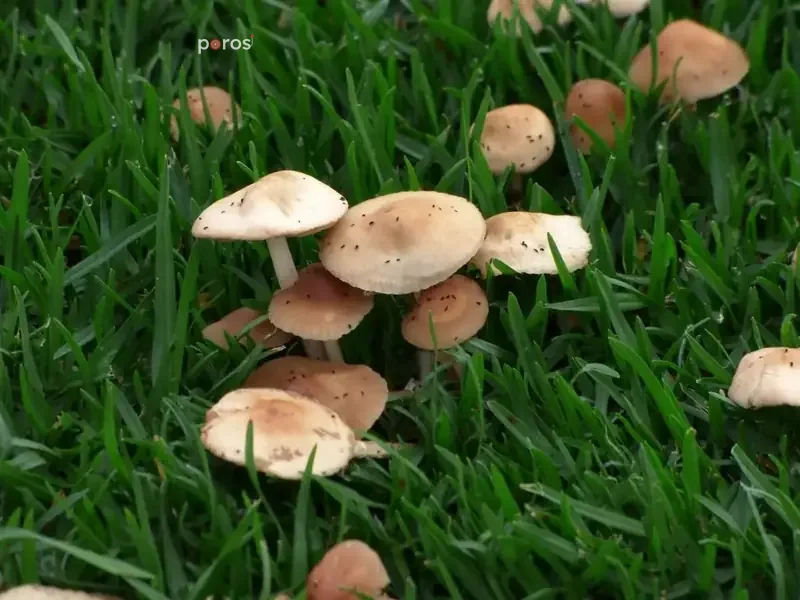
Local names of the fairy ring champignon
The fairy ring champignon (Marasmius oreades) is sold and known locally as mıh tepesi, mıhlıca and mıhcık; in Kastamonu it is reportedly called cincile. The name refers to the bump in the cap centre, which looks like a nail head (mıh).
All these names mean the same species. But small white funnel mushrooms (Clitocybe rivulosa, C. dealbata) grow in the same lawns and cause muscarine poisoning, which can be dangerous; decide by checking each mushroom's features, not the name.
Picking, drying and cooking
The stem of the fairy ring champignon is tough and fibrous, so only the caps are used. Its thin flesh dries easily and keeps well dried; it softens again when soaked. Sautéed in butter, with eggs, in soups and sauces are the most common uses.
When picking, check three signs on every mushroom: distant, thick gills; a pale brown cap with a central bump; and a flexible stem that bends without snapping. If all three are not there, set it aside.
How to recognise it
Fairy ring champignon, part by part
No ring or volva Spore print: White to pale cream Pleasant, faintly of almonds or fresh-cut grass.


When and where
Apr–May, Sep–Dec
- Jan
- Feb
- Mar
- Aprin season
- Mayin season
- Jun
- Jul
- Aug
- Sepin season
- Octin season
- Novin season
- Decin season
The fairy ring champignon comes up in grassland after rain; our records cluster in October, November and December, with a few in spring and September.
Type Edible
In season AprilMaySeptemberOctoberNovemberDecember
Colour Brown
Regions Black Sea RegionCentral Anatolia RegionAegean RegionMarmara RegionManisaTrabzonGiresunAnkaraBoluIstanbulKırklareli
Where does fairy ring champignon grow?
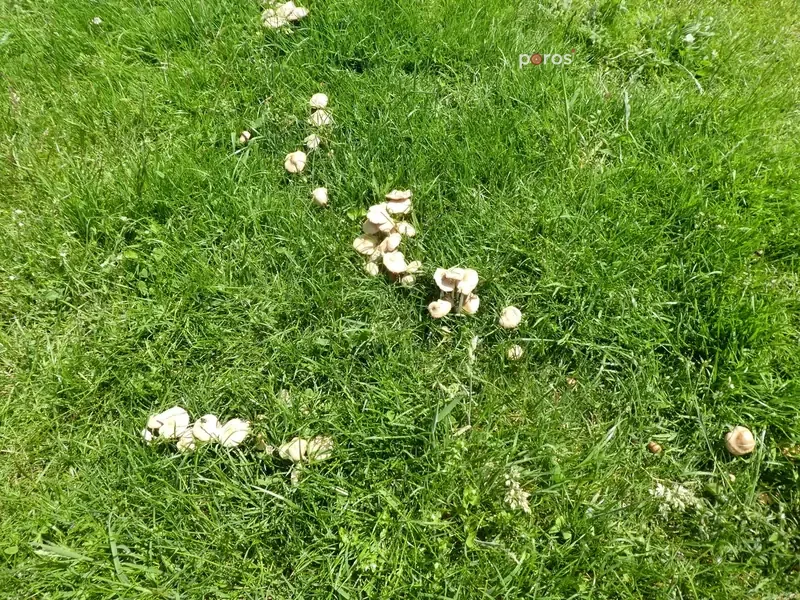
Pastures, meadows, lawns, parks and grassy verges; it is not tied to trees. It usually grows in rings or arcs, in large troops, and can leave a ring of darker green grass.
Where is fairy ring champignon found in Turkey?
Our map data (GBIF and iNaturalist) holds 12 Turkish records: Istanbul, Bolu, Manisa, Giresun, Kırklareli, Ankara and Trabzon. The species is common in grassland but under-recorded.
Which months
- Jan0
- Feb0
- Mar0
- Apr1
- May1
- Jun0
- Jul0
- Aug0
- Sep1
- Oct3
- Nov3
- Dec3
7 provinces, 12 observations (GBIF, iNaturalist); months from observation dates. Record density also reflects where observers work.
Latest fairy ring champignon observations
-
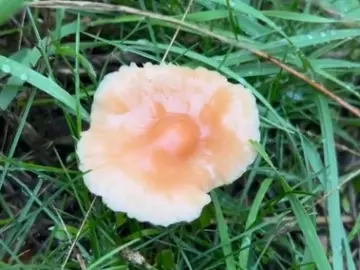 Giresun5 Nov 2025 · iNaturalist© no rights reserved · CC0
-
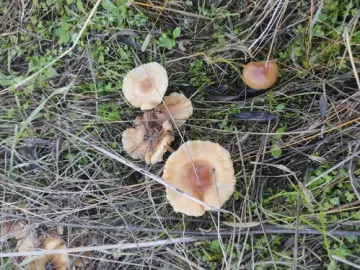 Manisa18 Dec 2023 · iNaturalist© Umut Nuri Erdoğan · CC BY
-
 Illustrative
Bolu29 Oct 2026 · iNaturalist
-
 Illustrative
İstanbul29 Oct 2025 · iNaturalist
-
 Illustrative
İstanbul8 Oct 2025 · iNaturalist
-
 Illustrative
İstanbul8 Nov 2023 · iNaturalist
-
 Illustrative
Bolu17 Apr 2023 · iNaturalist
-
 Illustrative
Kırklareli17 Dec 2022 · iNaturalist
- See on the map
On "illustrative" cards the image is a photo of the species; the observation photo cannot be shown here because of its licence, but can be seen at the source.
Look-alikes
What could it be confused with?
Fairy ring champignon can be mistaken for the species below. Each card shows the look-alike and how it differs from Fairy ring champignon.
 Poisonous
not Fairy ring champignon
Fool's funnel Clitocybe rivulosa
It can grow in the same lawns, even in the same ring. Its cap is whitish and frosted, dished rather than bumped in the centre, and its gills are crowded and run down the stem. It contains muscarine and causes serious poisoning.
 Poisonous
not Fairy ring champignon
Ivory funnel Clitocybe dealbata
A small, white, frosted grassland mushroom with crowded, decurrent gills and a stem that is not tough and bendy like the champignon's. It contains muscarine.
 Deadly
not Fairy ring champignon
Deadly fibrecap Inosperma erubescens
Its cap is conical and fibrous and reddens with age or bruising; its gills are crowded and turn brown, and the spore print is brown. It usually grows under trees.
 Inedible
not Fairy ring champignon
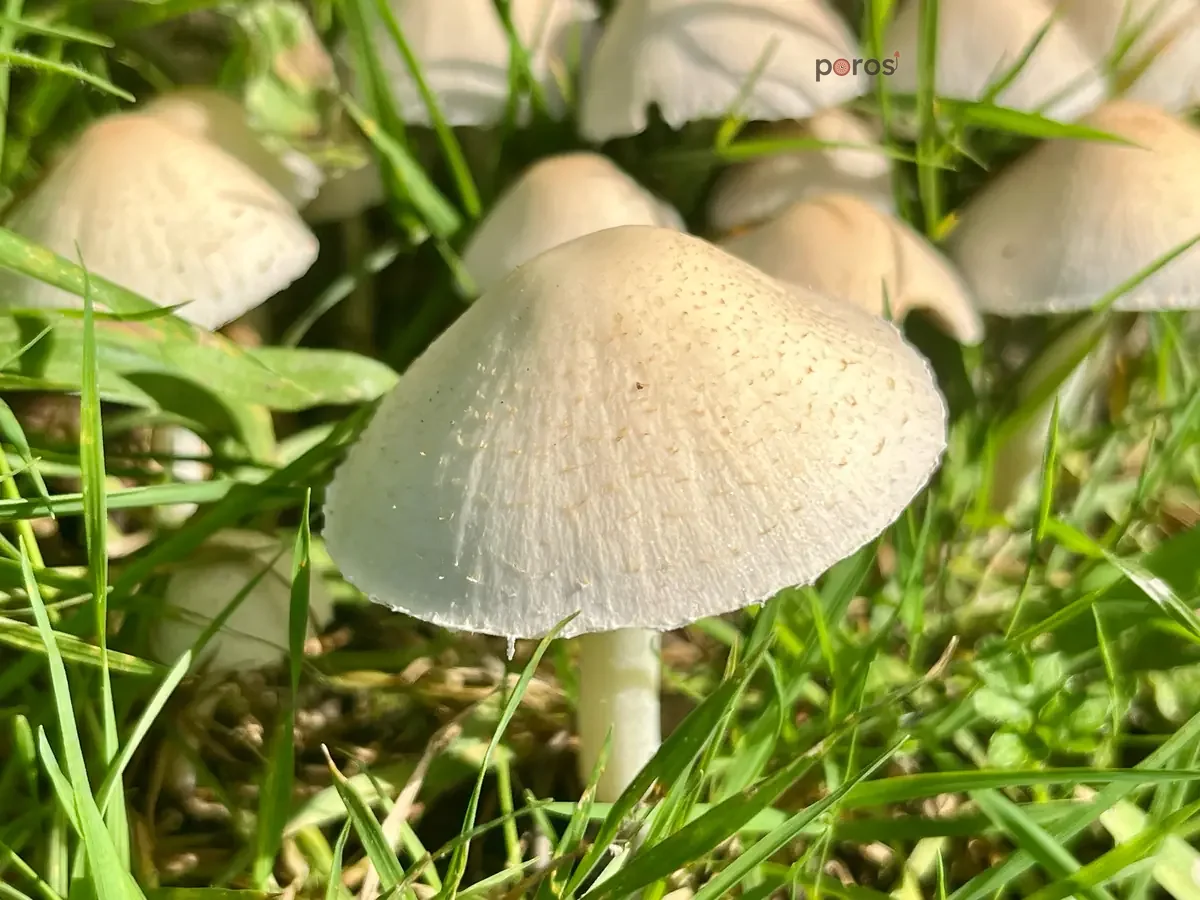
Pale brittlestem Candolleomyces candolleanus
The pale brittlestem's stem snaps easily when bent, its gills are crowded and turn brown, and its spore print is dark purplish brown.
How to cook and eat fairy ring champignon
Safety first. The fairy ring champignon is edible, but the white funnels that grow in the same lawns (Clitocybe rivulosa, C. dealbata) cause muscarine poisoning. Check every single mushroom: widely spaced gills, a bumped cap and a tough, twisting stem must all be present. Do not eat anything you are unsure of; if poisoning is suspected, call poison control and keep any leftover mushroom.
How to prepare it
The stems are tough and fibrous, so cut them off and use only the caps. Traditionally the caps are threaded and dried; they soften again when soaked.
How to cook it
Sauté in butter, cook with eggs or use in soups, stews and sauces.
Source: Wikipedia.
How to store fairy ring champignon
What it contains
Only the caps are used; the tough stems are discarded. The flavour is sweetish and nutty; it dries well and goes into soups, sauces and omelettes. Wild mushrooms are always eaten cooked.
General information, not a health claim.
Grow it, buy it
Fairy ring champignon price list
| Product | Us | Market (sourced, dated) |
|---|---|---|
| Fresh fairy ring champignon | Made to order · ask | — |
| Dried fairy ring champignon | Made to order · ask | — |
We make our fairy ring champignon products in small batches, to order; send a request and we email you the price and delivery date. The market column shows prices seen on other sellers' pages on the date given; they are not our prices and may have changed.
Frequently asked questions
Is the fairy ring champignon edible?
Yes, it is a well-known edible; only the caps are eaten, cooked. The real risk is mixing it up with poisonous white funnels growing in the same lawn.
Is it poisonous?
Not itself. Poisonings come from muscarine-containing species such as Clitocybe rivulosa and C. dealbata slipping in among the picked champignons.
How do you identify it?
Look for all of these together: widely spaced thick gills, a tan cap with a central bump, a tough stem that twists instead of snapping, a white spore print and growth in rings in grass.
When does it appear?
Our Turkish records peak in October, November and December; it also appears after rain in spring and September.
Where does it grow?
In meadows, pastures, parks and garden lawns, without needing trees. Our map data has records from Istanbul, Bolu, Manisa, Giresun, Kırklareli, Ankara and Trabzon.
How is it cooked?
Remove the tough stems and sauté the caps in butter, or add them to soups, sauces and omelettes. They dry well and soften again when soaked.
How much does it cost?
The fairy ring champignon is sometimes sold fresh online in season under the name mıh tepesi, but supply is irregular and prices vary. We do not list current prices.
What is a fairy ring?
It is the ring of mushrooms and darker grass formed as the underground mycelium spreads outward each year. The fairy ring champignon is the best-known ring-forming species.
What is its Turkish name?
Its Turkish name on iNaturalist is mıhbaşı mantarı.
Is mıhlıca edible?
Mıhlıca is a local name for the fairy ring champignon (Marasmius oreades), an edible species; do not confuse it with the poisonous white funnel mushrooms in the same lawns.
When does cincile appear?
Cincile, the fairy ring champignon, appears in meadows and pastures after rain from spring to late autumn; our Turkish records peak in October–December.
Can the fairy ring champignon be dried?
The fairy ring champignon has thin flesh, dries easily and keeps well dried; it softens again when soaked before use.
Is fairy ring champignon edible?
Yes, fairy ring champignon is an edible species. Eat a wild one only after an expert has identified it with certainty: it can be confused with Fool's funnel (Clitocybe rivulosa), ivory funnel (Clitocybe dealbata) and deadly fibrecap (Inosperma erubescens). The fairy ring champignon is edible, but the white funnels that grow in the same lawns (Clitocybe rivulosa, C. dealbata) cause muscarine poisoning. Check every single mushroom: widely spaced gills, a bumped cap and a tough, twisting stem must all be present. Do not eat anything you are unsure of; if poisoning is suspected, call poison control and keep any leftover mushroom.
When is fairy ring champignon season in Turkey?
In our calendar, fairy ring champignon season runs Apr–May, Sep–Dec. The fairy ring champignon comes up in grassland after rain; our records cluster in October, November and December, with a few in spring and September.
Where does fairy ring champignon grow?
Pastures, meadows, lawns, parks and grassy verges; it is not tied to trees. It usually grows in rings or arcs, in large troops, and can leave a ring of darker green grass.
Where is fairy ring champignon found in Turkey?
Our map data (GBIF and iNaturalist) holds 12 Turkish records: Istanbul, Bolu, Manisa, Giresun, Kırklareli, Ankara and Trabzon. The species is common in grassland but under-recorded.
What can fairy ring champignon be confused with?
Fairy ring champignon can be confused with Fool's funnel (Clitocybe rivulosa, poisonous), ivory funnel (Clitocybe dealbata, poisonous), deadly fibrecap (Inosperma erubescens, deadly) and pale brittlestem (Candolleomyces candolleanus, inedible). Look-alikes are compared on this page.
What is fairy ring champignon called in Turkish?
In Turkish, fairy ring champignon (Marasmius oreades) is called Mıhbaşı mantarı; other local names include mıh başı mantarı, mıh tepesi, mıhlıca, mıhcık and cincile.
Related species
-
 Anatolian matsutakeTricholoma anatolicumEdible species
-
 Beefsteak fungusFistulina hepaticaEdible species
-
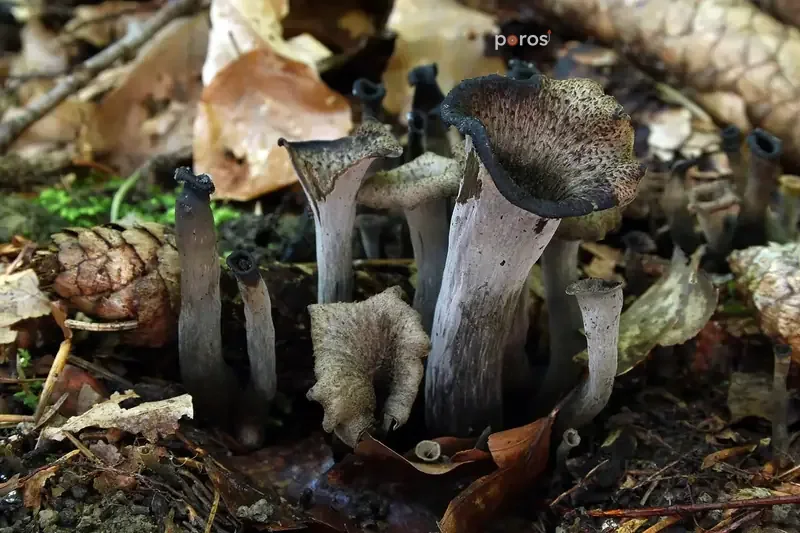 Black trumpetCraterellus cornucopioidesEdible species
-
 Bloody milk capLactarius sanguifluusEdible species
-
 Button mushroomAgaricus bisporusEdible species
-
 Caesar’s mushroomAmanita caesareaEdible species
-
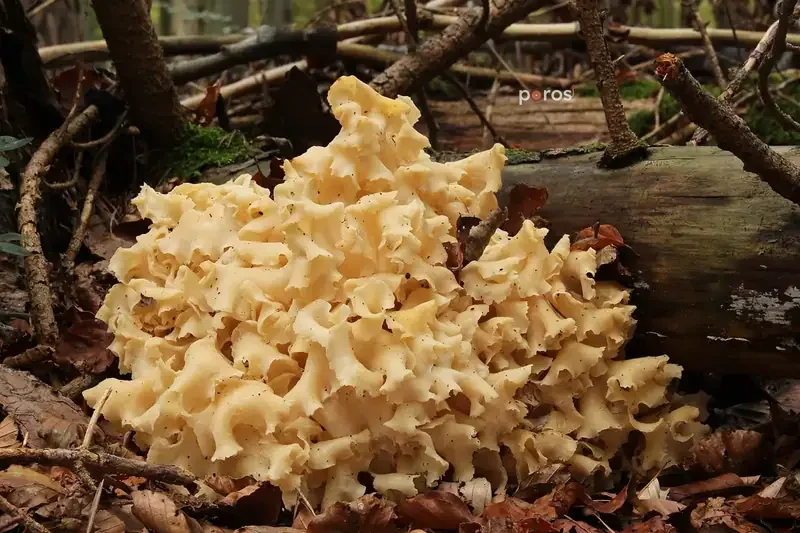 Cauliflower mushroomSparassis crispaEdible species
-
 ChanterelleCantharellus cibariusEdible species
Sources
- Hiltunen ve ark. (2021), Genome Biology and Evolution: Marasmius oreades genomu pubmed.ncbi.nlm.nih.gov
- Adanacıoğlu ve ark. (2014), ANADOLU (Ege Tarımsal Araştırma Enstitüsü): Türkiye makromantar genetik kaynakları I. Ege Bölgesi dergipark.org.tr
- Wikipedia (EN): Marasmius oreades en.wikipedia.org
All sources (10)
- First Nature: Marasmius oreades first-nature.com
- Wikipedia (EN): Clitocybe rivulosa en.wikipedia.org
- iNaturalist: Marasmius oreades (Türkçe ad ve Türkiye gözlemleri) inaturalist.org
- GBIF: Türkiye kayıtları gbif.org
- Saklı Orman: Taze Mıh Tepesi Mantarı (Marasmius oreades; mıhbaşı, mıhlıca, mıhcık adları) sakliorman.com
- Ekşi Sözlük: mıhbaşı mantarı (Kastamonu'da cincile adı) eksisozluk.com
- Mantarlı Yaşam: Mıhbaşı Mantarı (Marasmius oreades) mantarliyasam.com
Photo credits (10)
- File:Weidekringzwam (Marasmius oreades). Locatie, Paddenstoelenreservaat. 31-10-2022. (actm.) 02.jpg · Agnes Monkelbaan · CC BY-SA 4.0
- Marasmius oreades · iNaturalist #321956296 · Peter Chen 2.0 · CC BY 4.0
- Marasmius oreades · iNaturalist #47868416 · Thomas Nataprawira · CC BY 4.0
- Marasmius oreades · iNaturalist #27825408 · kitbeard · CC BY 4.0
- File:Michigan Marasmius oreades black background.jpg · Alan Rockefeller · CC BY 4.0
- Marasmius oreades · iNaturalist #47868416 · Thomas Nataprawira · CC BY 4.0
- Marasmius oreades · iNaturalist #291434650 · Альбина · CC BY 4.0
- File:Michigan Marasmius oreades.jpg · Alan Rockefeller · CC BY 4.0
- iNaturalist: Giresun, 5 Nov 2025 · no rights reserved · CC0
- iNaturalist: Manisa, 18 Dec 2023 · Umut Nuri Erdoğan · CC BY


