
White fibrecap (earthy inocybe)
Inocybe geophylla · Inocybaceae

Inocybe geophylla, the white fibrecap, is a small fibrecap with a silky white, 1.5–4 cm cap with a pointed umbo and gills that turn earthy brown. It is very common along woodland paths. It carries muscarine and, when eaten, causes sweating, salivation, tears and a slowed heartbeat. Its white colour lets it be confused with small edible white mushrooms. In Turkey GBIF holds 46 records, from Trabzon, Istanbul and Muğla.
Also called: earthy inocybe Turkish: Inocybe geophylla
Last updated: Prepared by the Poros Mantar editorial team4 sources checkedReport a correction
POISONOUS — do not eat.
Inocybe geophylla is poisonous. According to sources it carries muscarine; 15 minutes to 2 hours after eating it causes heavy sweating, salivation, tears, pinpoint pupils, abdominal cramps and a slowed heartbeat. No small white mushroom with a brown spore print should be picked. If poisoning is suspected, call 112 (Turkish poison centre UZEM: 114) and keep any leftover mushroom.
White fibrecap photos
-
© Matej Frančeškin · CC BY 4.0
-

© Björn Sothmann · CC BY-SA 4.0
-

Gills© Michael Werth · CC0
-

© Piermario Maculan · CC0
-
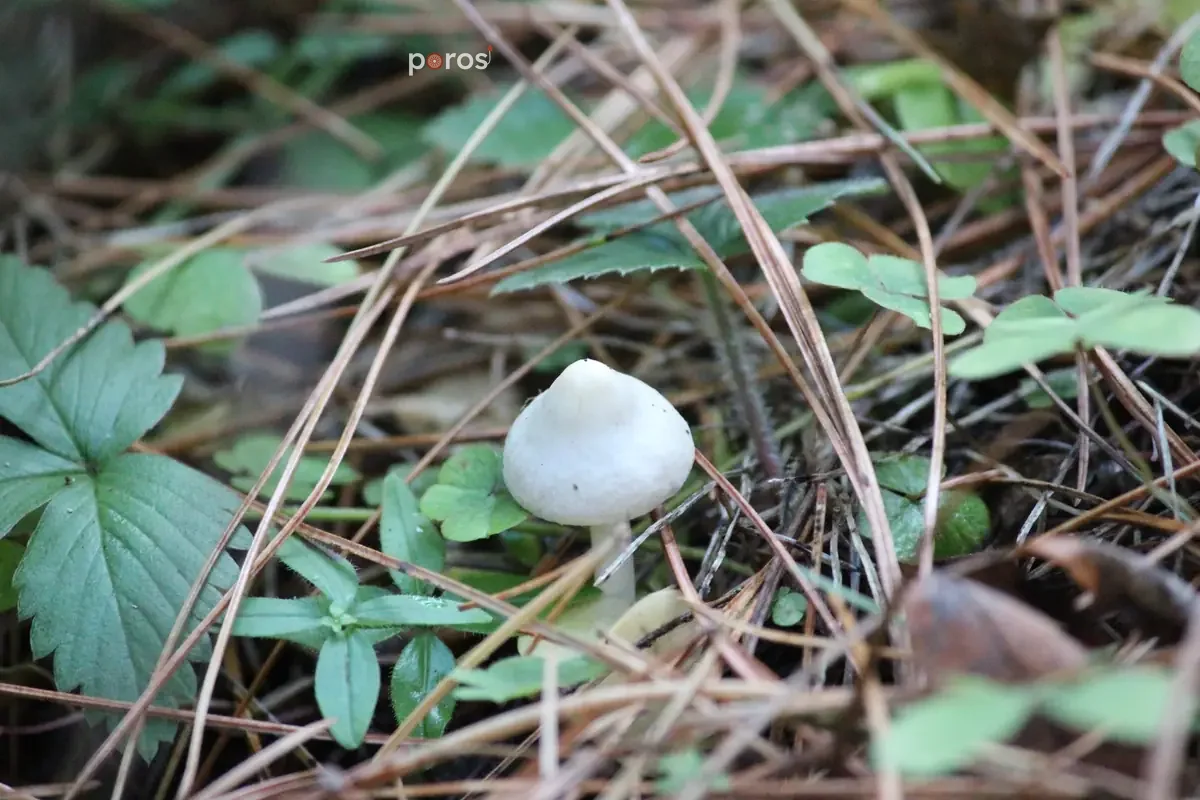
In habitat© Marina Potapova · CC0
-

© Michel Langeveld · CC BY 4.0
-

© Nina Filippova · CC BY 4.0
-

Gills© Piermario Maculan · CC0
-

© empressmoth · CC0
-

Gills© pinonbistro · CC BY-SA 4.0
-

Spore print© Matej Frančeškin · CC BY 4.0


These are licensed records of this species; photos alone are not enough to identify a mushroom.
Are white fibrecaps poisonous?
Yes, white fibrecaps are poisonous and must not be eaten. It carries muscarine and causes sweating, salivation and a slowed heartbeat. If poisoning is suspected, call 112 at once (Turkish poison centre: 114) and keep any leftover mushroom.
Are white fibrecaps edible?
No, white fibrecaps must not be eaten; they are poisonous. They can be picked by mistake for fairy ring champignon (Marasmius oreades) and field blewit (Lepista personata). If poisoning is suspected, call 112 at once (Turkish poison centre: 114) and keep any leftover mushroom.
How to recognise it
Appearance of white fibrecaps
No ring or volva Spore print: Earth brown Earthy, spermatic or musty.
When and where
When to find white fibrecaps
Jul–Nov
Fruits from July to November, mostly in autumn.
Type Poisonous
Months seen JulyAugustSeptemberOctoberNovember
Colour White
Regions Black Sea RegionAegean RegionMarmara RegionTrabzonManisaMuğlaBoluIstanbul
Where do white fibrecaps grow?
Mycorrhizal with broadleaf and conifer trees; grows in groups along woodland paths, verges and bare-soiled clearings.
Where is white fibrecaps found in Turkey?
Our map data holds 46 GBIF records from Turkey (Trabzon, Istanbul, Muğla) and four research-grade iNaturalist observations; it appears to be common in Black Sea and Aegean woodland.
Which months
- Jan2
- Feb1
- Mar0
- Apr0
- May0
- Jun0
- Jul0
- Aug0
- Sep0
- Oct4
- Nov0
- Dec5
5 provinces, 12 observations (GBIF, iNaturalist); months from observation dates. Record density also reflects where observers work.
Latest white fibrecap observations
-
 Illustrative
Bolu29 Oct 2026 · iNaturalist
-
 Illustrative
Bolu29 Oct 2026 · iNaturalist
-
 Illustrative
Bolu29 Oct 2026 · iNaturalist
-
 Illustrative
İstanbul25 Dec 2025 · Mushroom Observer
-
 Illustrative
İstanbul6 Dec 2025 · Mushroom Observer
-
 Illustrative
Trabzon26 Oct 2024 · iNaturalist
-
 Illustrative
İstanbul21 Feb 2024 · Mushroom Observer
-
 Illustrative
Manisa17 Jan 2024 · Mushroom Observer
- See on the map
On "illustrative" cards the image is a photo of the species; the observation photo cannot be shown here because of its licence, but can be seen at the source.
Look-alikes
What is it mistaken for?
White fibrecap can be mistaken for the species below. Each comparison shows White fibrecap on the left, the look-alike on the right, and how to tell them apart.
Poisoning risk: White fibrecap gets picked by people who think they have found one of the edible species below. If even one feature does not match, do not eat it.

Fairy ring champignon Marasmius oreades
How to tell The fairy ring champignon grows in grassland, has distant whitish gills and a white spore print.

Field blewit Lepista personata
How to tell The field blewit is much larger and fleshier (cap 6–12 cm), with a pale buff cap, a lilac-tinted stem and a pale pink spore print; it grows in grassland. The white fibrecap is small, with a pointed, silky white or lilac cap and a brown spore print, and it carries muscarine.
Other look-alikes (5)
 Deadly
not White fibrecap
Deadly fibrecap Inosperma erubescens
Its larger relative, which reddens with age and carries even more muscarine.
 Inedible
not White fibrecap
Amethyst deceiver Laccaria amethystina
Confused with the lilac form of the white fibrecap; the amethyst deceiver has distant, thick, deep purple gills and a white spore print.
 Poisonous
not White fibrecap
Lilac bonnet Mycena pura
The lilac bonnet has a pinkish-lilac cap, smells of radish, keeps pale gills and gives a white spore print; it also carries muscarine. In the lilac form of the white fibrecap the gills turn brown and the spore print is brown.
 Poisonous
not White fibrecap
Split fibrecap Pseudosperma rimosum
The white fibrecap is smaller and silky white; it also carries muscarine.
 Psilocybin
not White fibrecap
Liberty cap Psilocybe semilanceata
The liberty cap grows in damp grassland; its cap is sharply conical with a nipple and its spore print is dark purple-brown. Inocybe geophylla has a whitish, silky cap and an earth-brown spore print, and contains muscarine. This confusion is reported in the sources.
White fibrecap and its look-alikes compared
| Species | Status | Underside | Spore print | Season |
|---|---|---|---|---|
| White fibrecapInocybe geophylla | Poisonous | Crowded gills, pale grey-cream when young, later earthy brown | Earth brown | Jul–Nov |
| Fairy ring champignonMarasmius oreades | Edible species | Gills widely spaced, thick and whitish to cream, free or only just touching the stem, with short gills in between | White to pale cream | Apr–May, Sep–Dec |
| Deadly fibrecapInosperma erubescens | Deadly poisonous | Reddish-pink, adnexed | Brown | Apr–Jul |
| Amethyst deceiverLaccaria amethystina | Inedible | Thick, widely spaced, waxy-looking purple gills, lightly dusted with white spores when mature | White | Jan, Jul–Nov |
| Field blewitLepista personata | Edible species | Whitish to pale pinkish cream, close, attached or notched | Pale pink | Oct–Dec |
| Lilac bonnetMycena pura | Poisonous | Adnate, fairly distant, whitish-pinkish gills, with cross-veins between them | White | Jun–Dec |
| Split fibrecapPseudosperma rimosum | Poisonous | Crowded gills, pale olive-grey when young, then olive-brown | Brown | Jun–Nov |
| Liberty capPsilocybe semilanceata | Inedible · legally controlled | 15–27 narrow gills | Deep reddish purple-brown | Sep–Nov |
The table is compiled from each species page. The status column is a guide only; do not eat a wild mushroom unless an expert has seen it in person. Compare look-alikes side by side
Frequently asked questions
Are white fibrecaps poisonous?
Yes, white fibrecaps are poisonous and must not be eaten. It carries muscarine and causes sweating, salivation and a slowed heartbeat. If poisoning is suspected, call 112 at once (Turkish poison centre: 114) and keep any leftover mushroom.
Are white fibrecaps edible?
No, white fibrecaps must not be eaten; they are poisonous. They can be picked by mistake for fairy ring champignon (Marasmius oreades) and field blewit (Lepista personata). If poisoning is suspected, call 112 at once (Turkish poison centre: 114) and keep any leftover mushroom.
Is it found in Turkey?
Yes. GBIF holds 46 records from Trabzon, Istanbul and Muğla.
How do you recognise it?
A small, silky white cap with a pointed centre, browning gills, a brown spore print and an earthy smell.
When do symptoms start?
According to sources within 15 minutes to 2 hours. If in doubt, call 112.
Is the lilac form poisonous too?
Yes. Var. lilacina is a lilac form of the same species and also carries muscarine.
Why does the spore print matter?
Fibrecaps have brown spore prints, which helps separate them from white-spored edible species.
Where does it grow?
In woodland, along paths and tracks, on bare soil near tree roots.
When is white fibrecap season in Turkey?
In our calendar, white fibrecap season runs Jul–Nov. Fruits from July to November, mostly in autumn.
Where do white fibrecaps grow?
Mycorrhizal with broadleaf and conifer trees; grows in groups along woodland paths, verges and bare-soiled clearings.
Where are white fibrecaps found in Turkey?
Our map data holds 46 GBIF records from Turkey (Trabzon, Istanbul, Muğla) and four research-grade iNaturalist observations; it appears to be common in Black Sea and Aegean woodland.
What can the white fibrecap be confused with?
The white fibrecap can be confused with fairy ring champignon (Marasmius oreades, edible species), deadly fibrecap (Inosperma erubescens, deadly), amethyst deceiver (Laccaria amethystina, inedible), field blewit (Lepista personata, edible species), lilac bonnet (Mycena pura, poisonous), split fibrecap (Pseudosperma rimosum, poisonous) and liberty cap (Psilocybe semilanceata, psilocybin). Look-alikes are compared on this page.
What is the white fibrecap called in Turkish?
In Turkish, the white fibrecap (Inocybe geophylla) is called Inocybe geophylla.
Related species
-
Split fibrecapPseudosperma rimosumPoisonous
-
Deadly fibrecapInosperma erubescensDeadly poisonous
-
 Cinnamon bracketHapalopilus rutilansPoisonous
-
 Common earthballScleroderma citrinumPoisonous
-
 Common ink capCoprinopsis atramentariaPoisonous
-
 Devil’s boleteRubroboletus satanasPoisonous
-
 Eastern jack-o’-lanternOmphalotus illudensPoisonous
-
 Fly agaricAmanita muscariaPoisonous
Sources
- Wikipedia (EN): Inocybe geophylla en.wikipedia.org
- First Nature: Inocybe geophylla, White Fibrecap first-nature.com
- iNaturalist: Inocybe geophylla inaturalist.org
All sources (4)
- GBIF: Türkiye kayıtları gbif.org
Photo credits (11)
- File:Inocybe geophylla 447322293.jpg · Matej Frančeškin · CC BY 4.0
- Inocybe geophylla · iNaturalist #62727453 · Björn Sothmann · CC BY-SA 4.0
- Inocybe geophylla · iNaturalist #328865665 · Michael Werth · CC0
- Inocybe geophylla · iNaturalist #326868807 · Piermario Maculan · CC0
- Inocybe geophylla · iNaturalist #184968004 · Marina Potapova · CC0
- Inocybe geophylla · iNaturalist #181406256 · Michel Langeveld · CC BY 4.0
- File:Inocybe geophylla 151378635.jpg · Nina Filippova · CC BY 4.0
- Inocybe geophylla · iNaturalist #326868807 · Piermario Maculan · CC0
- File:Inocybe geophylla 308969793.jpg · empressmoth · CC0
- Inocybe geophylla · iNaturalist #16348042 · pinonbistro · CC BY-SA 4.0
- File:Inocybe geophylla 447872344.jpg · Matej Frančeškin · CC BY 4.0


