
Tiger tricholoma (leopard knight, spotted tricholoma)
Tricholoma pardinum · Tricholomataceae

Tricholoma pardinum, the tiger tricholoma, is a large, fleshy knight with a 5–15 cm whitish cap covered in rings of grey-brown scales. It looks like a good edible mushroom, but in the first half of the 20th century it caused more than a fifth of mushroom poisonings in Switzerland: eating it brings violent vomiting and diarrhoea lasting several days. It is confused with the grey knight (T. terreum) and other grey tricholomas. It has not been recorded in Turkey.
Also called: leopard knight, spotted tricholoma Turkish: Tricholoma pardinum
Last updated: Prepared by the Poros Mantar editorial team5 sources checkedReport a correction
POISONOUS — do not eat.
Tricholoma pardinum is poisonous. According to sources violent nausea, vomiting and diarrhoea begin 15 minutes to 2 hours after the meal and can last several days; temporary rises in liver enzymes have been reported. The toxin has not been firmly identified. If poisoning is suspected, call 112 (Turkish poison centre UZEM: 114) and keep any leftover mushroom.
Tiger tricholoma photos
-
© Daniel Ghyselinck · CC BY 4.0
-

© Alan Rockefeller · CC BY 4.0
-

Gills© Gail A Baker · CC BY 4.0
-

Cap© Sava Krstic (sava) · CC BY-SA 3.0
-

Cap© vuikaan · CC BY 4.0
-

Gills© Arvel Hernandez · CC BY-SA 4.0
-

Stem© Ryane Snow · CC BY-SA 3.0
-
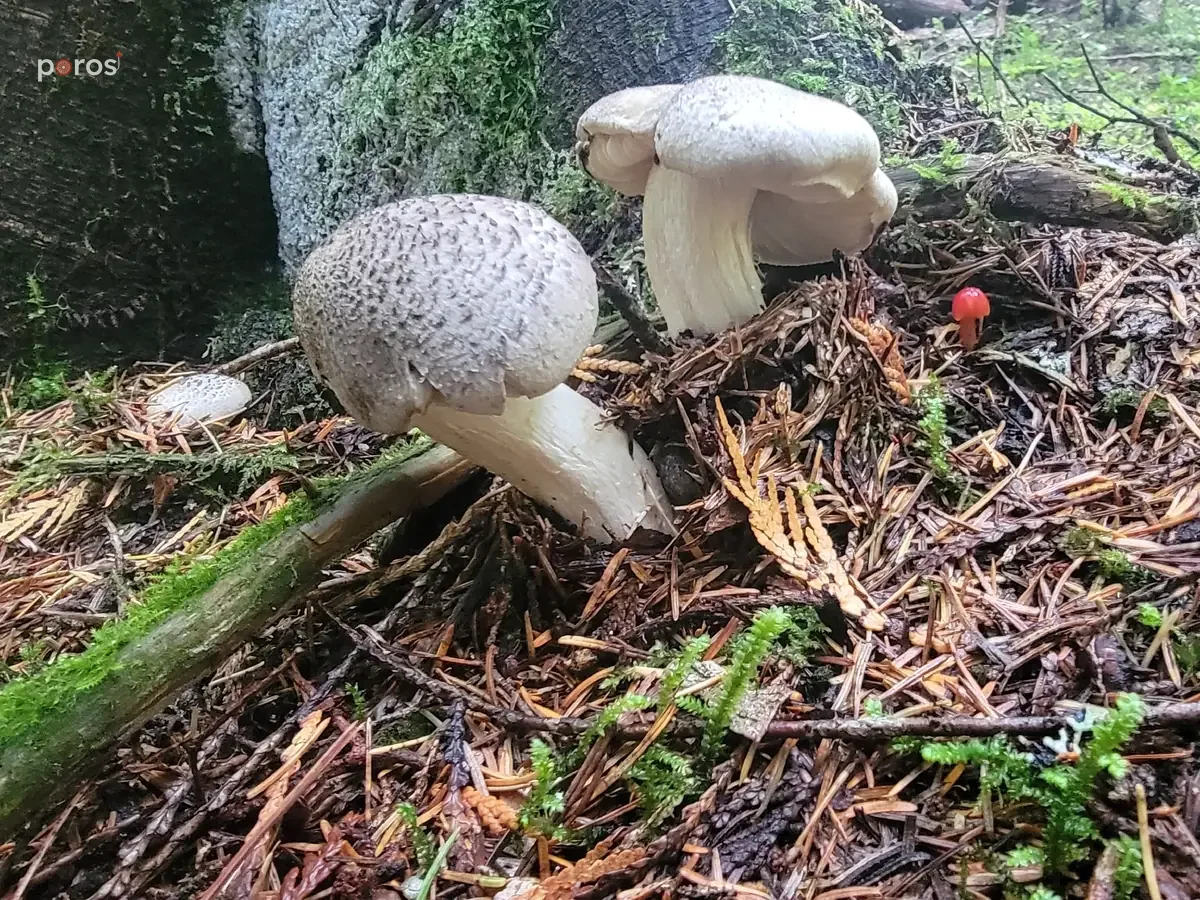
In habitat© Brian Bookhout · CC0
-

Gills© Jerzy Opioła · CC BY-SA 3.0
-

Cap© Jerzy Opioła · CC BY-SA 3.0
-

© Alan Rockefeller · CC BY 4.0


These are licensed records of this species; photos alone are not enough to identify a mushroom.
Is the tiger tricholoma poisonous?
Yes, the tiger tricholoma is poisonous and must not be eaten. It causes violent vomiting and diarrhoea lasting days; recovery usually takes four to six days. In the first half of the 20th century it caused more than a fifth of mushroom poisonings in Switzerland. If poisoning is suspected, call 112 at once (Turkish poison centre: 114) and keep any leftover mushroom.
Is the tiger tricholoma edible?
No, the tiger tricholoma must not be eaten; it is poisonous. It can be picked by mistake for march mushroom (Hygrophorus marzuolus). If poisoning is suspected, call 112 at once (Turkish poison centre: 114) and keep any leftover mushroom.
How to recognise it
Appearance of tiger tricholoma
No ring or volva Spore print: White Mealy.
Where does tiger tricholoma grow?
Mycorrhizal with beech, spruce and fir; grows in mountain forests, mostly on calcareous soil.
In Turkey
There are no Turkish records: our map data (GBIF and iNaturalist) holds no observations from Turkey. The species is known from Europe's mountains (Alps, Jura, Pyrenees) and from North America. Turkey's calcareous mountain forests would suit it, so any large, grey, scaly knight deserves careful checking.
Our map has no observations of tiger tricholoma from Turkey yet.
Look-alikes
What is it mistaken for?
Tiger tricholoma can be mistaken for the species below. Each comparison shows Tiger tricholoma on the left, the look-alike on the right, and how to tell them apart.
Poisoning risk: Tiger tricholoma gets picked by people who think they have found one of the edible species below. If even one feature does not match, do not eat it.
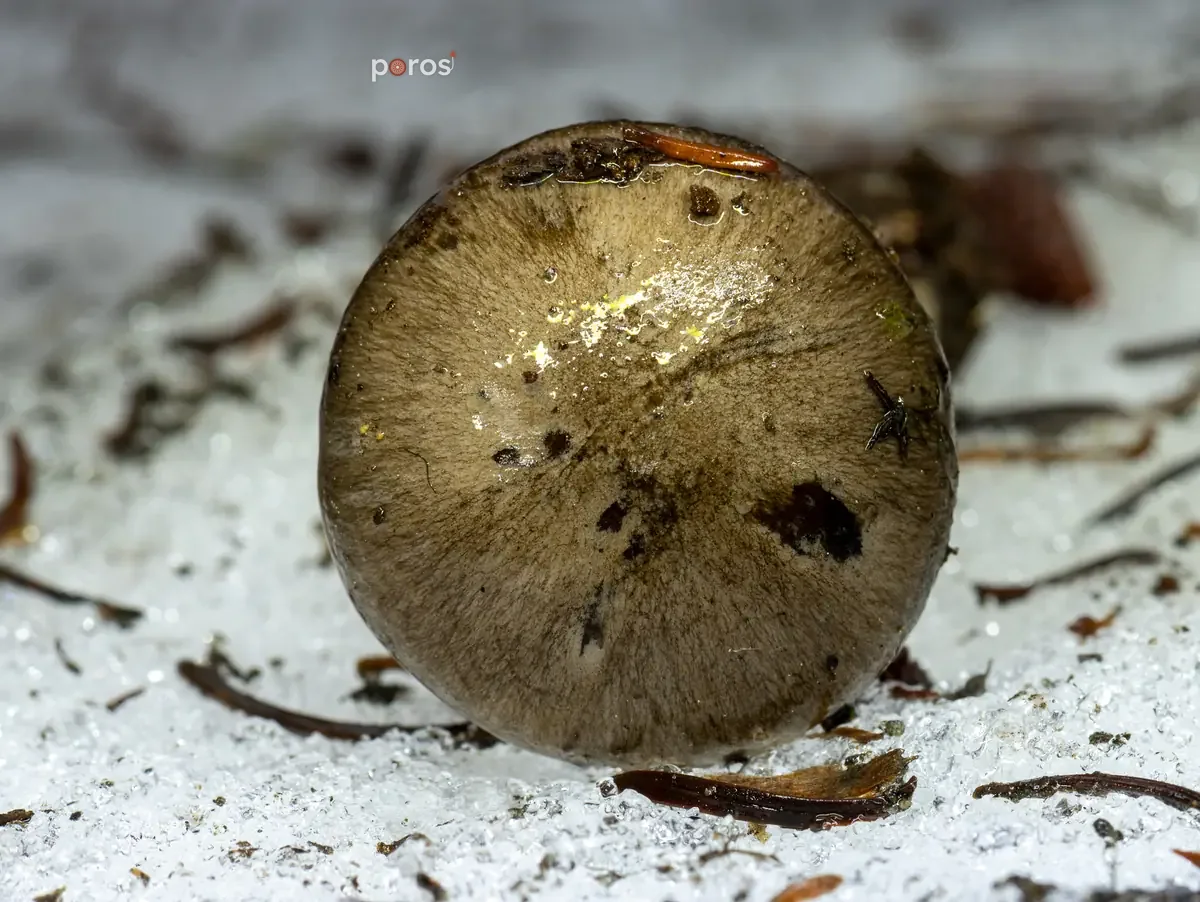
March mushroom Hygrophorus marzuolus
How to tell The March mushroom fruits in spring as the snow melts in high mountain forests; its grey-black cap is smooth, sticky and scaleless, with broad, widely spaced gills. Tricholoma pardinum fruits in autumn, has rings of scales on the cap, crowded gills and a mealy smell.
Other look-alikes (3)
 Inedible
not Tiger tricholoma
Grey knight Tricholoma terreum
The grey knight is far smaller (cap 3–7 cm), with a dark grey, felty cap, thin flesh and no strong mealy smell; it grows under pine.
 Inedible
not Tiger tricholoma
Clouded funnel Clitocybe nebularis
The clouded agaric has a smooth, scaleless ash-grey cap and decurrent gills.
 Poisonous
not Tiger tricholoma
Ashen knight Tricholoma virgatum
Its cap is conical, silvery grey and radially streaked, with a hot, bitter taste; also poisonous.
Tiger tricholoma and its look-alikes compared
| Species | Status | Underside | Spore print | Season |
|---|---|---|---|---|
| Tiger tricholomaTricholoma pardinum | Poisonous | Notched, crowded, whitish-cream gills, sometimes with yellowish-greenish tints, which may weep droplets | White | Aug–Nov |
| Grey knightTricholoma terreum | Inedible | White to pale grey, fairly distant gills, notched where they meet the stem | White | Oct–Mar |
| Clouded funnelClitocybe nebularis | Inedible | Gills crowded, cream to pale yellowish, slightly decurrent and easily scraped off with a finger | Cream to pale yellow | Oct–Jan |
| March mushroomHygrophorus marzuolus | Edible species | Widely spaced, thick and waxy | White | Feb–May |
The table is compiled from each species page. The status column is a guide only; do not eat a wild mushroom unless an expert has seen it in person. Compare look-alikes side by side
Frequently asked questions
Is the tiger tricholoma poisonous?
Yes, the tiger tricholoma is poisonous and must not be eaten. It causes violent vomiting and diarrhoea lasting days; recovery usually takes four to six days. In the first half of the 20th century it caused more than a fifth of mushroom poisonings in Switzerland. If poisoning is suspected, call 112 at once (Turkish poison centre: 114) and keep any leftover mushroom.
Is the tiger tricholoma edible?
No, the tiger tricholoma must not be eaten; it is poisonous. It can be picked by mistake for march mushroom (Hygrophorus marzuolus). If poisoning is suspected, call 112 at once (Turkish poison centre: 114) and keep any leftover mushroom.
How do you tell it from the grey knight?
It is much larger and fleshier, its whitish cap carries rings of scales and it smells mealy. The grey knight is small, dark grey and felty.
Is it found in Turkey?
There are no Turkish records; it is known from Europe's mountains and from North America.
When do symptoms start?
According to sources within 15 minutes to 2 hours. If in doubt, call 112.
Why is it called the tiger tricholoma?
Latin pardinum means leopard-spotted, referring to the rings of dark scales on the cap.
Where does it grow?
Under beech, spruce and fir, mostly in calcareous mountain forest.
Does cooking make it safe?
No, cooked mushrooms poison too.
When is tiger tricholoma season in Turkey?
In our calendar, tiger tricholoma season runs Aug–Nov. Fruits from late August to November, especially in autumn in mountain areas.
Where does tiger tricholoma grow?
Mycorrhizal with beech, spruce and fir; grows in mountain forests, mostly on calcareous soil.
Where is tiger tricholoma found in Turkey?
There are no Turkish records: our map data (GBIF and iNaturalist) holds no observations from Turkey. The species is known from Europe's mountains (Alps, Jura, Pyrenees) and from North America. Turkey's calcareous mountain forests would suit it, so any large, grey, scaly knight deserves careful checking.
What can tiger tricholoma be confused with?
Tiger tricholoma can be confused with grey knight (Tricholoma terreum, inedible), clouded funnel (Clitocybe nebularis, inedible), ashen knight (Tricholoma virgatum, poisonous) and march mushroom (Hygrophorus marzuolus, edible species). Look-alikes are compared on this page.
What is tiger tricholoma called in Turkish?
In Turkish, tiger tricholoma (Tricholoma pardinum) is called Tricholoma pardinum.
Related species
-
 Yellow knightTricholoma equestrePoisonous
-
 Anatolian matsutakeTricholoma anatolicumEdible species
-
 Aniseed funnelClitocybe odoraEdible species
-
 Field blewitLepista personataEdible species
-
 Fool’s funnelClitocybe rivulosaDeadly poisonous
-
Grey knightTricholoma terreumInedible
-
 MatsutakeTricholoma matsutakeEdible species
-
 Tawny funnelParalepista flaccidaInedible
Sources
- Clericuzio ve ark. (2021), Nat Prod Res: Tricholoma pardinum'dan yeni asetilenik metabolitler pubmed.ncbi.nlm.nih.gov
- Wikipedia (EN): Tricholoma pardinum en.wikipedia.org
- iNaturalist: Tricholoma pardinum inaturalist.org
All sources (5)
- GBIF: Türkiye kayıtları gbif.org
- Wikipedia (EN): Hygrophorus marzuolus en.wikipedia.org
Photo credits (11)
- Tricholoma pardinum · iNaturalist #249907535 · Daniel Ghyselinck · CC BY 4.0
- Tricholoma pardinum · iNaturalist #63750191 · Alan Rockefeller · CC BY 4.0
- Tricholoma pardinum · iNaturalist #35244644 · Gail A Baker · CC BY 4.0
- File:Tricholoma pardinum 112561 cropped.jpg · Sava Krstic (sava) · CC BY-SA 3.0
- Tricholoma pardinum · iNaturalist #321374856 · vuikaan · CC BY 4.0
- Tricholoma pardinum · iNaturalist #69163292 · Arvel Hernandez · CC BY-SA 4.0
- File:Tricholoma pardinum gills.jpg · Ryane Snow · CC BY-SA 3.0
- Tricholoma pardinum · iNaturalist #403908055 · Brian Bookhout · CC0
- File:Tricholoma pardinum a1.JPG · Jerzy Opioła · CC BY-SA 3.0
- File:Tricholoma pardinum (1).JPG · Jerzy Opioła · CC BY-SA 3.0
- Tricholoma pardinum · iNaturalist #4748860 · Alan Rockefeller · CC BY 4.0


