
Woolly milkcap (bearded milkcap, woolly milk cap)
Lactarius torminosus · Russulaceae

The woolly milkcap (Lactarius torminosus) is a birch-associated milkcap with a pink to salmon cap and a strikingly woolly, shaggy margin. When broken it oozes white, very acrid milk that does not change colour. Eaten raw or undercooked it causes gastrointestinal poisoning with nausea, vomiting and severe diarrhoea. Its Turkish name contains kanlıca, but it is not the saffron milk cap (L. deliciosus): it has no orange milk and no green stains.
Also called: bearded milkcap, woolly milk cap Turkish: Yünlü kanlıca
Last updated: Prepared by the Poros Mantar editorial team6 sources checkedReport a correction
POISONOUS — do not eat.
The woolly milkcap is poisonous: eaten raw or undercooked it brings on nausea, vomiting and severe diarrhoea within about an hour, and fluid loss can be serious. In northern and eastern Europe it is reportedly eaten after parboiling and salting, but this is not a recommendation; our advice is not to eat it. Because its Turkish name contains kanlıca, it can be mistaken for the saffron milk cap: never pick a white-milked milkcap as kanlıca. If poisoning is suspected, call 112 (Turkish poison centre: 114) and keep any leftover mushroom.
Woolly milkcap photos
-
Cap© Strobilomyces · CC BY-SA 3.0
-

© Татьяна Фирсова · CC0
-

Cap© MichalPL · CC BY-SA 4.0
-

Gills© Lorenz Wenner · CC BY 4.0
-

Gills© Марина Давлетшина · CC BY 4.0
-
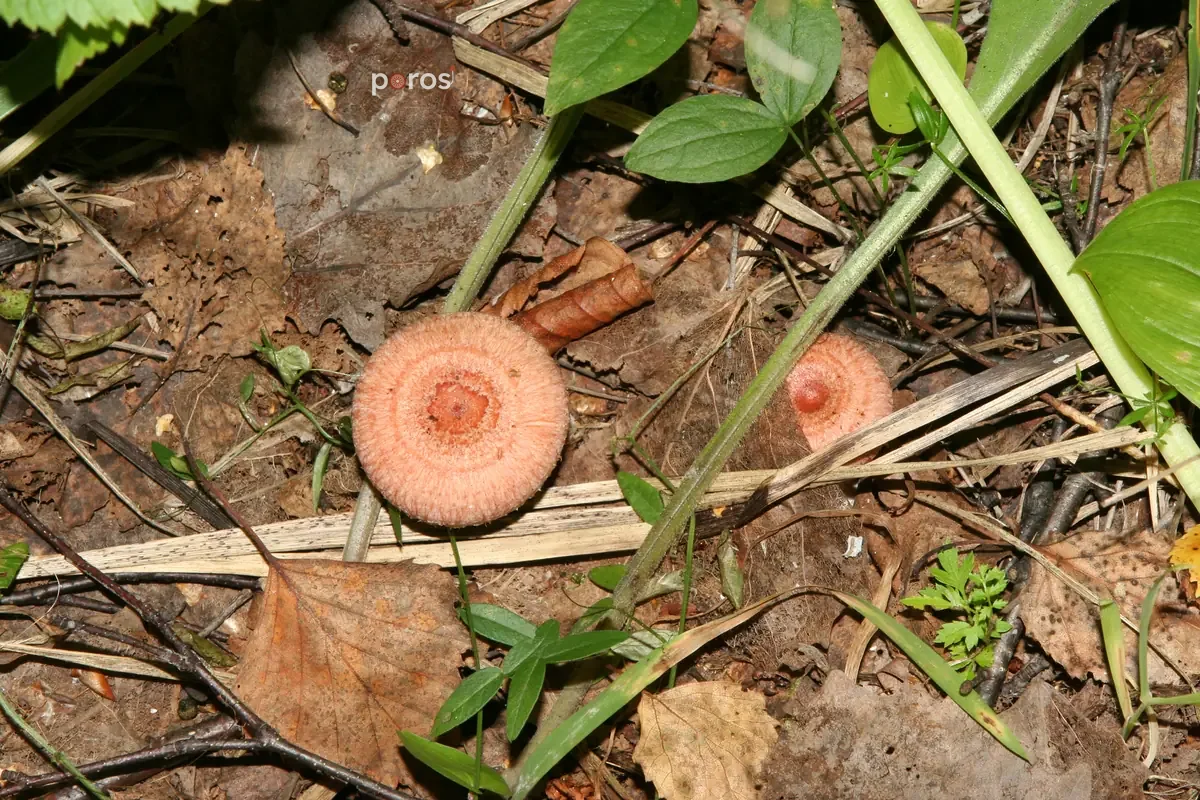
In habitat© Oleg Kosterin · CC BY 4.0
-

Cross-section© D. Rafael S. Fernandes · CC BY 4.0
-

© Jerzy Opioła · CC BY-SA 3.0
-

Gills© Br00k963 · CC BY-SA 4.0
-

Cap© Adrien BENOIT à la GUILLAUME · CC BY-SA 4.0
-

© Adrien BENOIT à la GUILLAUME · CC BY-SA 4.0


These are licensed records of this species; photos alone are not enough to identify a mushroom.
Are woolly milkcaps poisonous?
Yes, woolly milkcaps are poisonous and must not be eaten. Eaten raw or undercooked it causes gastrointestinal poisoning with nausea, vomiting and severe diarrhoea. If poisoning is suspected, call 112 at once (Turkish poison centre: 114) and keep any leftover mushroom.
Are woolly milkcaps edible?
No, woolly milkcaps must not be eaten; they are poisonous. Our advice is not to eat it. It is reportedly eaten in northern and eastern Europe after parboiling and salting, but it poisons when wrongly prepared. They can be picked by mistake for saffron milk cap (Lactarius deliciosus), bloody milk cap (Lactarius sanguifluus) and weeping milk cap (Lactifluus volemus). If poisoning is suspected, call 112 at once (Turkish poison centre: 114) and keep any leftover mushroom.
How to recognise it
Appearance of woolly milkcaps
No ring or volva Spore print: Cream to pale yellowish cream Not distinctive; the milk is very acrid and hot (do not taste it).
When and where
When to find woolly milkcaps
Aug–Nov
The woolly milkcap fruits from August to October in Europe. Its published Turkish record is from late November (Muğla); where winters are mild the season can run late.
Where do woolly milkcaps grow?
Mycorrhizal with birch (Betula), usually on damp, acidic soil at woodland edges and in clearings, singly or in small groups. The Turkish record comes from deciduous and mixed woodland, with birch.
In Turkey
Our map data (GBIF and iNaturalist) holds no Turkish records. The species has been published from Ula in Muğla province (Çiçekli village, with birch, 29.11.2014), where the same study lists it among the toxic species (Çınar Yılmaz and Işıloğlu, 2016, Mugla Journal of Science and Technology). Its Turkish name on iNaturalist is Yünlü Kanlıca (woolly saffron milk cap).
- Muğla
Our map has no observations of woolly milkcaps from Turkey yet.
Look-alikes
What is it mistaken for?
Woolly milkcap can be mistaken for the species below. Each comparison shows Woolly milkcap on the left, the look-alike on the right, and how to tell them apart.
Poisoning risk: Woolly milkcap gets picked by people who think they have found one of the edible species below. If even one feature does not match, do not eat it.
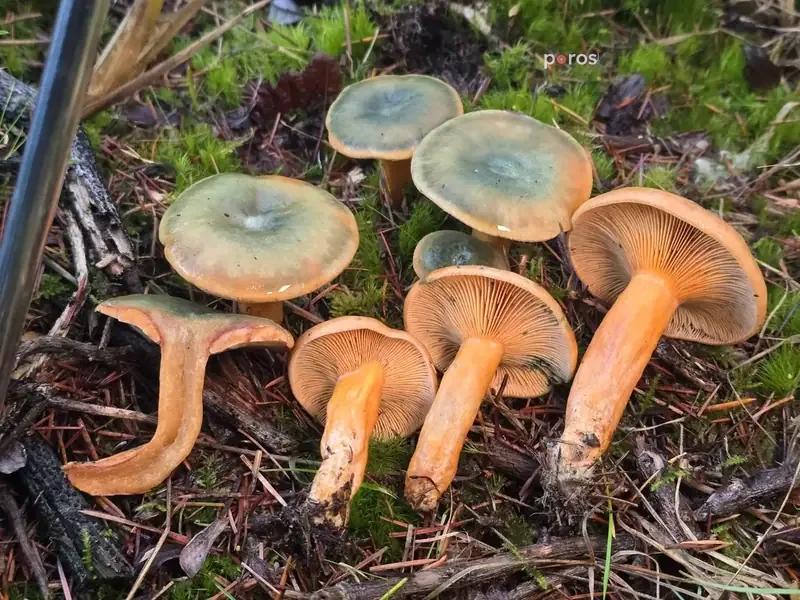
Saffron milk cap Lactarius deliciosus
How to tell The saffron milk cap grows under pine, has carrot-orange milk and stains green where handled; its cap margin is not woolly. The woolly milkcap has white milk and a woolly margin, and grows with birch.

Bloody milk cap Lactarius sanguifluus
How to tell The bloody milk cap has blood-red to purple milk from the start and grows under pine; it has no woolly margin.

Weeping milk cap Lactifluus volemus
How to tell The weeping milk cap has a velvety apricot to tawny cap without a woolly margin; it weeps abundant white, mild milk that turns brown in the air, and it smells fishy. It grows under broadleaf and coniferous trees.
Other look-alikes (6)
 Inedible
not Woolly milkcap
False saffron milkcap Lactarius deterrimus
Grows under spruce and pine; its orange milk turns wine-red within minutes and it greens quickly; the margin is not woolly.
 Inedible
not Woolly milkcap
Salmon milkcap Lactarius salmonicolor
Grows only under fir, has orange milk and a smooth cap margin.
 Poisonous
not Woolly milkcap
Bearded milkcap Lactarius pubescens
Also found under birch with a hairy margin, but paler, whitish cream, with faint or no zoning and smaller spores. They are hard to tell apart; neither should be eaten.
 Inedible
not Woolly milkcap
Fiery milkcap Lactarius pyrogalus
The fiery milkcap is greyish brown, grows under hazel and hornbeam and has a smooth margin; its white milk is also burning-hot.
 Deadly
not Woolly milkcap
Brown roll-rim Paxillus involutus
Its margin is also inrolled and downy, but it is brown, has no milk, and its gills bruise brown and peel easily from the cap.
 Poisonous
not Woolly milkcap
Ugly milkcap Lactarius turpis
Lactarius turpis, also under birch, has a dark olive-brown cap without a woolly margin; it should not be eaten either.
Woolly milkcap and its look-alikes compared
| Species | Status | Underside | Spore print | Season |
|---|---|---|---|---|
| Woolly milkcapLactarius torminosus | Poisonous | Crowded, pale pinkish cream gills, slightly decurrent | Cream to pale yellowish cream | Aug–Nov |
| Saffron milk capLactarius deliciosus | Edible species | Crowded, decurrent orange gills that stain green when handled | Cream to pale pinkish buff | Sep–Dec |
| False saffron milkcapLactarius deterrimus | Inedible | Crowded orange gills, slightly decurrent | Pale pinkish buff | Jan, Aug–Nov |
| Salmon milkcapLactarius salmonicolor | Inedible | Crowded, pale orange gills, slightly decurrent | Pale pinkish cream | Jun, Aug–Nov |
| Bloody milk capLactarius sanguifluus | Edible species | Pinkish to purplish, adnate to slightly decurrent | Buff | Sep–Dec |
| Fiery milkcapLactarius pyrogalus | Inedible | Widely spaced, slightly decurrent gills, yellowish to flesh-coloured, later cinnamon-ochre | Light ochre | Aug–Nov |
| Brown roll-rimPaxillus involutus | Deadly poisonous | Crowded, decurrent gills | Brown | Jun–Nov |
| Ugly milkcapLactarius turpis | Poisonous | Crowded, cream gills that stain brown where handled | Cream | Aug–Nov |
| Weeping milk capLactifluus volemus | Edible species | Crowded, cream to pale yellow gills that stain brown when touched | White | Jun–Sep |
The table is compiled from each species page. The status column is a guide only; do not eat a wild mushroom unless an expert has seen it in person. Compare look-alikes side by side
Frequently asked questions
Are woolly milkcaps poisonous?
Yes, woolly milkcaps are poisonous and must not be eaten. Eaten raw or undercooked it causes gastrointestinal poisoning with nausea, vomiting and severe diarrhoea. If poisoning is suspected, call 112 at once (Turkish poison centre: 114) and keep any leftover mushroom.
Are woolly milkcaps edible?
No, woolly milkcaps must not be eaten; they are poisonous. Our advice is not to eat it. It is reportedly eaten in northern and eastern Europe after parboiling and salting, but it poisons when wrongly prepared. They can be picked by mistake for saffron milk cap (Lactarius deliciosus), bloody milk cap (Lactarius sanguifluus) and weeping milk cap (Lactifluus volemus). If poisoning is suspected, call 112 at once (Turkish poison centre: 114) and keep any leftover mushroom.
How does it differ from the saffron milk cap?
The woolly milkcap has white milk that does not change colour, a woolly margin and grows with birch. The saffron milk cap has orange milk, greens where handled and grows under pine.
When do poisoning symptoms start?
According to sources within about an hour: nausea, vomiting and diarrhoea, usually settling within a few days. If in doubt, call 112.
Why is it called woolly?
Its inrolled cap margin is covered in long, wool-like hairs. Yünlü Kanlıca is the Turkish name iNaturalist gives the species.
Which tree does it grow under?
It forms a mycorrhizal partnership with birch and usually grows beside birch on damp, acidic soil.
When does it appear?
From August to October in Europe; its published Turkish record is from late November.
Where is it found in Turkey?
It has been published from Ula in Muğla province. Our map data (GBIF and iNaturalist) has no Turkish records yet.
When is woolly milkcap season in Turkey?
In our calendar, woolly milkcap season runs Aug–Nov. The woolly milkcap fruits from August to October in Europe. Its published Turkish record is from late November (Muğla); where winters are mild the season can run late.
Where do woolly milkcaps grow?
Mycorrhizal with birch (Betula), usually on damp, acidic soil at woodland edges and in clearings, singly or in small groups. The Turkish record comes from deciduous and mixed woodland, with birch.
Where are woolly milkcaps found in Turkey?
Our map data (GBIF and iNaturalist) holds no Turkish records. The species has been published from Ula in Muğla province (Çiçekli village, with birch, 29.11.2014), where the same study lists it among the toxic species (Çınar Yılmaz and Işıloğlu, 2016, Mugla Journal of Science and Technology). Its Turkish name on iNaturalist is Yünlü Kanlıca (woolly saffron milk cap).
What can the woolly milkcap be confused with?
The woolly milkcap can be confused with saffron milk cap (Lactarius deliciosus, edible species), false saffron milkcap (Lactarius deterrimus, inedible), salmon milkcap (Lactarius salmonicolor, inedible), bloody milk cap (Lactarius sanguifluus, edible species), bearded milkcap (Lactarius pubescens, poisonous), fiery milkcap (Lactarius pyrogalus, inedible), brown roll-rim (Paxillus involutus, deadly), ugly milkcap (Lactarius turpis, poisonous) and weeping milk cap (Lactifluus volemus, edible species). Look-alikes are compared on this page.
What is the woolly milkcap called in Turkish?
In Turkish, the woolly milkcap (Lactarius torminosus) is called Yünlü kanlıca.
Related species
-
 The sickenerRussula emeticaPoisonous
-
Ugly milkcapLactarius turpisPoisonous
-
Bloody milk capLactarius sanguifluusEdible species
-
 Charcoal burnerRussula cyanoxanthaEdible species
-
False saffron milkcapLactarius deterrimusInedible
-
Fiery milkcapLactarius pyrogalusInedible
-
 Green-cracking brittlegillRussula virescensEdible species
-
 Milk-white brittlegillRussula delicaEdible species
Sources
- Çınar Yılmaz ve Işıloğlu (2016), Mugla Journal of Science and Technology, Özel Sayı, s. 19–20: Some Lactarius species from the Aegean region of Turkey (Ege Bölgesi'nde yetişen bazı Lactarius türleri) dergipark.org.tr
- Wikipedia (EN): Lactarius torminosus en.wikipedia.org
- First Nature: Lactarius torminosus, Woolly Milkcap first-nature.com
All sources (6)
- iNaturalist: Lactarius torminosus (Türkçe ad) inaturalist.org
- GBIF: Türkiye kayıtları gbif.org
- Wikipedia (EN): Lactifluus volemus en.wikipedia.org
Photo credits (11)
- File:Lactarius torminosus 041031w.jpg · Strobilomyces · CC BY-SA 3.0
- Lactarius torminosus · iNaturalist #132804038 · Татьяна Фирсова · CC0
- File:Woolly milkcap (Lactarius torminosus), founded in Bibiela, District Tarnowskie Góry, Silesian Voivodeship, Poland, September 2021.jpg · MichalPL · CC BY-SA 4.0
- Lactarius torminosus · iNaturalist #138885437 · Lorenz Wenner · CC BY 4.0
- Lactarius torminosus · iNaturalist #311853107 · Марина Давлетшина · CC BY 4.0
- Lactarius torminosus · iNaturalist #92920919 · Oleg Kosterin · CC BY 4.0
- Lactarius torminosus · iNaturalist #269515262 · D. Rafael S. Fernandes · CC BY 4.0
- File:Lactarius torminosus G2.jpg · Jerzy Opioła · CC BY-SA 3.0
- File:Lactarius torminosus and Lactarius pubescens comparison.jpg · Br00k963 · CC BY-SA 4.0
- File:Lactarius pubescens versus Lactarius torminosus (Haute-Loire, France) 01.jpg · Adrien BENOIT à la GUILLAUME · CC BY-SA 4.0
- File:Lactarius torminosus (Haute-Loire, France).jpg · Adrien BENOIT à la GUILLAUME · CC BY-SA 4.0


