Poplar mushroom (kavak mantarı) in Turkey: a field guide
In Turkey, kavak mantarı covers two species: the oyster mushroom and the poplar fieldcap, Cyclocybe aegerita. How to tell both from a deadly look-alike.
In the wild 8 min read
In Turkey the name kavak mantarı, poplar mushroom, is given to two different mushrooms: the oyster mushroom (Pleurotus ostreatus), which Turkish Wikipedia lists under that name, and the poplar fieldcap (Cyclocybe aegerita), a brown-capped, ringed mushroom that grows in clusters on poplar and willow stumps. Both are edible when correctly identified and cooked. But the deadly funeral bell also grows in clusters on wood with a brown cap and a ring, so wild poplar mushrooms must never be eaten without certain identification.
Which mushroom is the poplar mushroom?
Kavak mantarı is not the name of a single species; two different mushrooms go by it in Turkey. The first is the oyster mushroom: Turkish Wikipedia describes Pleurotus ostreatus under the title kavak mantarı and calls it a common edible mushroom. The second is Cyclocybe aegerita, known in Europe as the poplar fieldcap or, in Italian, pioppino; according to Wikipedia it grows in clusters on stumps and in hollows of poplars and other broadleaf trees.
So the right answer to “is the poplar mushroom edible?” starts with “which one?”. The cultivated mushroom sold as kavak mantarı at markets and shops is usually the oyster mushroom. A brown-capped mushroom with a ring on its stem that has come up by itself on a poplar stump may be Cyclocybe aegerita, but a deadly species can grow in the same place. Here we separate the two species and the deadly look-alike that can be confused with them.
How do you recognise the oyster mushroom sold as poplar mushroom?
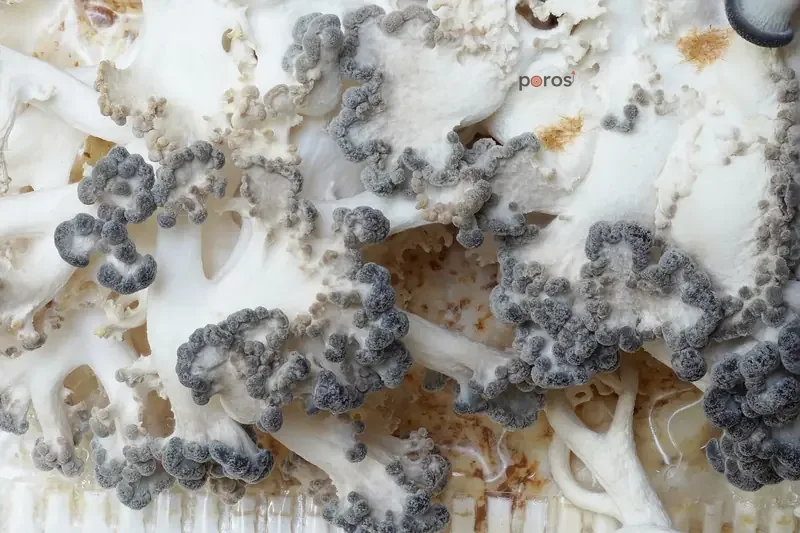
The oyster mushroom is recognised by its fan- or oyster-shell-shaped caps growing in tiers, a stem that is absent or short and off-centre, and the absence of a ring. Its gills are whitish and run down the stem. It grows in clusters on dead or dying broadleaf trunks and branches, especially beech and oak; Wikipedia describes its taste as mild with a slight aniseed aroma.
It is one of the most widely cultivated mushrooms in the world and is widely grown in Turkey too. Cultivated oyster mushrooms are available all year; wild ones fruit in the cool months. We explain how to clean and cook them in how to cook oyster mushrooms.
- Cap: fan- or oyster-shaped, white to grey and brown; in overlapping tiers.
- Stem: short or absent; off-centre when present.
- Ring: none.
- Gills: whitish, running down the stem.
- Spore print: white to pale lilac-grey.
How do you recognise Cyclocybe aegerita (pioppino)?
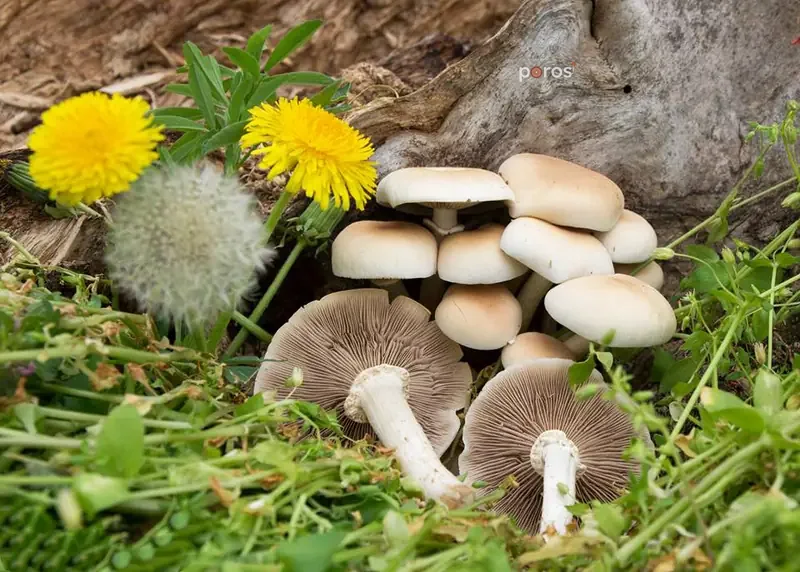
Cyclocybe aegerita is a clustered mushroom with a brown cap, a white fibrous stem and a membranous ring near the top of the stem. According to Wikipedia, the cap is 3–10 cm across, reddish-brown when very young and light brown later, more ochre at the centre and whiter at the edge. The gills are whitish at first, then brownish-grey. The stem is usually curved, and the ring soon turns tobacco-coloured from falling spores. The spore print is brown.
It is a wood-dwelling saprotroph that rots dead wood, growing in clusters on stumps and in trunk hollows of poplar, willow and other broadleaf trees. It is a typical ingredient in southern European and Chinese cooking and is grown commercially in Korea, Japan, China and Australia. In Turkey, specimens collected in Tokat have been studied in research on edible mushroom species.
- Cap: 3–10 cm; reddish-brown when young, then light brown, ochre centre, whitish edge.
- Stem: white, fibrous, often curved.
- Ring: membranous ring high on the stem, turning tobacco-coloured with spores.
- Gills: whitish at first, then brownish-grey.
- Spore print: brown.
- Where: poplar and willow stumps or trunk hollows; in clusters.
Which deadly species can be confused with it?
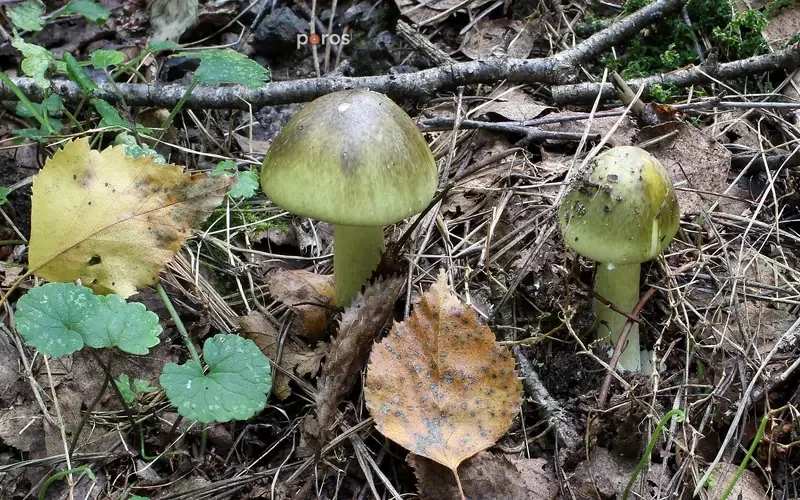
The most dangerous species that can be confused with the poplar mushroom, especially Cyclocybe aegerita, is the funeral bell (Galerina marginata). It too grows in clusters on wood, has a brown cap, carries a membranous ring on the stem when young, and leaves a rusty-brown spore print. Its amatoxins are the same as the death cap's and cause severe liver damage. Wikipedia's entry on Cyclocybe aegerita also notes that it resembles some deadly species and is therefore not recommended for foragers.
There are clues: the funeral bell is usually smaller (cap 1–6 cm), with a thin brown stem and a mealy smell, while Cyclocybe aegerita has a larger cap and a white, fibrous stem. But these clues are not enough for a reliable call in the field. Before eating a brown, ringed mushroom from a cluster on a stump, the identification must be confirmed by an expert. The funeral bell is an autumn species recorded in Turkey; we cover the season's poisoning pattern in why mushroom poisonings rise in autumn.
- Cyclocybe aegerita: cap 3–10 cm · white fibrous stem · brown spore print · poplar and willow stumps.
- Funeral bell: cap 1–6 cm · thin brown stem · rusty-brown spore print · mealy smell · deadly, not edible.
- Oyster mushroom: no ring · stem off-centre or absent · white to lilac spore print.
This comparison is not an identification tool. Never eat a mushroom you cannot identify with certainty; if you suspect poisoning, call 112 without waiting for symptoms and contact the National Poison Information Centre on 114.
Is every mushroom on a poplar tree a poplar mushroom?
No. A mushroom growing on a poplar tree or stump is not a poplar mushroom just because of the tree it grows on. Many fungi live on wood: alongside the edible oyster mushroom and Cyclocybe aegerita, the deadly funeral bell, clustered species such as honey fungus, and tough, inedible bracket fungi can share the same stumps.
The tree is only one clue to identification. Cap shape, whether there is a ring, gill colour and attachment, spore print colour and smell are judged together. We list edible species and their distinguishing features on our edible mushrooms page and all species on our mushroom species page.
When and where does the poplar mushroom appear?
Wild oyster mushrooms appear in the cool months on dead broadleaf trees, mostly between October and March according to Turkish observation records. Cyclocybe aegerita has few Turkish records on GBIF: six, from September, November, December and May, two of them from Istanbul. Wikipedia notes that it grows on poplars and other broadleaf trees and is common in southern Europe.
With so few records, this is not a reliable calendar; in mild, damp spells, poplar and willow stumps along streams are the places to look. See which species appear in which month in our mushroom calendar. Before heading out, read our mushroom foraging guide for rules and equipment.
Is the poplar mushroom edible, and how is it cooked?
A correctly identified poplar mushroom, whether oyster mushroom or Cyclocybe aegerita, is eaten cooked; a wild one is not eaten without certain identification. Cultivated oyster mushrooms bought as kavak mantarı from a shop or grower are cooked like any oyster mushroom: in a hot pan, roasted or fried.
In East Asia, Cyclocybe aegerita is used fresh or dried and rehydrated in stir-fries, soups, stews and hot pots (Wikipedia), and it is a typical ingredient in southern Europe as well. Because its stem is fibrous, slicing stems and caps separately and giving the stems a little longer works well. Neither species is eaten raw.
Can you grow poplar mushrooms at home?
Yes, both species called poplar mushroom can be cultivated, and the easiest way to start at home is a ready-made oyster mushroom block. The oyster mushroom is one of the easiest species to begin with; an oyster mushroom grow kit can give a harvest within a few weeks. We explain the steps in our grow mushrooms at home guide.
Cyclocybe aegerita is also grown commercially in Korea, Japan, China and Australia. Don't try to propagate a mushroom you picked in the wild: you can't be sure which species a piece from the forest belongs to, and growing the wrong species carries the same risk as eating it.
FAQ
Is the poplar mushroom edible?
Both mushrooms called poplar mushroom, the oyster mushroom and Cyclocybe aegerita, are eaten cooked when correctly identified. A wild one that has come up on a stump must not be eaten without certain identification; the deadly funeral bell can grow in the same place.
Is the poplar mushroom poisonous?
The poplar mushroom itself is not poisonous. The danger is its look-alike, the funeral bell, which also grows in clusters on wood, is brown and ringed, and contains amatoxins. If in doubt, call 112 and 114.
When does the poplar mushroom appear?
Wild oyster mushrooms appear in Turkey mostly between October and March. The few Turkish records of Cyclocybe aegerita are from September, November, December and May. Cultivated mushrooms are available all year.
How do you cook poplar mushrooms?
In a hot pan in a single layer until the edges brown; they also work roasted or in soups and stews. Cook the fibrous stems of Cyclocybe aegerita a little longer than the caps. Don't eat them raw.
Can you grow poplar mushrooms at home?
Yes. The easiest route is a ready-made oyster mushroom block, which crops within a few weeks. Don't try to propagate wild-picked mushrooms; you can't be sure of the species.
Is every mushroom on a poplar a poplar mushroom?
No. The deadly funeral bell, honey fungus and inedible bracket fungi can grow on the same stumps. The tree is only a clue; cap, ring, gills and spore print are judged together.
Sources
- Çınar Yılmaz H., Işık H., Bengü A. Ş., Türkekul İ. — Fatty Acid Contents of Two Edible Mushroom Species (Cyclocybe aegerita and Hygrophorus eburneus) Collected from Tokat Region, Middle East Journal of Science dergipark.org.tr
- Vikipedi (TR) — Kavak mantarı (Pleurotus ostreatus) tr.wikipedia.org
- Wikipedia (EN) — Cyclocybe aegerita en.wikipedia.org
All sources (6)
- Wikipedia (EN) — Pleurotus ostreatus en.wikipedia.org
- First Nature — Galerina marginata, Funeral Bell first-nature.com
- GBIF — Cyclocybe aegerita, Türkiye kayıtları gbif.org
Last updated: 2 November 2026