
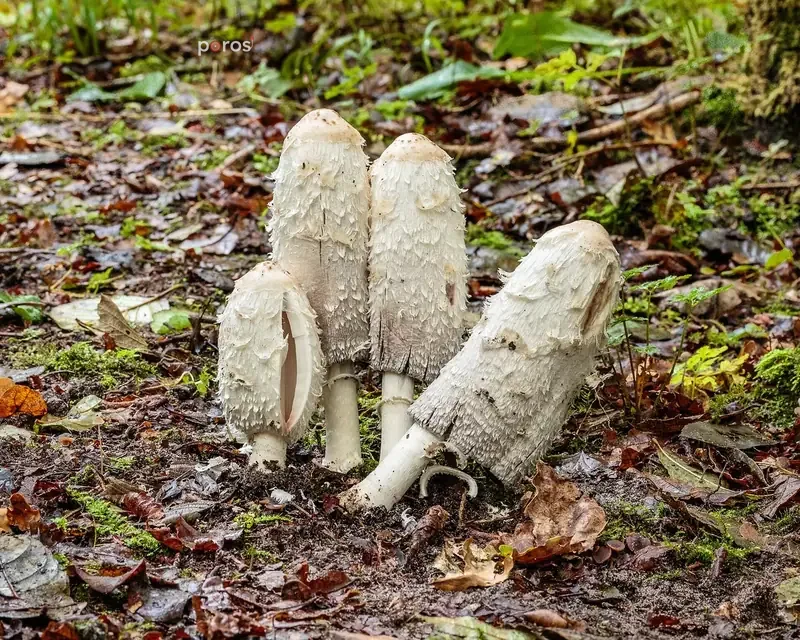


Shaggy ink cap
Coprinus comatus · Agaricaceae
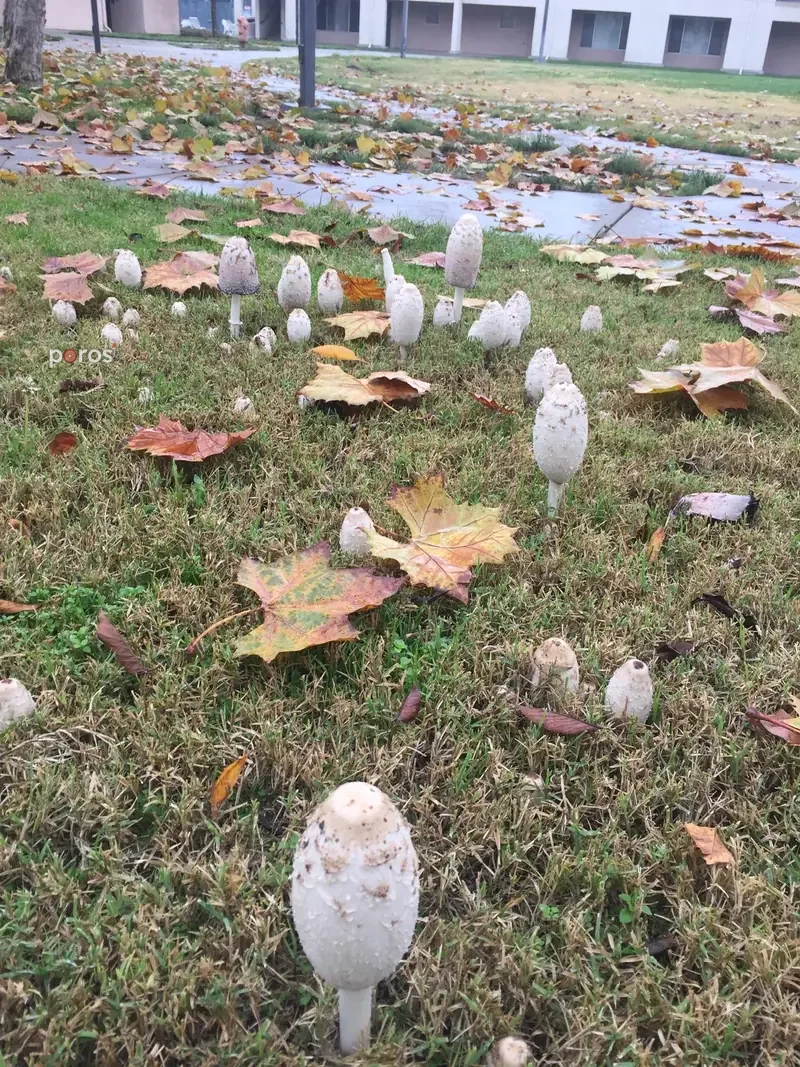
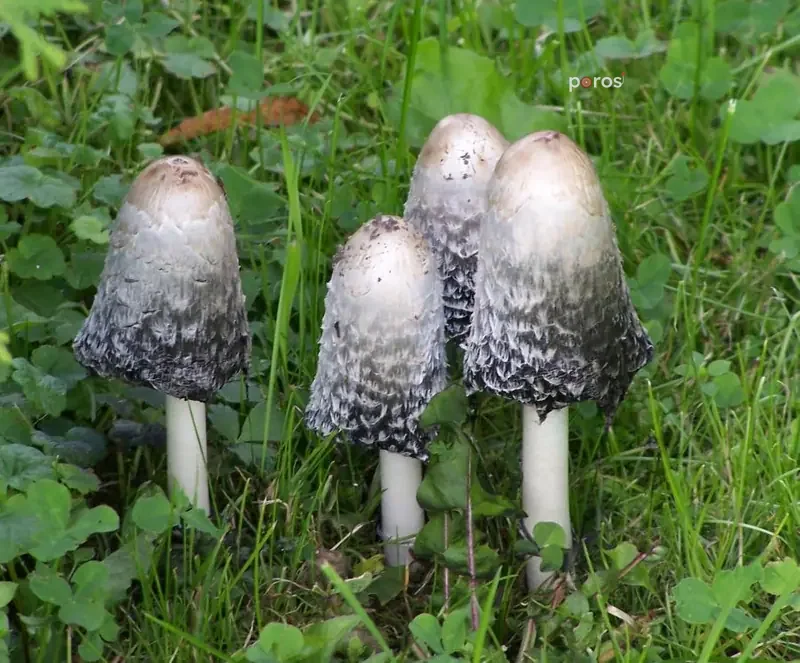
The shaggy ink cap grows in lawns, verges and parks, with a tall, egg-shaped white cap covered in shaggy scales.
Last updated: Prepared by the Poros Mantar editorial team7 sources checkedReport a correction
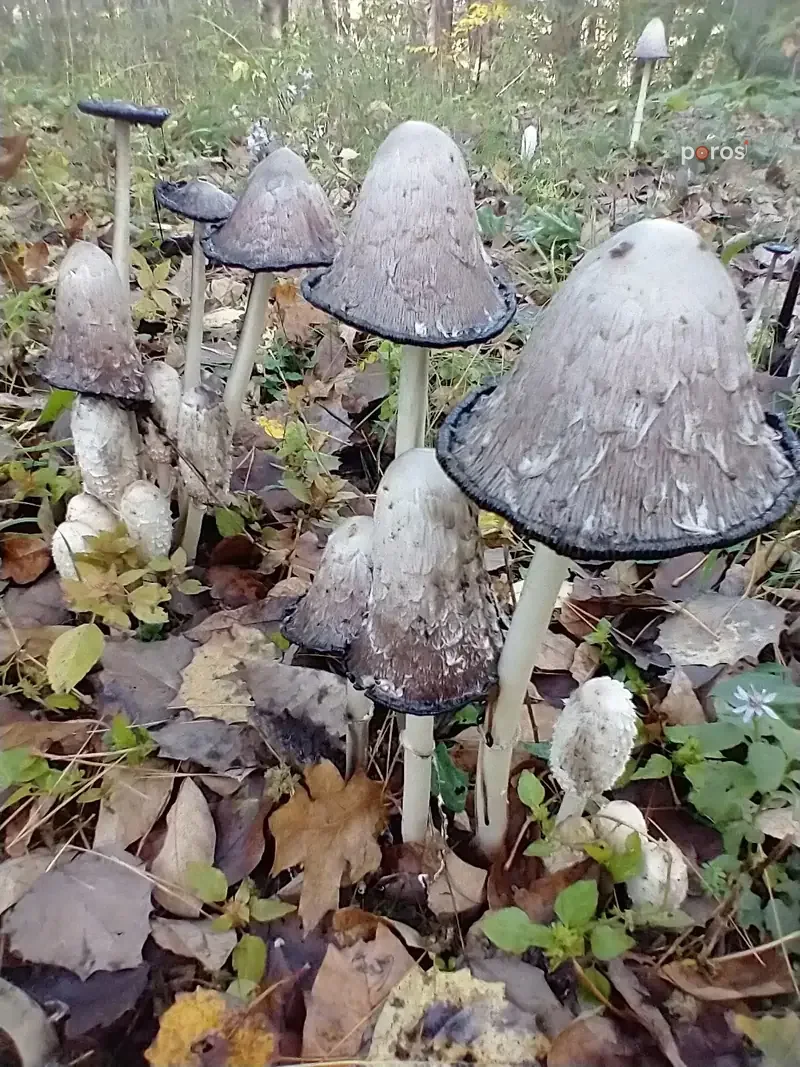
The shaggy ink cap grows in lawns, verges and parks, with a tall, egg-shaped white cap covered in shaggy scales. As it matures the cap dissolves from the edge into a black, ink-like liquid. It is known as an edible species while young and white-gilled.
Also called: lawyer's wig, shaggy mane Turkish: Mürekkep mantarı, tüylü mürekkep mantarı, avukat peruğu, çayır mürekkep mantarı, söbelen Synonyms: söbelen
How to recognise it
Shaggy ink cap, part by part
No volva Spore print: Black Mild, pleasant mushroomy smell.


When and where
Apr–May, Sep–Dec
- Jan
- Feb
- Mar
- Aprin season
- Mayin season
- Jun
- Jul
- Aug
- Sepin season
- Octin season
- Novin season
- Decin season
The shaggy ink cap fruits in spring and autumn after rain; Turkish GBIF records show two peaks, April–May and October–December.
Type Edible
In season AprilMaySeptemberOctoberNovemberDecember
Colour White
Regions Southeastern Anatolia RegionEastern Anatolia RegionBlack Sea RegionCentral Anatolia RegionMediterranean RegionAegean RegionMarmara RegionAntalyaİzmirAnkaraKocaeliBoluIstanbulKırklareli
Where do shaggy ink caps grow?
The shaggy ink cap grows in groups in open, nitrogen-rich places such as lawns, field edges, roadsides and disturbed soil; it is not tied to trees.
Where is shaggy ink caps found in Turkey?
The shaggy ink cap is widespread in Turkey: GBIF records cluster in İstanbul and Ankara, and it has been recorded in more than 30 provinces, from İzmir, Kırklareli, Bolu and Antalya to Iğdır and Tunceli.
- İstanbul47
- Ankara34
- Bolu10
- İzmir6
- Kırklareli6
- Bilecik4
- Antalya4
- Kocaeli4
- Tekirdağ4
- Karaman3
- Kayseri2
- Zonguldak2
Other provinces: Samsun (2), Adıyaman (2), Muğla (2), Aksaray (1), Gaziantep (1), Elazığ (1), Mersin (1), Kırıkkale (1), Bursa (1), Eskişehir (1), Tunceli (1), Uşak (1), Balıkesir (1), Kütahya (1), Gümüşhane (1), Konya (1), Iğdır (1), Manisa (1), Trabzon (1), Sinop (1), Afyonkarahisar (1), Nevşehir (1), Osmaniye (1)
Which months
- Jan5
- Feb1
- Mar1
- Apr18
- May32
- Jun4
- Jul1
- Aug0
- Sep5
- Oct36
- Nov27
- Dec22
shaggy ink cap map of Turkey: all provinces and months →
35 provinces, 152 observations (GBIF, iNaturalist); months from observation dates. Record density also reflects where observers work.
Latest shaggy ink cap observations
-
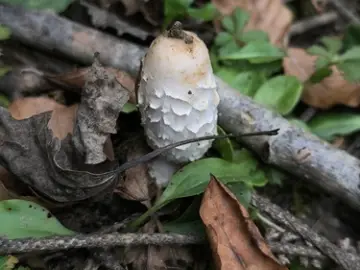 Bolu29 Oct 2026 · iNaturalist© Umut Nuri Erdoğan · CC BY
-
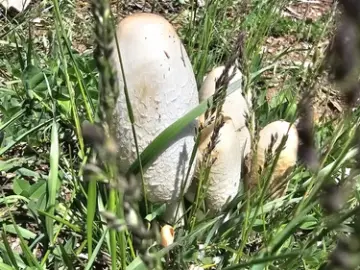 Zonguldak16 May 2026 · iNaturalist© no rights reserved · CC0
-
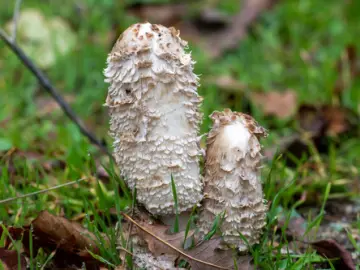 Kırklareli8 Nov 2025 · iNaturalist© Asrın Akıncıoğlu · CC BY
-
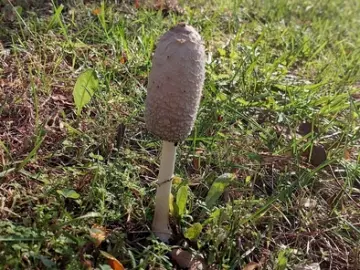 İstanbul3 Nov 2025 · iNaturalist© Liva Erkul · CC BY
-
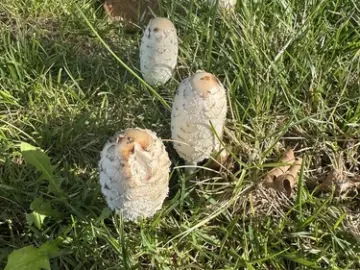 İstanbul2 Nov 2025 · iNaturalist© Selim Türeli · CC BY
-
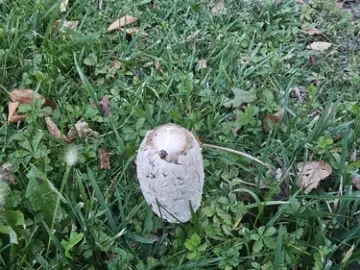 Ankara27 Oct 2025 · iNaturalist© no rights reserved · CC0
-
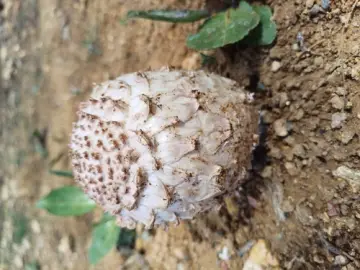 Karaman26 Apr 2025 · iNaturalist© Fahri Tunahan Çevik · CC BY
-
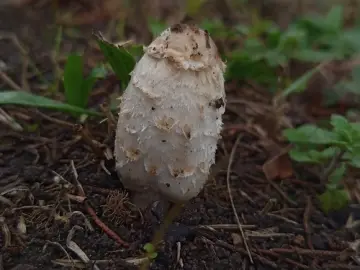 İstanbul5 Dec 2024 · iNaturalist© Umut Nuri Erdoğan · CC BY
- See on the map
Look-alikes
What could it be confused with?
Shaggy ink cap can be mistaken for the species below. Each card shows the look-alike and how it differs from Shaggy ink cap.
 Poisonous
not Shaggy ink cap
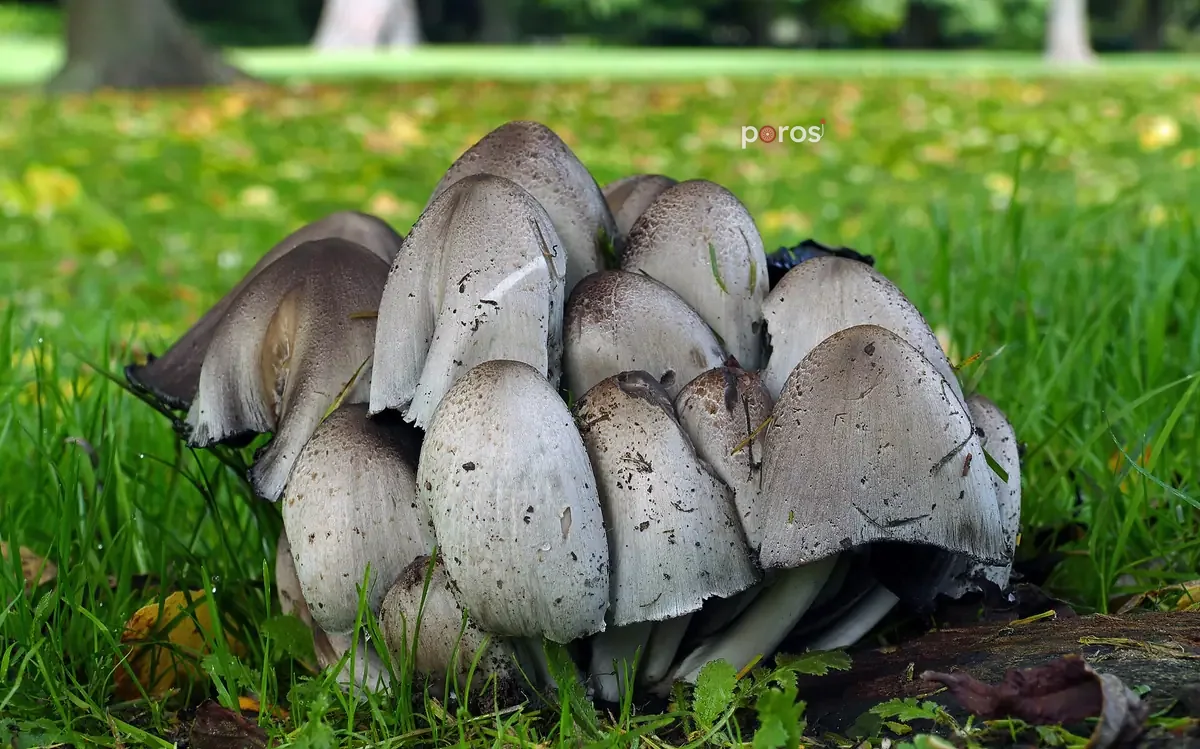
Common ink cap Coprinopsis atramentaria
Its cap is grey-brown and smooth, without shaggy scales. It contains coprine, which together with alcohol (even days after the meal) causes palpitations, flushing and nausea.
 Deadly
not Shaggy ink cap
Destroying angel Amanita virosa
Pure white, but it grows in woods, its gills stay white and never liquefy, and there is a sack-like volva at the stem base. It is deadly.
 Edible species
not Shaggy ink cap
Parasol mushroom Macrolepiota procera
A young, closed parasol can look egg-shaped, but its cap has brown scales, its stem has a snakeskin pattern and it never liquefies.
 Inedible
not Shaggy ink cap
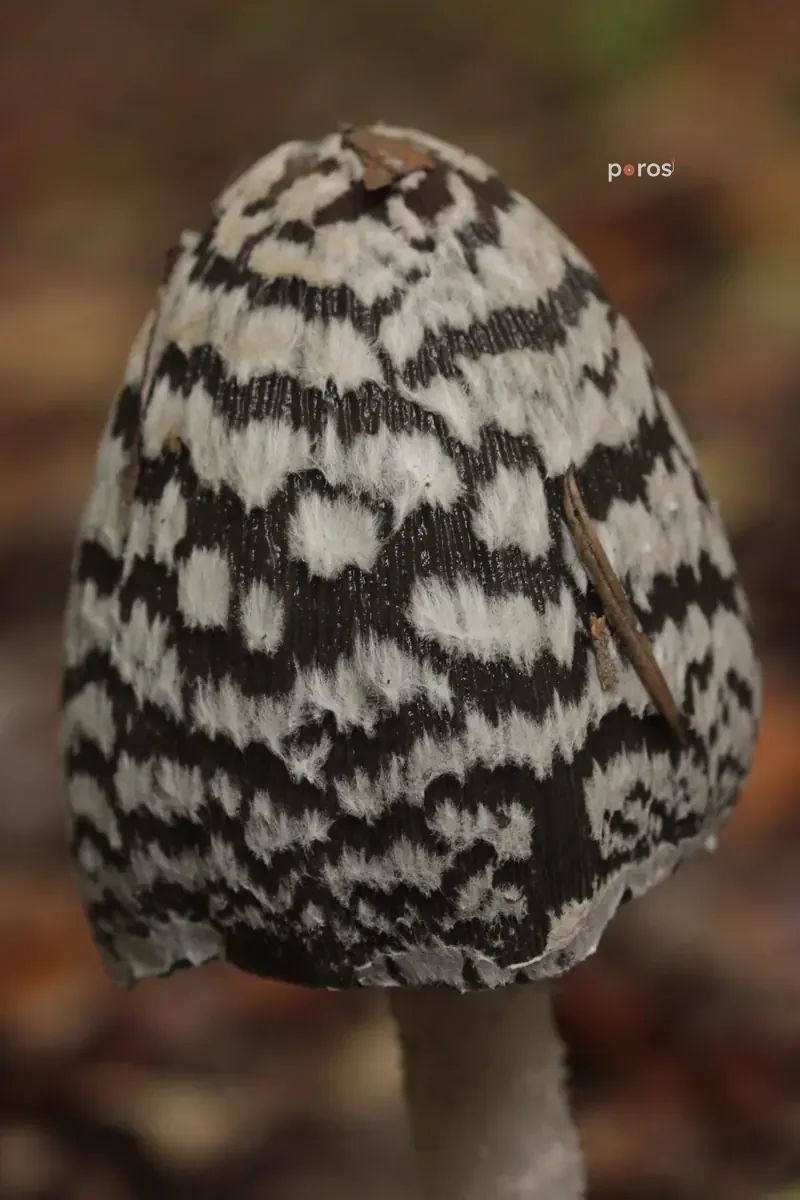
Magpie inkcap Coprinopsis picacea
It also turns to ink, but its cap is dark brown to black with white patches, it has no ring and it grows in beech woods.
 Inedible
not Shaggy ink cap
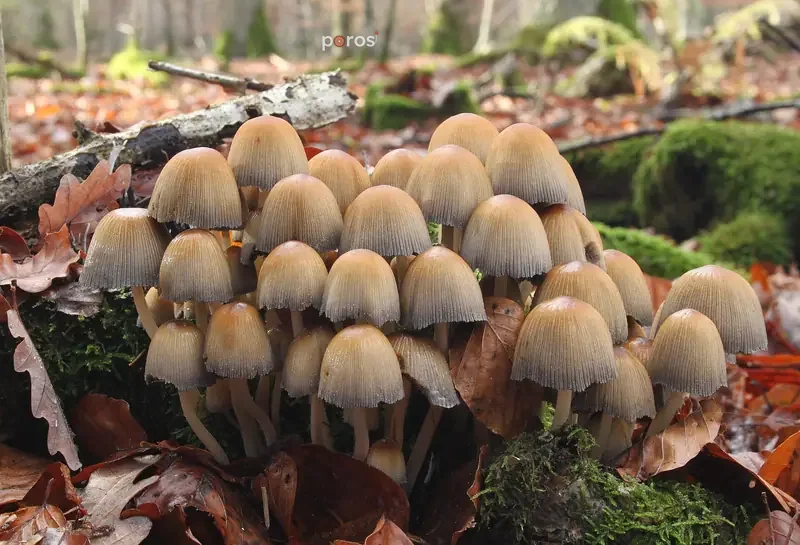
Glistening inkcap Coprinellus micaceus
Much smaller, with a honey-coloured, glittering cap, growing in dense clusters around stumps.
How to cook and eat shaggy ink caps
Safety first. Pick only young mushrooms with closed caps and completely white gills, and cook them the same day; throw away any that are pink or blackening. Because of the risk of confusion with the common ink cap, it is safest never to combine it with alcohol. Do not pick it beside busy roads.
How to prepare it
Use only young mushrooms with closed caps and pure white gills; blackened parts quickly turn bitter. Cook them the day they are picked.
How to cook it
The taste is mild and it releases a lot of liquid as it cooks, so it is used mostly in soups.
What goes with it?
- butter
- spring onions
- garlic
- plain flour
- milk
- chicken stock
Source: Wikipedia · practical details from our recipes.
Recipe
How to store shaggy ink caps
Grow it, buy it
Shaggy ink cap price list
| Product | Us | Market (sourced, dated) |
|---|---|---|
| Fresh shaggy ink caps | Made to order · ask | — |
| Dried shaggy ink caps | Made to order · ask | — |
We make our shaggy ink caps products in small batches, to order; send a request and we email you the price and delivery date. The market column shows prices seen on other sellers' pages on the date given; they are not our prices and may have changed.
Frequently asked questions
Is the shaggy ink cap edible?
It is known as edible while young, with a closed cap and pure white gills. It starts to dissolve within hours of picking, so it must be cooked the same day. Never eat it without an expert's identification.
Why does the shaggy ink cap turn black?
To release its spores the mushroom digests its own cap from the edge inward (autolysis), turning it into a black, ink-like liquid. The liquid was once actually used as ink.
Is the shaggy ink cap poisonous with alcohol?
Coprine, the compound that reacts with alcohol, is found mainly in the common ink cap (Coprinopsis atramentaria). Since the two can be confused, it is safest to avoid alcohol with the meal and for the following days.
Where does the shaggy ink cap grow in Turkey?
In lawns, parks, roadsides and field edges almost everywhere. GBIF records cluster in İstanbul and Ankara, with records from more than 30 provinces.
When does the shaggy ink cap appear?
In spring (April–May) and autumn (October–December), in the days after rain.
Can the shaggy ink cap be confused with the destroying angel?
When young and white it can be. The destroying angel grows in woodland, has a sack-like volva and gills that never darken; the shaggy ink cap's gills turn pink then black and it has no volva.
What is söbelen mantarı?
Söbelen is the local name used around Bolu for the shaggy ink cap (Coprinus comatus), which appears in meadows from late spring to autumn (Karancı and Çetin, 2025). Only young, closed, white-gilled caps are eaten, and it must not be confused with the common ink cap, which is toxic with alcohol. Never eat it without an expert's identification.
Is the shaggy mane the same as the shaggy ink cap?
Yes. Shaggy mane, shaggy ink cap and lawyer's wig are all names for Coprinus comatus. 'Shaggy mane' is the usual name in North America, 'shaggy ink cap' in Britain.
How do you cook shaggy ink caps?
We pick only young, closed caps with white gills and cook them the same day, because they start to turn into black ink within hours. Sliced and sautéed in butter they are soft and mild; caps whose gills have turned pink or black are left out.
What are the synonyms of Coprinus comatus?
Coprinus comatus was first described as Agaricus comatus, and it has also been published under names such as Coprinus ovatus; these older names are now treated as synonyms. In English it is called shaggy ink cap, shaggy mane or lawyer's wig.
Is the inky cap the same as the shaggy ink cap?
Inky cap is a general name for several mushrooms whose gills dissolve into black ink. The shaggy ink cap (Coprinus comatus) is one of them; the common ink cap (Coprinopsis atramentaria) is another, and it is the one that reacts badly with alcohol.
Are all ink cap mushrooms edible?
No. Only the shaggy ink cap is widely eaten, and only while young and white, before the gills start to turn black. The common ink cap reacts with alcohol, and the magpie inkcap is not eaten. We identify the species first and do not treat 'ink cap' as one mushroom.
Why is the shaggy ink cap called lawyer's wig?
The young cap is tall, white and covered in shaggy scales that curl up like a barrister's powdered wig, so in Britain it is also called lawyer's wig.
Which mushroom drips black liquid?
Ink caps do. As the shaggy ink cap and the common ink cap mature, their gills dissolve from the edge into a black, inky liquid that drips from the cap and carries the spores. This liquid was once used as ink. We eat shaggy ink caps only while the gills are still white.
Are shaggy ink caps edible?
Yes, the shaggy ink cap is an edible species. Eat a wild one only after an expert has identified it with certainty: it can be confused with common ink cap (Coprinopsis atramentaria) and destroying angel (Amanita virosa). Pick only young mushrooms with closed caps and completely white gills, and cook them the same day; throw away any that are pink or blackening. Because of the risk of confusion with the common ink cap, it is safest never to combine it with alcohol. Do not pick it beside busy roads.
When is shaggy ink cap season in Turkey?
In our calendar, shaggy ink cap season runs Apr–May, Sep–Dec. The shaggy ink cap fruits in spring and autumn after rain; Turkish GBIF records show two peaks, April–May and October–December.
Where do shaggy ink caps grow?
The shaggy ink cap grows in groups in open, nitrogen-rich places such as lawns, field edges, roadsides and disturbed soil; it is not tied to trees.
Where are shaggy ink caps found in Turkey?
The shaggy ink cap is widespread in Turkey: GBIF records cluster in İstanbul and Ankara, and it has been recorded in more than 30 provinces, from İzmir, Kırklareli, Bolu and Antalya to Iğdır and Tunceli.
What can the shaggy ink cap be confused with?
The shaggy ink cap can be confused with common ink cap (Coprinopsis atramentaria, poisonous), destroying angel (Amanita virosa, deadly), parasol (Macrolepiota procera, edible species), magpie inkcap (Coprinopsis picacea, inedible) and glistening inkcap (Coprinellus micaceus, inedible). Look-alikes are compared on this page.
What is the shaggy ink cap called in Turkish?
In Turkish, the shaggy ink cap (Coprinus comatus) is called Mürekkep mantarı; other local names include tüylü mürekkep mantarı, avukat peruğu, çayır mürekkep mantarı and söbelen.
Related species
-
 Button mushroomAgaricus bisporusEdible species
-
 Field mushroomAgaricus campestrisEdible species
-
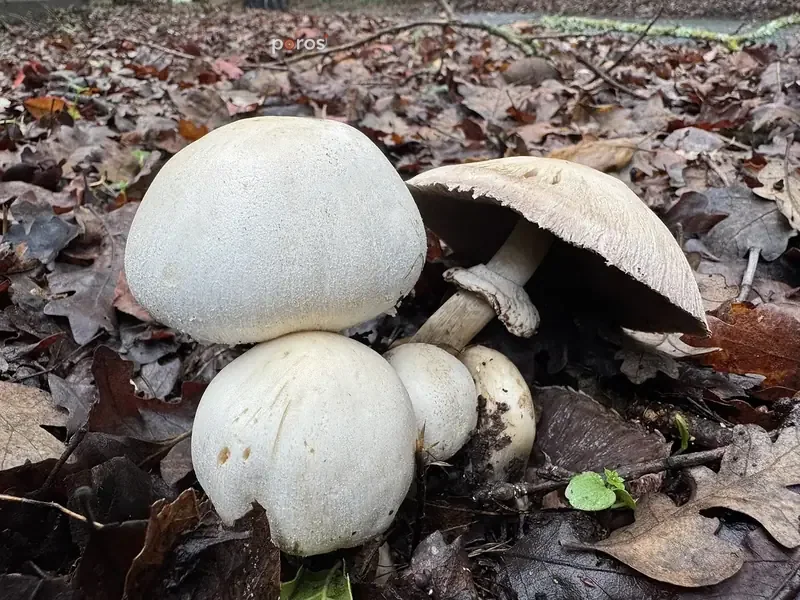 Horse mushroomAgaricus arvensisEdible species
-
Parasol mushroomMacrolepiota proceraEdible species
-
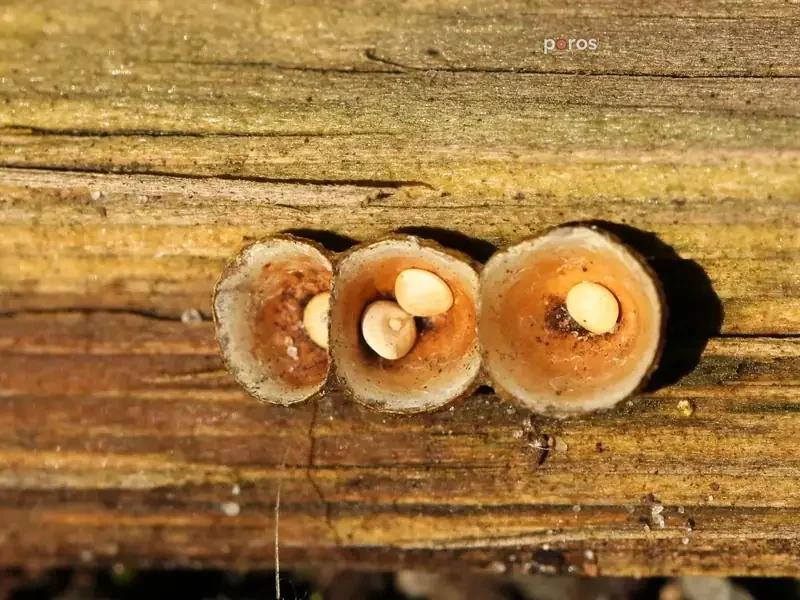 Common bird’s nest fungusCrucibulum laeveInedible
-
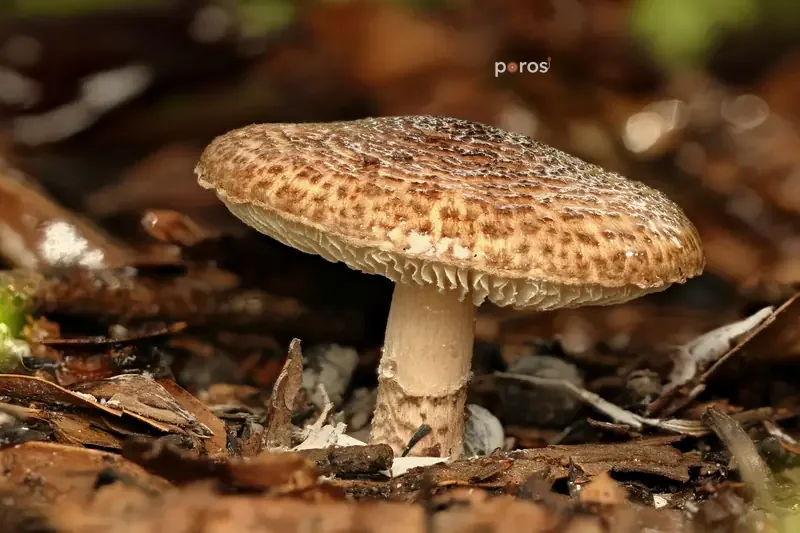 Deadly dapperlingLepiota brunneoincarnataDeadly poisonous
-
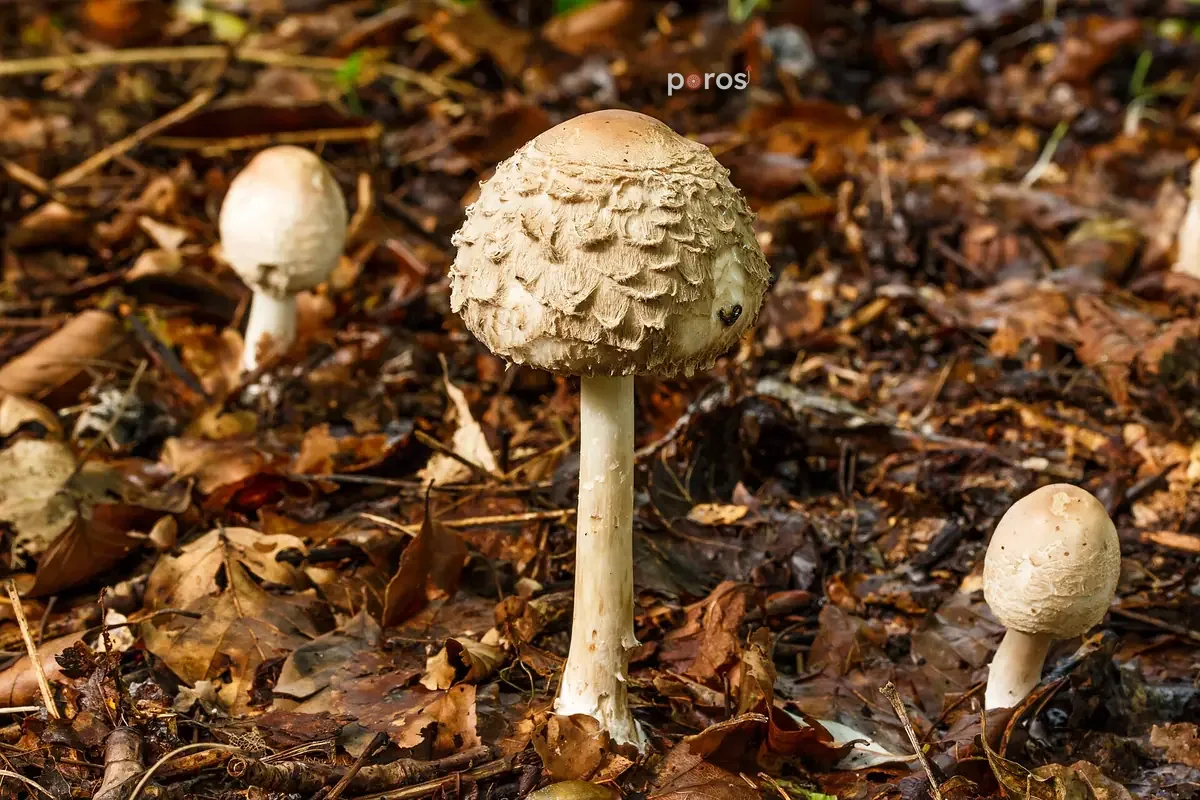 Shaggy parasolChlorophyllum rhacodesInedible
-
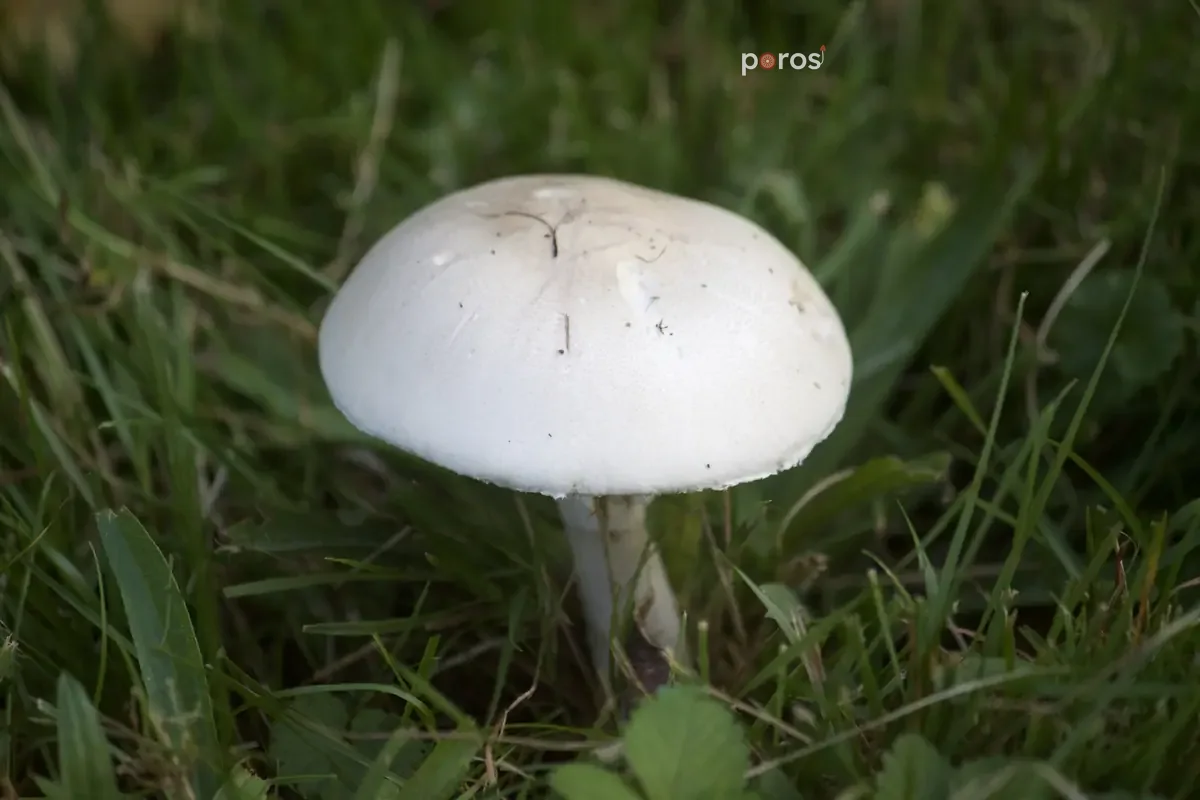 White dapperlingLeucocoprinus leucothitesInedible
Sources
- Nowakowski ve ark. (2020), Phytotherapy Research: Coprinus comatus işlevsel özellikleri ve olası riskleri pubmed.ncbi.nlm.nih.gov
- Karancı, A. ve Çetin, K. (2025). Batı Karadeniz Bölgesi'ndeki Yenilebilir Yabani Mantarların Etnomikolojik ve Gastronomik Değerlerinin İncelenmesi. Journal of Tourism and Gastronomy Studies 13(1): 485–514 jotags.net
- Wikipedia (EN): Coprinus comatus en.wikipedia.org
All sources (7)
- First Nature: Coprinus comatus first-nature.com
- GBIF: Türkiye kayıtları gbif.org
- iNaturalist: Türkiye gözlemleri inaturalist.org
- Wikipedia (EN): Coprinopsis atramentaria en.wikipedia.org
Photo credits (16)
- File:Geschubde inktzwam (Coprinus comatus). Locatie, Paddenstoelenreservaat. 11-10-2021. (actm.) 02.jpg · Agnes Monkelbaan · CC BY-SA 4.0
- Coprinus comatus · iNaturalist #98687583 · Tom Norton · CC BY 4.0
- Coprinus comatus · iNaturalist #98687583 · Tom Norton · CC BY 4.0
- Coprinus comatus · iNaturalist #98687583 · Tom Norton · CC BY 4.0
- Coprinus comatus · iNaturalist #29068342 · Alison Northup · CC BY 4.0
- Coprinus comatus · iNaturalist #29068342 · Alison Northup · CC BY 4.0
- Coprinus comatus · iNaturalist #101446415 · LJ Moore-McClelland · CC BY 4.0
- Coprinus comatus · iNaturalist #57304959 · Emily Langdon-Lassagne · CC0
- iNaturalist: Bolu, 29 Oct 2026 · Umut Nuri Erdoğan · CC BY
- iNaturalist: Zonguldak, 16 May 2026 · no rights reserved · CC0
- iNaturalist: Kırklareli, 8 Nov 2025 · Asrın Akıncıoğlu · CC BY
- iNaturalist: İstanbul, 3 Nov 2025 · Liva Erkul · CC BY
- iNaturalist: İstanbul, 2 Nov 2025 · Selim Türeli · CC BY
- iNaturalist: Ankara, 27 Oct 2025 · no rights reserved · CC0
- iNaturalist: Karaman, 26 Apr 2025 · Fahri Tunahan Çevik · CC BY
- iNaturalist: İstanbul, 5 Dec 2024 · Umut Nuri Erdoğan · CC BY
