
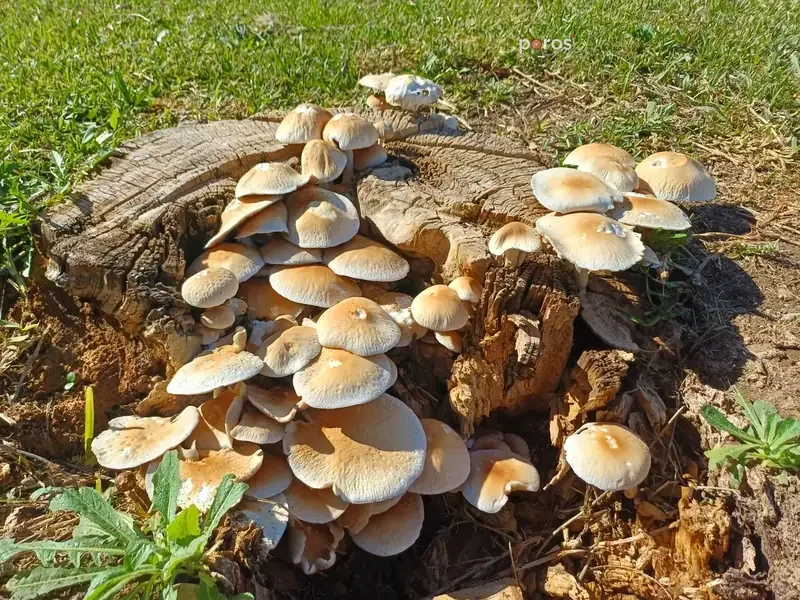


Poplar mushroom
Cyclocybe cylindracea · Tubariaceae
The poplar mushroom (Cyclocybe cylindracea, formerly Agrocybe aegerita) is an edible, easily cultivated mushroom that grows in clusters on poplar and willow stumps, with a brown cap and a white, fibrous stem with a ring.
Last updated: Prepared by the Poros Mantar editorial team11 sources checkedReport a correction
The poplar mushroom (Cyclocybe cylindracea, formerly Agrocybe aegerita) is an edible, easily cultivated mushroom that grows in clusters on poplar and willow stumps, with a brown cap and a white, fibrous stem with a ring. In Europe it is known by its Italian name pioppino. In Turkey the name kavak mantarı is also used for the oyster mushroom. Wild clusters can be confused with the deadly funeral bell, so they are never eaten without an expert's identification.
Also called: poplar fieldcap, pioppino, velvet pioppini, black poplar mushroom Turkish: Kavak mantarı, söğüt mantarı, pioppino Synonyms: Agrocybe aegerita, Cyclocybe aegerita, Agrocybe cylindracea, Pholiota aegerita
Which mushroom is the poplar mushroom?
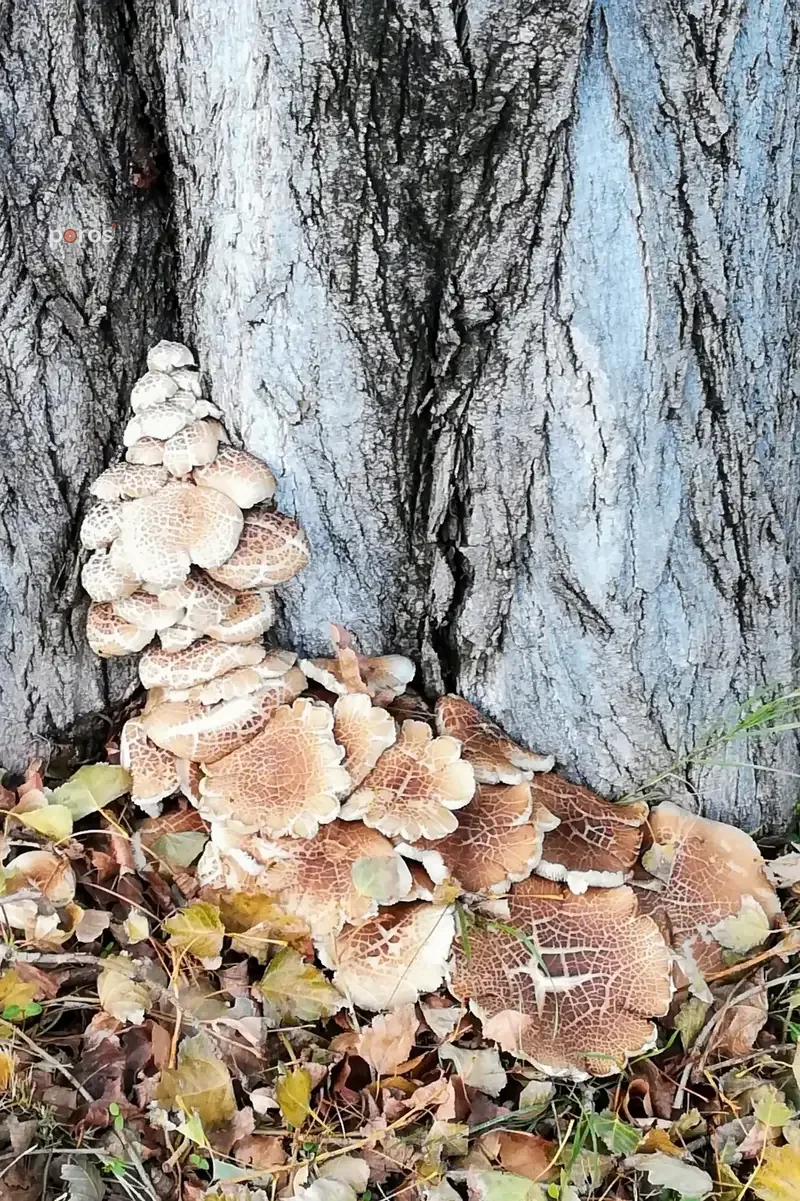
The poplar mushroom on this page is Cyclocybe cylindracea, listed in older sources as Agrocybe aegerita. In Europe it is sold as pioppino and in China as the tea tree mushroom. In Turkey the name kavak mantarı is also used for the oyster mushroom; Turkish Wikipedia describes Pleurotus ostreatus under that title. We explain the difference in our article on kavak mantarı; for the oyster mushroom see our oyster mushroom page.
Can you grow poplar mushrooms at home? Is there a kit?
Yes. The poplar mushroom suits cultivation and is grown commercially in Korea, Japan, China and Australia (Wikipedia). In a 2022 study in the Asian Journal of Mycology, researchers at ACECR in Iran inoculated wheat-grain spawn into substrates made from woody and non-woody waste; the substrates were fully colonised in 9–11 days at 23–25 °C and then moved to a fruiting room at 16–20 °C and 80–85% humidity.
The same study notes that on most substrates this species yields less than oyster mushrooms, and that this is the main obstacle to large-scale production. So poplar mushrooms will grow at home, but they need patience and steady humidity and temperature: the wait for the first flush is longer than with oysters and each cluster gives less.
We don't sell a poplar mushroom kit at the moment. For a first try at home an oyster mushroom block is still the easiest start; see our grow at home guide. If you want to try poplar mushrooms, buy ready spawn or a block from a reliable grower; don't try to multiply a wild mushroom at home, because you can't be sure of the species.
How do you cook poplar mushrooms?
Poplar mushrooms are eaten cooked in stir-fries, soups, stews and casseroles; they are a typical ingredient in southern European and Chinese cooking and in East Asia are used fresh or dried and rehydrated (Wikipedia). First Nature describes the taste as nutty and the smell as pleasant.
The stems are fibrous, so trim the tough base of the cluster and either cut stems and caps separately or give the whole cluster a quick sauté and then cook it covered over a low heat until the stems soften. In Italy pioppino most often becomes a pasta sauce with garlic, olive oil, white wine and parsley; our pioppino spaghetti recipe gives the quantities. Never eat them raw.
Don't soak the mushrooms; rinse them quickly under running water and dry straight away. See our mushroom calendar for seasons and our map for Turkish records.
How do you store poplar mushrooms?
Store fresh poplar mushrooms like any mushroom: in the fridge, in their own container or a paper bag, and cook them within 3 days. Penn State Extension notes that plastic bags trap moisture that spoils mushrooms, while loose mushrooms dry out, and advises keeping them away from raw meat, poultry, seafood and eggs.
For longer storage there are two options. Drying: according to the same source, clean the mushrooms, remove woody stems, slice and dry in a dehydrator for 8–10 hours; in East Asia poplar mushrooms are commonly used dried and rehydrated (Wikipedia). Freezing: steam-blanch slices for 5 minutes, cool quickly, drain, pack and freeze (Penn State Extension).
Which mushrooms can be confused with the poplar mushroom?
The most dangerous lookalike is the funeral bell (Galerina marginata). According to First Nature it also grows in clusters on wood and is brown with a ring, but its cap is smaller, its stem thin and brown and its spore print rusty brown, and it contains liver-destroying amatoxins. The poplar mushroom has a thick white stem and a tobacco-brown spore print.
The second is the sulphur tuft (Hypholoma fasciculare), which forms crowded clusters on stumps but has a sulphur-yellow cap, greenish-yellow gills, no ring and a very bitter taste; it is poisonous (First Nature). The third is a naming mix-up: in Turkey the oyster mushroom is also called kavak mantarı, but oysters are fan-shaped, ringless and have gills running down the stem.
Never rely on a single feature: judge the cap, stem, ring, spore print colour and the wood it grows on together. If in doubt, don't eat it; our poisonous mushrooms page lists the deadly species.
Where and when is the poplar mushroom found in Turkey?
Most of the 23 Turkish observations on our map are from Istanbul, with others from Ankara, Diyarbakır, İzmir and Kocaeli (GBIF). Specimens collected in Tokat have also been studied scientifically. Look at the stumps, trunk hollows and roots of old or felled poplars and willows along streams, in parks and by roadsides.
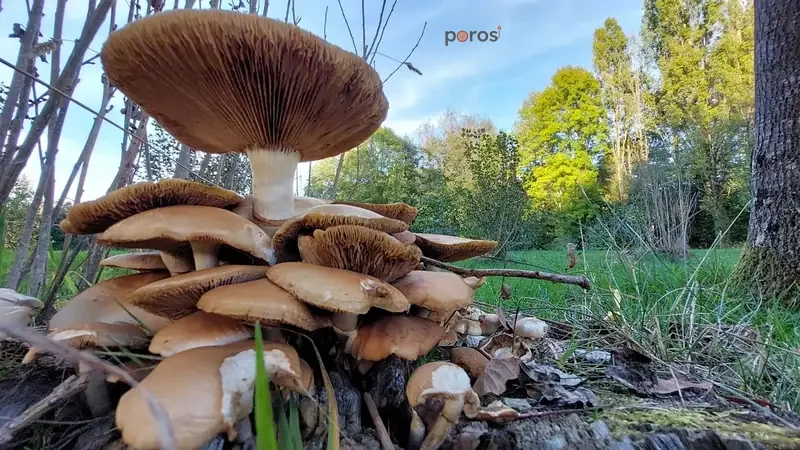
In the field the clues come together: First Nature describes it as a saprobic mushroom growing in tufts on poplar and willow stumps and on standing dead or dying trees. The gills start cream, turn grey-brown and then mid brown as the spores mature, and the ring high on the stem is persistent and hanging. A brown cap, a thick white stem, a hanging ring and a tobacco-brown spore print together point to the poplar mushroom, but the final call belongs to an expert.
Turkish records cluster in spring (March–May) and autumn (September–December); 11 of the 23 observations are from October. First Nature gives the season in Britain and Ireland as July to October and says the species is more common in central and southern mainland Europe. In cultivation it is produced all year. A lack of records doesn't mean the species is absent, only that no one has logged it.
How to recognise it
Poplar mushroom, part by part
No volva Spore print: Brown Pleasant smell and a nutty taste (First Nature).


When and where
Mar–May, Sep–Dec
- Jan
- Feb
- Marin season
- Aprin season
- Mayin season
- Jun
- Jul
- Aug
- Sepin season
- Octin season
- Novin season
- Decin season
In Turkey, poplar mushroom records fall in spring (March–May) and autumn (September–December); 11 of the 23 observations on our map are from October. In cultivation it is grown all year.
Type Edible
In season MarchAprilMaySeptemberOctoberNovemberDecember
Regions Southeastern Anatolia RegionCentral Anatolia RegionAegean RegionMarmara RegionDiyarbakırİzmirAnkaraKocaeliIstanbul
Where do poplar mushrooms grow?
The poplar mushroom grows in clusters on stumps, in trunk hollows and on the roots of poplars, willows and other broadleaved trees; it breaks down dead wood as a white rot and also appears on old or wounded living trees.
Where is poplar mushrooms found in Turkey?
Our map has 23 Turkish observations of the poplar mushroom, mostly from Istanbul, with others from Ankara, Diyarbakır, İzmir and Kocaeli. Specimens collected in Tokat were analysed in a study of fatty acid content. Poplars and willows along streams are the places to look.
- İstanbul14
- Ankara4
- Diyarbakır3
- İzmir1
- Kocaeli1
Which months
- Jan0
- Feb0
- Mar2
- Apr2
- May3
- Jun0
- Jul1
- Aug0
- Sep1
- Oct11
- Nov2
- Dec1
poplar mushroom map of Turkey: all provinces and months →
5 provinces, 23 observations (GBIF, iNaturalist); months from observation dates. Record density also reflects where observers work.
Latest poplar mushroom observations
-
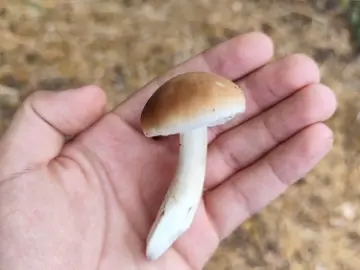 Diyarbakır3 Oct 2026 · iNaturalist© Mustafa Arisli · CC BY
-
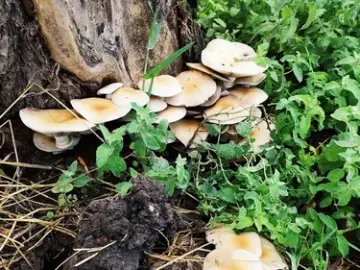 Diyarbakır3 Oct 2026 · iNaturalist© Mustafa Arisli · CC BY
-
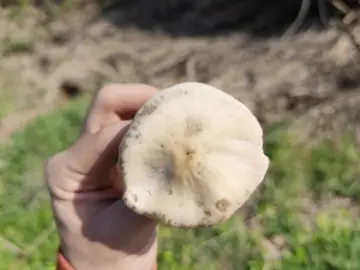 Diyarbakır24 Mar 2026 · iNaturalist© Mustafa Arisli · CC BY
-
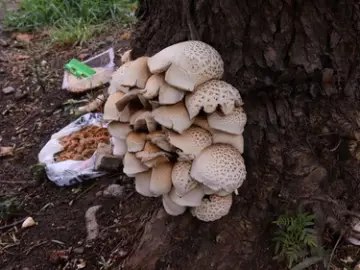 İzmir5 Oct 2025 · iNaturalist© no rights reserved · CC0
-
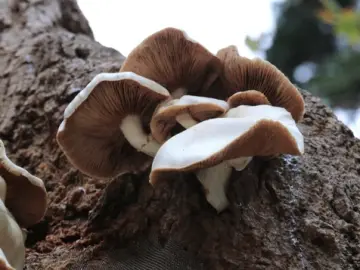 İstanbul17 Nov 2024 · iNaturalist© Daniel Ghyselinck · CC BY
-
 Illustrative
İstanbul17 Oct 2026 · iNaturalist
-
 Illustrative
İstanbul16 Oct 2026 · iNaturalist
-
 Illustrative
İstanbul3 Oct 2026 · iNaturalist
- See on the map
On "illustrative" cards the image is a photo of the species; the observation photo cannot be shown here because of its licence, but can be seen at the source.
Look-alikes
What could it be confused with?
Poplar mushroom can be mistaken for the species below. Each card shows the look-alike and how it differs from Poplar mushroom.
 Deadly
not Poplar mushroom
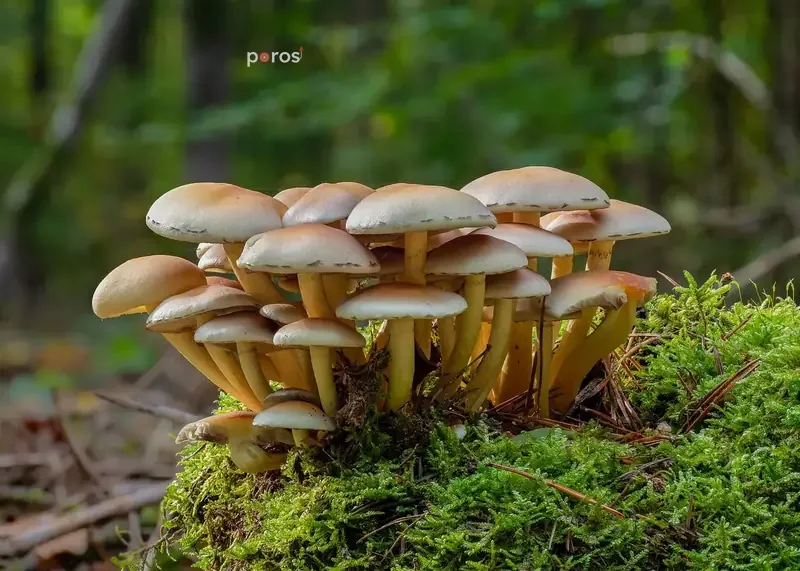
Deadly galerina Galerina marginata
Also grows in clusters on wood, brown with a ring; but smaller (cap 1–6 cm), with a thin brown stem and rusty-brown spore print. Contains amatoxins that destroy the liver.
 Poisonous
not Poplar mushroom
Sulphur tuft Hypholoma fasciculare
Forms crowded clusters on stumps; sulphur-yellow cap, greenish-yellow gills turning purple-brown; no ring and a very bitter taste. Poisonous (First Nature).
 Edible species
not Poplar mushroom
Oyster mushroom Pleurotus ostreatus
Also called kavak mantarı in Turkey; but fan-shaped, stemless or with a short side stem, without a ring, and its gills run down the stem.
How to cook and eat poplar mushrooms
Safety first. Brown, ringed mushrooms growing in clusters on stumps include the deadly funeral bell, so wild poplar mushrooms are not eaten without an expert's identification. Never eat it raw; cook it thoroughly.
How to prepare it
Trim the tough base and split the cluster into small clumps. Rinse quickly under running water and dry at once; do not soak.
How to cook it
Never eat it raw. Sauté it, then cook covered over a low heat so the fibrous stems soften. It also goes into soups, stews and casseroles.
What goes with it?
In Italy it becomes a pasta sauce with garlic, olive oil, white wine and parsley.
- extra virgin olive oil
- garlic
- dry white wine
- flat-leaf parsley
- spaghetti
Source: Wikipedia · practical details from our recipes.
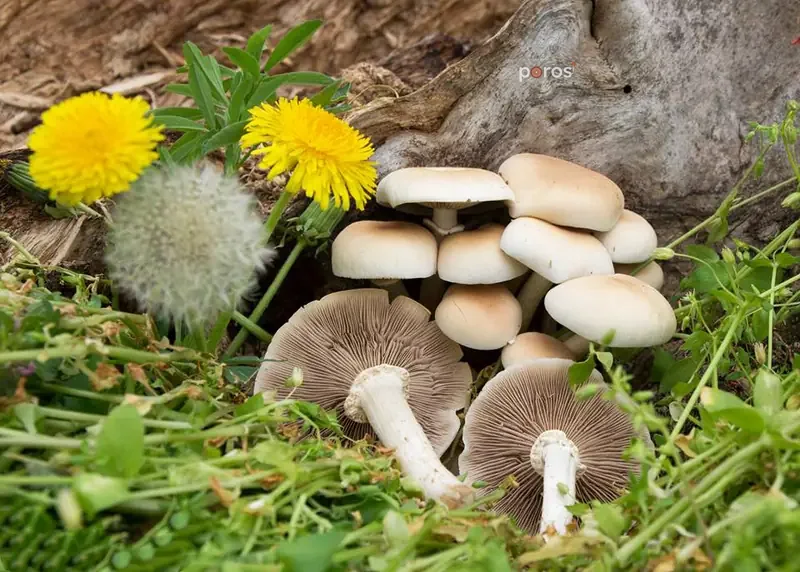
Recipe
On the blog
How to store poplar mushrooms
Grow it, buy it
Poplar mushroom price list

Black poplar mushroom grain spawn; brown-capped clusters on hardwood sawdust.
590 ₺
| Product | Us | Market (sourced, dated) |
|---|---|---|
| Fresh poplar mushrooms | Made to order · ask | — |
| Dried poplar mushrooms | Made to order · ask | — |
We make our poplar mushrooms products in small batches, to order; send a request and we email you the price and delivery date. The market column shows prices seen on other sellers' pages on the date given; they are not our prices and may have changed.
Frequently asked questions
Is the poplar mushroom the same as the oyster mushroom?
No, although both are called kavak mantarı in Turkey. Cyclocybe cylindracea has a ring, a central stem and a brown cap; the oyster mushroom is fan-shaped, ringless and almost stemless.
Is söğüt mantarı the same as the poplar mushroom?
Yes. Cyclocybe cylindracea grows on willow as well as poplar, so it is also called söğüt mantarı (willow mushroom); iNaturalist uses that Turkish name.
What can the poplar mushroom be confused with?
The most dangerous is the funeral bell (Galerina marginata): it also grows in clusters on wood and is brown with a ring, but smaller, with a thin brown stem. It contains amatoxins.
Can the poplar mushroom be grown at home?
Yes. It grows on hardwood sawdust or poplar logs and is produced commercially in Asia; the first harvest takes longer than with oyster mushrooms.
How do you cook poplar mushrooms?
Trim the tough base, rinse quickly and sauté, then cook covered over a low heat for a few minutes more so the fibrous stems soften. It is often made into a pasta sauce with garlic, olive oil, white wine and parsley. Never eat it raw.
How long do poplar mushrooms keep in the fridge?
Up to 3 days in the fridge in its own container or a paper bag (Penn State Extension). Plastic bags trap moisture and speed spoilage; for longer storage, dry it or blanch and freeze it.
Is there a poplar mushroom grow kit?
We don't currently sell a poplar mushroom kit. The species does grow at home but more slowly and with smaller yields than oyster mushrooms, so an oyster block is the easier first try.
When is poplar mushroom season?
Turkish records fall in spring (March–May) and autumn (September–December), most of all in October. Cultivated poplar mushrooms are produced all year.
Are poplar mushrooms edible?
Yes, the poplar mushroom is an edible species. Eat a wild one only after an expert has identified it with certainty: it can be confused with funeral bell (Galerina marginata) and sulphur tuft (Hypholoma fasciculare). Brown, ringed mushrooms growing in clusters on stumps include the deadly funeral bell, so wild poplar mushrooms are not eaten without an expert's identification. Never eat it raw; cook it thoroughly.
When is poplar mushroom season in Turkey?
In our calendar, poplar mushroom season runs Mar–May, Sep–Dec. In Turkey, poplar mushroom records fall in spring (March–May) and autumn (September–December); 11 of the 23 observations on our map are from October. In cultivation it is grown all year.
Where do poplar mushrooms grow?
The poplar mushroom grows in clusters on stumps, in trunk hollows and on the roots of poplars, willows and other broadleaved trees; it breaks down dead wood as a white rot and also appears on old or wounded living trees.
Where are poplar mushrooms found in Turkey?
Our map has 23 Turkish observations of the poplar mushroom, mostly from Istanbul, with others from Ankara, Diyarbakır, İzmir and Kocaeli. Specimens collected in Tokat were analysed in a study of fatty acid content. Poplars and willows along streams are the places to look.
What is the poplar mushroom called in Turkish?
In Turkish, the poplar mushroom (Cyclocybe cylindracea) is called Kavak mantarı; other local names include söğüt mantarı and pioppino.
Related species
-
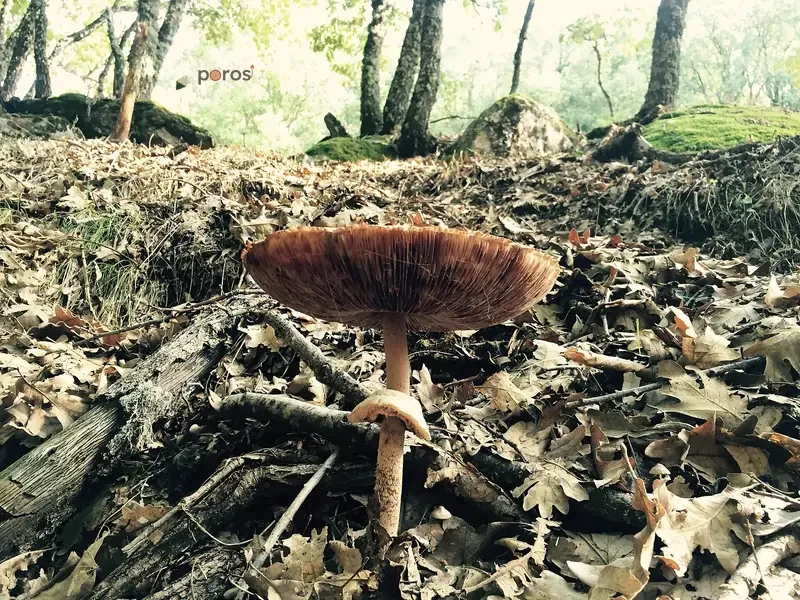 Anatolian matsutakeTricholoma anatolicumEdible species
-
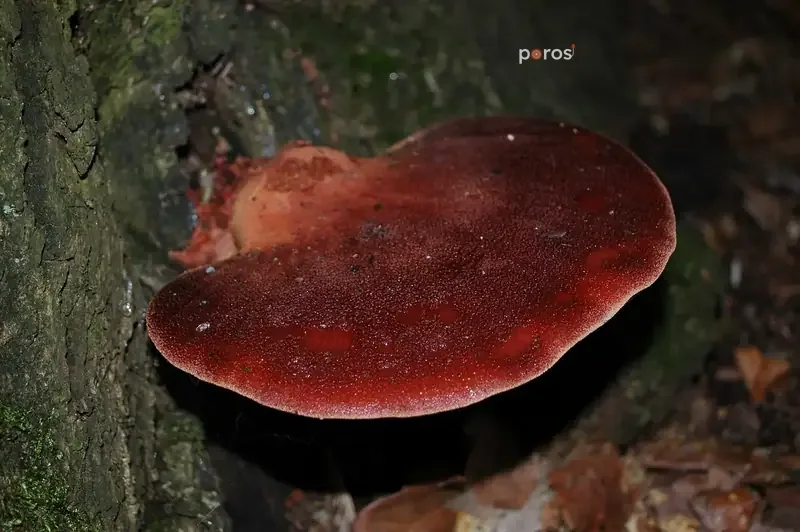 Beefsteak fungusFistulina hepaticaEdible species
-
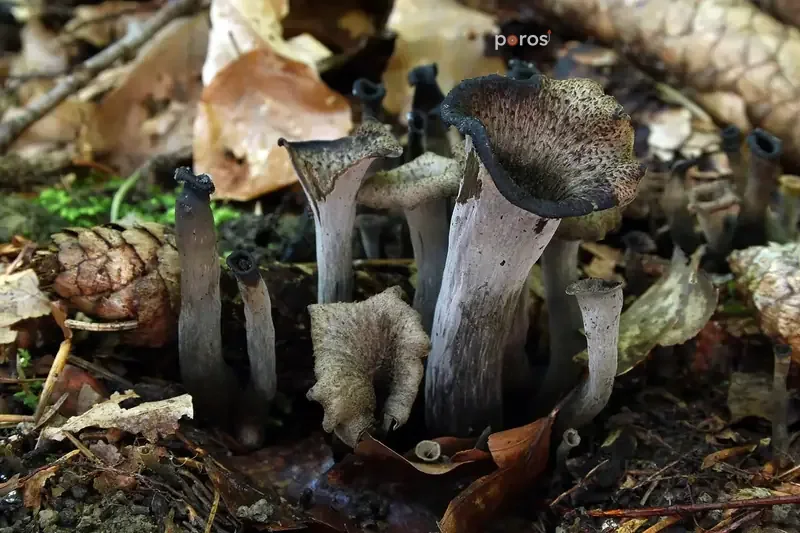 Black trumpetCraterellus cornucopioidesEdible species
-
 Bloody milk capLactarius sanguifluusEdible species
-
 Button mushroomAgaricus bisporusEdible species
-
 Caesar’s mushroomAmanita caesareaEdible species
-
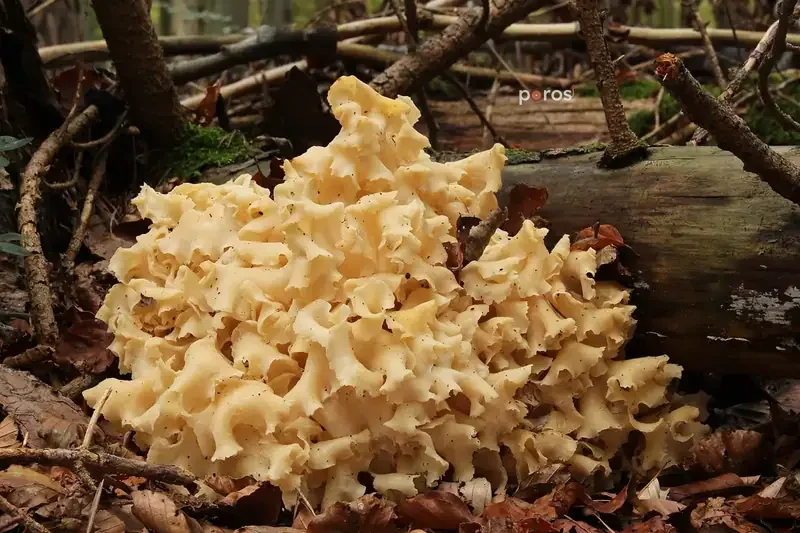 Cauliflower mushroomSparassis crispaEdible species
-
 ChanterelleCantharellus cibariusEdible species
Sources
- Koutrotsios ve ark. (2020), Molecules: Pleurotus ostreatus ve Cyclocybe cylindracea element içeriği pubmed.ncbi.nlm.nih.gov
- Çınar Yılmaz H. ve ark. — Fatty Acid Contents of Two Edible Mushroom Species (Cyclocybe aegerita and Hygrophorus eburneus) Collected from Tokat Region, MEJS dergipark.org.tr
- Rezaeian S.H., Pourianfar H.R., Shahtahmasbi S.H. — Cultivation of black poplar mushroom, Cyclocybe aegerita, on woody and non-woody lignocellulosic substrates with a high biological efficiency, Asian Journal of Mycology 5(1): 31–39, 2022 asianjournalofmycology.org
All sources (11)
- Penn State Extension: Preparing and Preserving Mushrooms extension.psu.edu
- Wikipedia (EN): Cyclocybe aegerita en.wikipedia.org
- Vikipedi (TR): Kavak mantarı tr.wikipedia.org
- First Nature: Galerina marginata first-nature.com
- First Nature: Hypholoma fasciculare first-nature.com
- GBIF: Cyclocybe cylindracea, Türkiye kayıtları gbif.org
- First Nature: Cyclocybe cylindracea (Poplar Fieldcap) first-nature.com
- Foodiamo (GialloZafferano blog): Spaghetti ai funghi pioppini blog.giallozafferano.it
Photo credits (14)
- Cyclocybe cylindracea · iNaturalist #248734232 · Cristina Gimeno Lozano · CC0
- Cyclocybe cylindracea · iNaturalist #193202533 · Gianni Del Bufalo bygdb · CC BY 4.0
- Cyclocybe cylindracea · iNaturalist #17933226 · Andrew J. Crawford · CC0
- Cyclocybe cylindracea · iNaturalist #323679088 · Gianni Del Bufalo bygdb · CC BY 4.0
- Cyclocybe cylindracea · iNaturalist #141835564 · Alan Rockefeller · CC BY 4.0
- Cyclocybe cylindracea · iNaturalist #17933226 · Andrew J. Crawford · CC0
- File:Cyclocybe cylindracea.jpg · Srđan Lazarević · CC BY-SA 4.0
- Cyclocybe cylindracea · iNaturalist #172633164 · Sylvain Montagner · CC BY 4.0
- File:Cyclocybe cylindracea 381453539.jpg · Matej Frančeškin · CC BY 4.0
- iNaturalist: Diyarbakır, 3 Oct 2026 · Mustafa Arisli · CC BY
- iNaturalist: Diyarbakır, 3 Oct 2026 · Mustafa Arisli · CC BY
- iNaturalist: Diyarbakır, 24 Mar 2026 · Mustafa Arisli · CC BY
- iNaturalist: İzmir, 5 Oct 2025 · no rights reserved · CC0
- iNaturalist: İstanbul, 17 Nov 2024 · Daniel Ghyselinck · CC BY

