
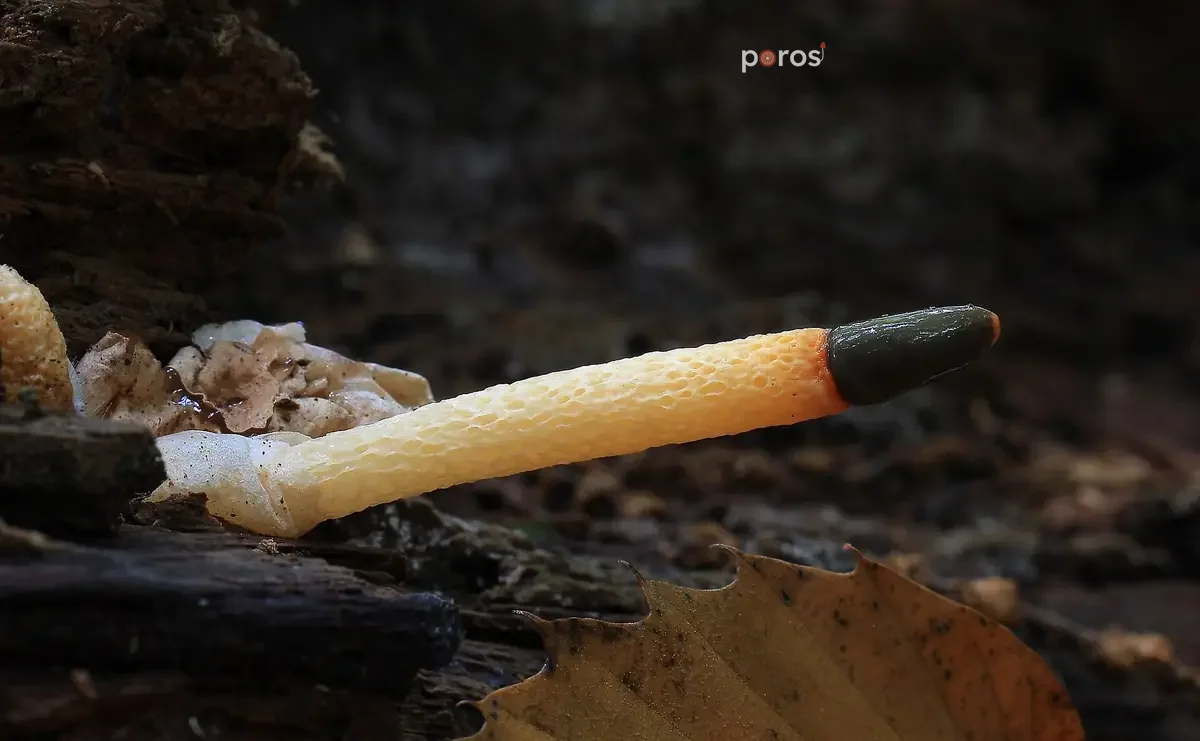


Dog stinkhorn
Mutinus caninus · Phallaceae
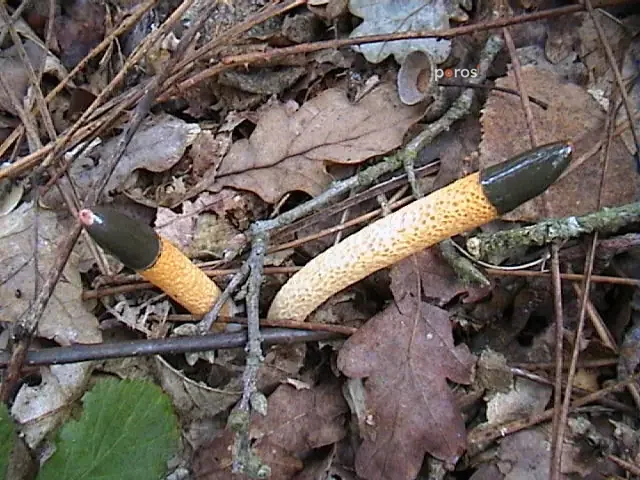
The dog stinkhorn (Mutinus caninus) is a slender stinkhorn with a spongy, pale orange stem that rises from a white "egg" among leaf litter and rotting wood.
Last updated: Prepared by the Poros Mantar editorial team7 sources checkedReport a correction
The dog stinkhorn (Mutinus caninus) is a slender stinkhorn with a spongy, pale orange stem that rises from a white "egg" among leaf litter and rotting wood. The stem tip is orange-red and coated in a foul-smelling olive-brown spore slime that draws flies. It is not known to be poisonous, but it is not eaten, and at the egg stage it can be mistaken for young deadly mushrooms.
Also called: dog's stinkhorn Turkish: Mutinus caninus
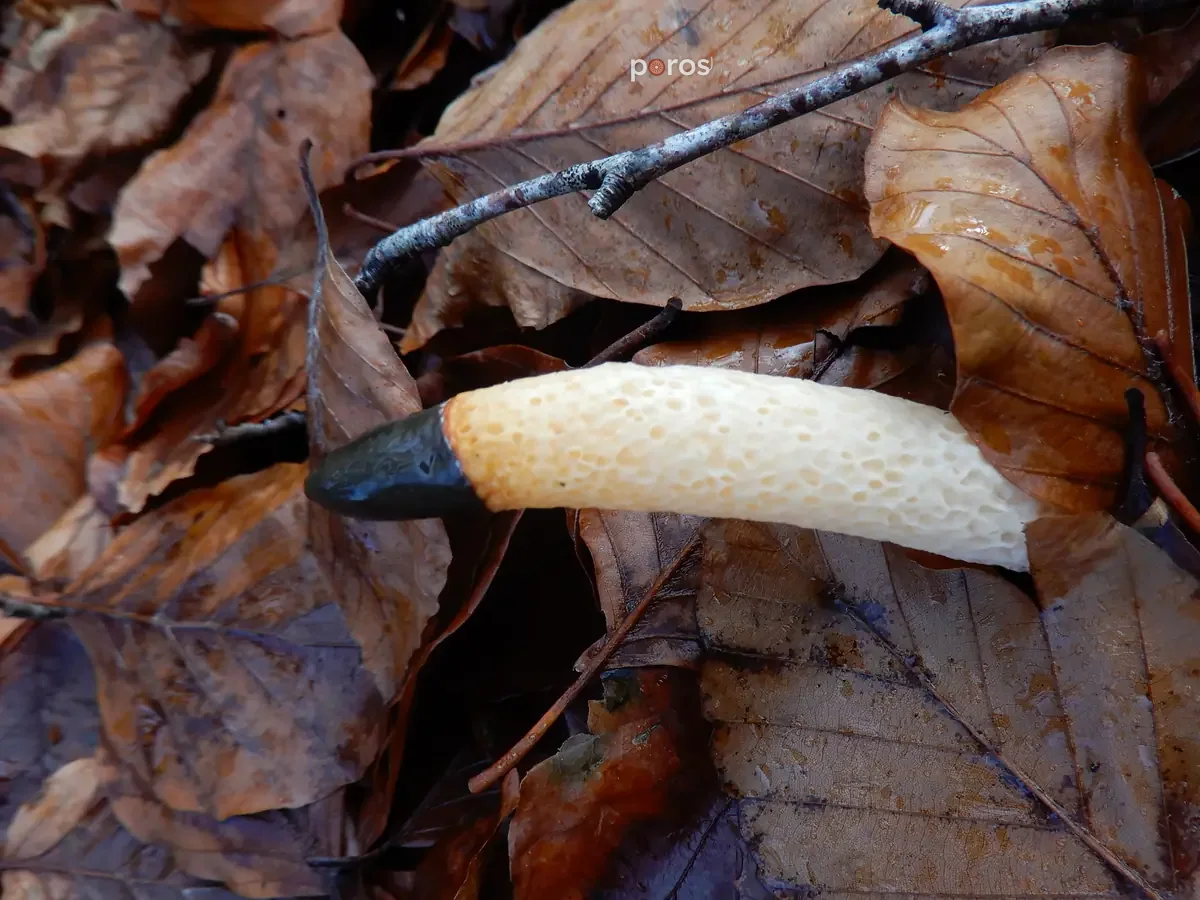
How to recognise it
Dog stinkhorn, part by part
No ring Spore print: No spore print is taken; the spores are in the olive-brown slime Foul and carrion-like when mature, though milder than the common stinkhorn.


When and where
Apr, Jul–Nov
- Jan
- Feb
- Mar
- Aprin season
- May
- Jun
- Julin season
- Augin season
- Sepin season
- Octin season
- Novin season
- Dec
The dog stinkhorn appears in summer and autumn. Our Turkish records fall in April, July, October and November, most in October. The first Turkish record, from Artvin, was collected in August.
Type Inedible
Months seen AprilJulyAugustSeptemberOctoberNovember
Colour Orange
Regions Black Sea RegionMediterranean RegionMarmara RegionOsmaniyeSamsunIstanbul
Where does dog stinkhorn grow?
Deciduous and mixed woodland, among leaf litter, rotting wood and woody debris; sometimes in wood chips in parks and gardens. It grows singly or in small groups.
Where is dog stinkhorn found in Turkey?
Our map data (GBIF and iNaturalist) holds 7 Turkish records: 5 from Istanbul and one each from Osmaniye and Samsun. It was first reported for Turkey from Artvin (Demirel and Uzun, 2004) and later from new sites in the eastern Black Sea region (Anatolian Journal of Botany, 2019).
Which months
- Jan0
- Feb0
- Mar0
- Apr2
- May0
- Jun0
- Jul1
- Aug0
- Sep0
- Oct3
- Nov1
- Dec0
3 provinces, 7 observations (GBIF, iNaturalist); months from observation dates. Record density also reflects where observers work.
Latest dog stinkhorn observations
-
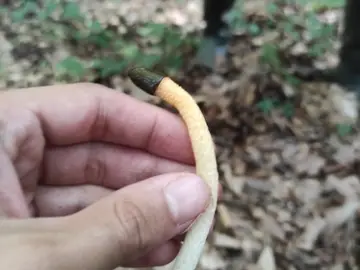 İstanbul5 Oct 2024 · iNaturalist© Umut Nuri Erdoğan · CC BY
-
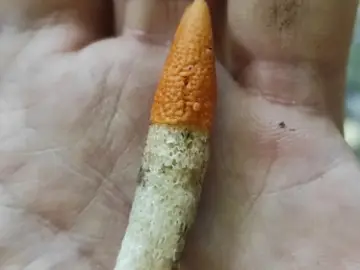 İstanbul21 Apr 2024 · iNaturalist© Umut Nuri Erdoğan · CC BY
-
 Illustrative
Osmaniye12 Jul 2023 · iNaturalist
-
 Illustrative
Samsun2 Nov 2019 · iNaturalist
-
 Illustrative
İstanbul29 Oct 2014 · iNaturalist
- See on the map
On "illustrative" cards the image is a photo of the species; the observation photo cannot be shown here because of its licence, but can be seen at the source.
Look-alikes
What could it be confused with?
Dog stinkhorn can be mistaken for the species below. Each card shows the look-alike and how it differs from Dog stinkhorn.
 Inedible
not Dog stinkhorn
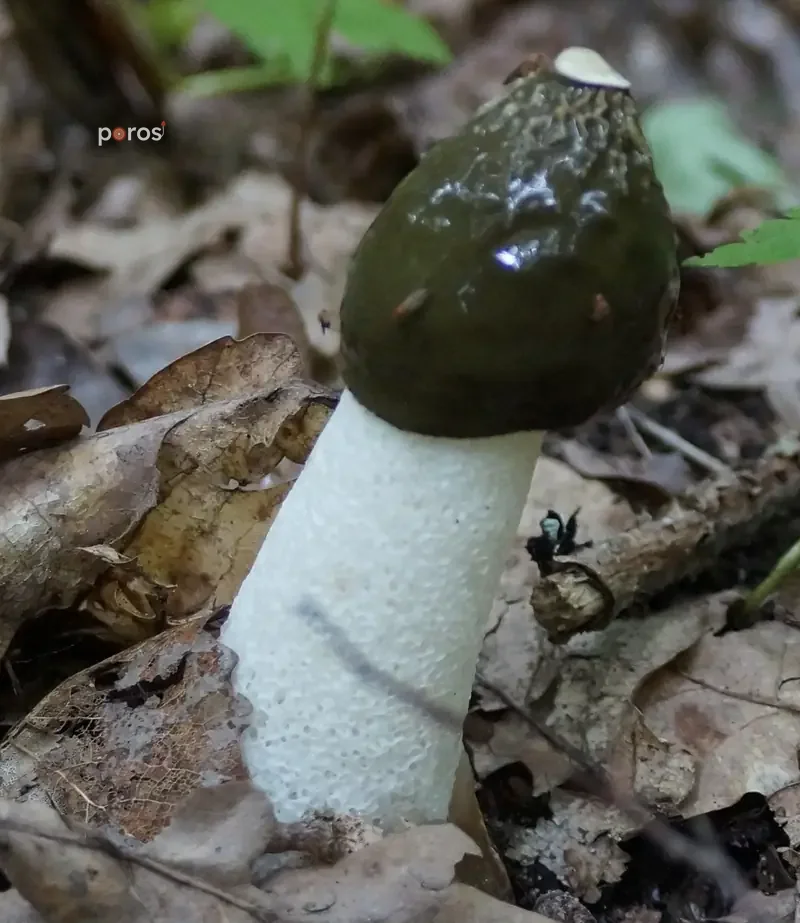
Common stinkhorn Phallus impudicus
The common stinkhorn is much larger and white; its spore slime sits on a separate honeycombed cap on top of the stem and it smells far stronger. The dog stinkhorn is slender, orangey and has no cap.
not Dog stinkhorn
Elegant stinkhorn Mutinus elegans
The elegant stinkhorn is taller with a pointed tip, its orange colour deepening gradually towards the tip, and its spore slime covers a longer part of the stem. The two are not always cleanly separable.
 Deadly
not Dog stinkhorn
Death cap Amanita phalloides
At the egg stage, the dog stinkhorn and a young death cap both look like a white ball. Cut lengthwise, a stinkhorn egg shows a jelly layer and a stem in the making; a death cap egg shows cap, gills and stem and has no jelly. Never eat white egg-like fungi.
 Edible species
not Dog stinkhorn
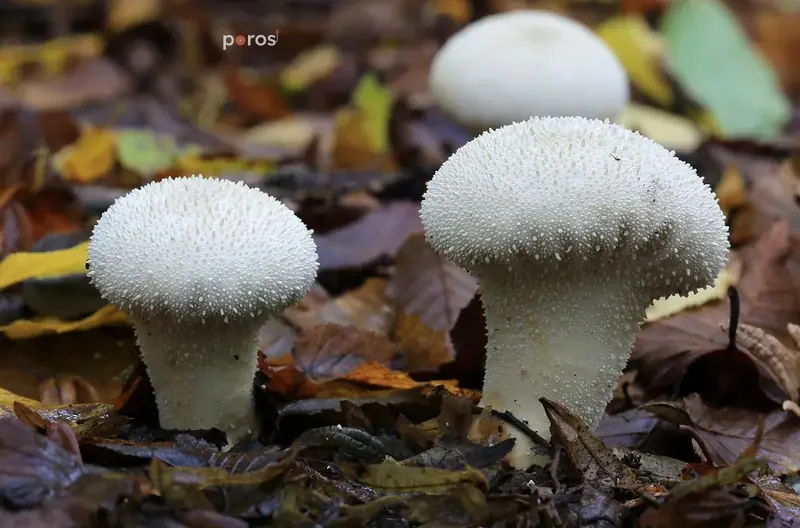
Common puffball Lycoperdon perlatum
A young puffball is white and uniform all the way through, with no jelly layer, and its skin is covered in tiny spines. A stinkhorn egg is smooth and shows jelly when cut.
What it contains
It has no culinary value; mature fruit bodies smell foul.
General information, not a health claim.
The dog stinkhorn is not known to be poisonous; some sources say the egg stage can be eaten, but most treat it as inedible because of its smell and lack of value. The real risk is confusing the white egg stage with young deadly Amanita species. Do not eat it. If poisoning is suspected, call poison control and keep any leftover mushroom.
Frequently asked questions
Is the dog stinkhorn edible?
Our advice is not to eat it. It is not known to be poisonous, but it smells foul and its egg stage can be mistaken for young deadly mushrooms.
Is the dog stinkhorn poisonous?
Sources give no record of it being poisonous. The risk lies in confusing it with its look-alikes rather than in the species itself.
Why does the dog stinkhorn smell?
The sticky spore slime on the tip smells of carrion and attracts flies, which spread the spores as they feed on it.
What does the dog stinkhorn egg look like?
It looks like a soft, white egg 2–3 cm across with white root-like cords at the base. Cut open, it shows a jelly layer and an orangey stem in the making.
How do you tell it from the common stinkhorn?
The common stinkhorn is large and white, with its spore slime on a separate honeycombed cap. The dog stinkhorn is slender, orangey and capless, and smells less strongly.
Where and when does it grow?
In deciduous and mixed woodland among litter and rotting wood, in summer and autumn.
Where is it found in Turkey?
Our map data has 7 records from Istanbul, Osmaniye and Samsun; the first Turkish record came from Artvin.
Does it have a Turkish name?
We found no established, sourced Turkish name, so we use its Latin name. It belongs to the stinkhorn group.
What is the elegant stinkhorn?
The elegant stinkhorn is Mutinus elegans, a close relative of the dog stinkhorn that is common in eastern North America. It is longer and more tapered, with its pink-orange colour running further down the stem. The species we describe on this page is Mutinus caninus.
When is dog stinkhorn season in Turkey?
In our calendar, dog stinkhorn season runs Apr, Jul–Nov. The dog stinkhorn appears in summer and autumn. Our Turkish records fall in April, July, October and November, most in October. The first Turkish record, from Artvin, was collected in August.
Where does dog stinkhorn grow?
Deciduous and mixed woodland, among leaf litter, rotting wood and woody debris; sometimes in wood chips in parks and gardens. It grows singly or in small groups.
Where is dog stinkhorn found in Turkey?
Our map data (GBIF and iNaturalist) holds 7 Turkish records: 5 from Istanbul and one each from Osmaniye and Samsun. It was first reported for Turkey from Artvin (Demirel and Uzun, 2004) and later from new sites in the eastern Black Sea region (Anatolian Journal of Botany, 2019).
What can dog stinkhorn be confused with?
Dog stinkhorn can be confused with common stinkhorn (Phallus impudicus, inedible), elegant stinkhorn (Mutinus elegans, inedible), death cap (Amanita phalloides, deadly) and common puffball (Lycoperdon perlatum, edible species). Look-alikes are compared on this page.
What is dog stinkhorn called in Turkish?
In Turkish, dog stinkhorn (Mutinus caninus) is called Mutinus caninus.
Related species
-
Common stinkhornPhallus impudicusInedible
-
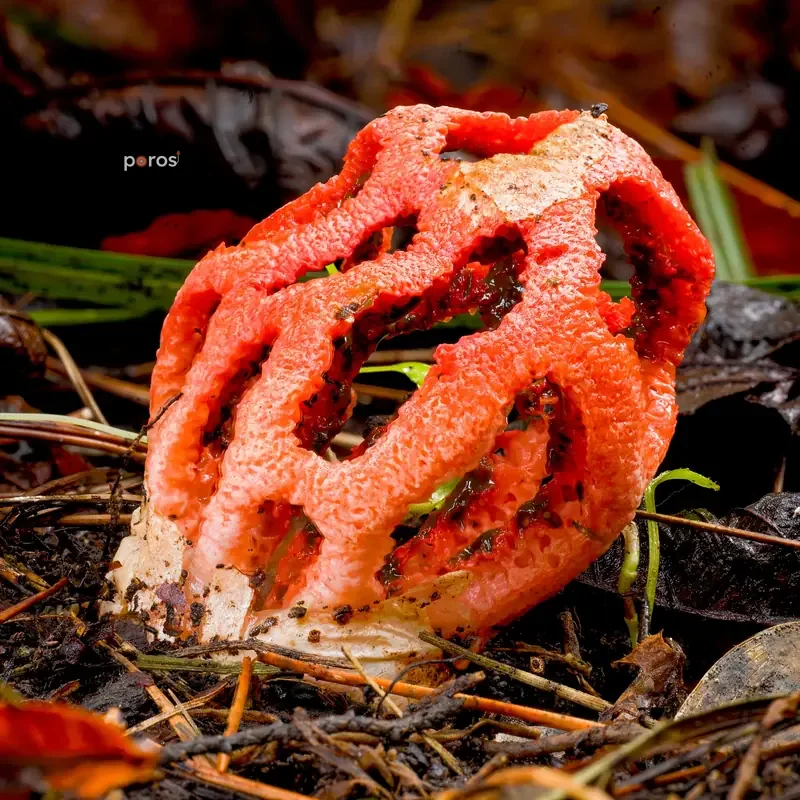 Red cage fungusClathrus ruberInedible
-
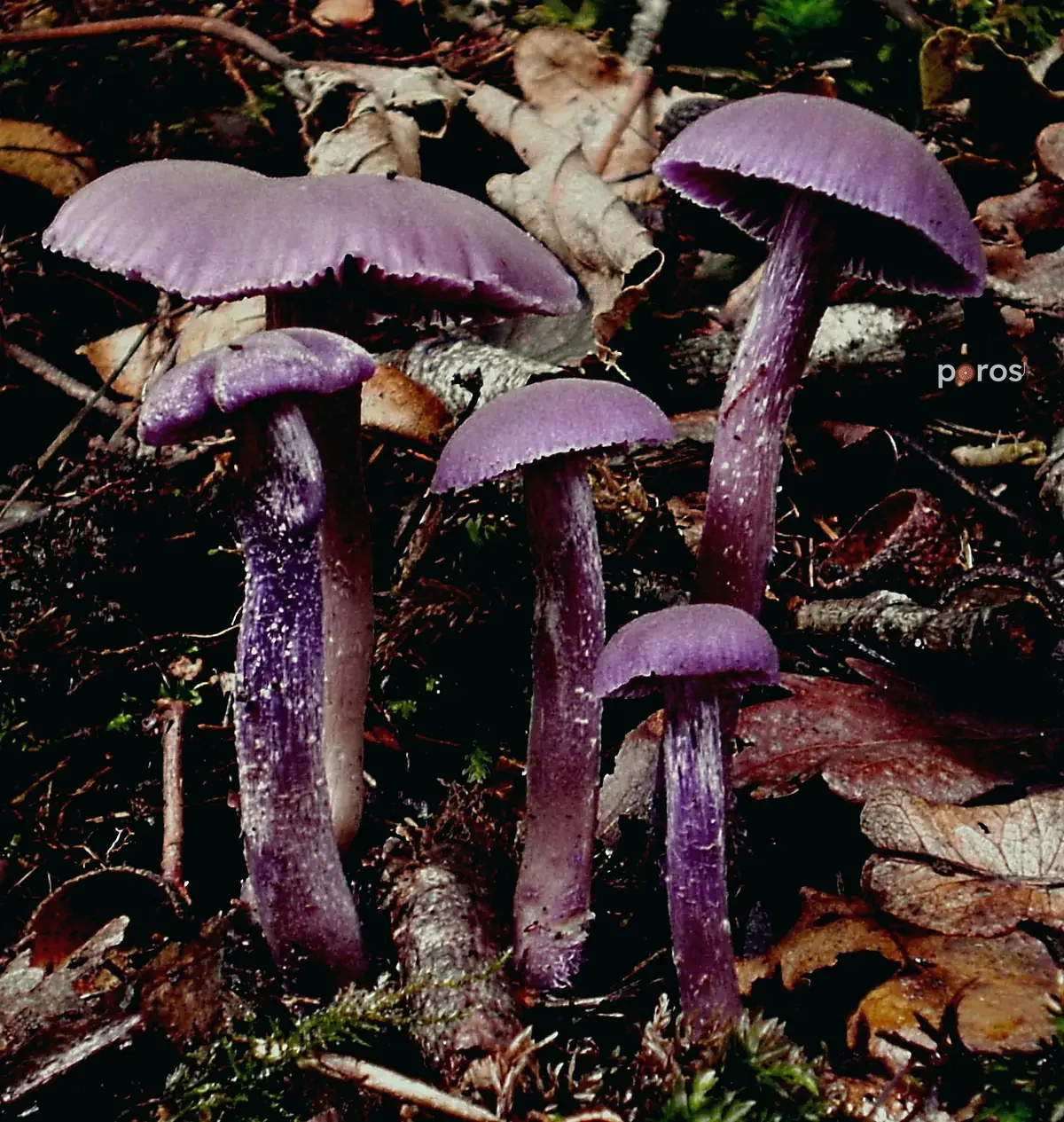 Amethyst deceiverLaccaria amethystinaInedible
-
 Artist’s bracketGanoderma applanatumInedible
-
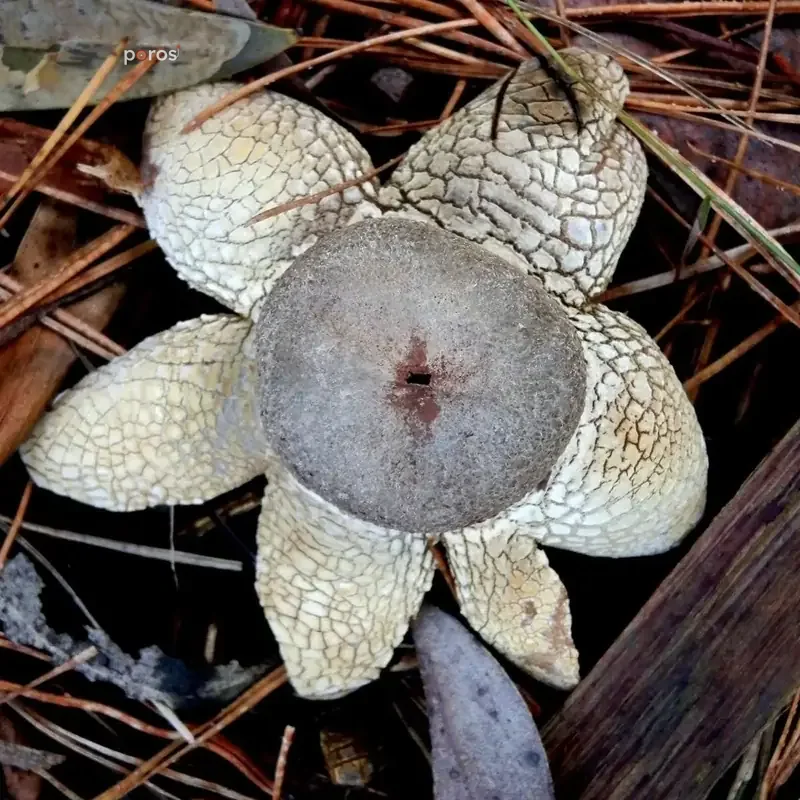 Barometer earthstarAstraeus hygrometricusInedible
-
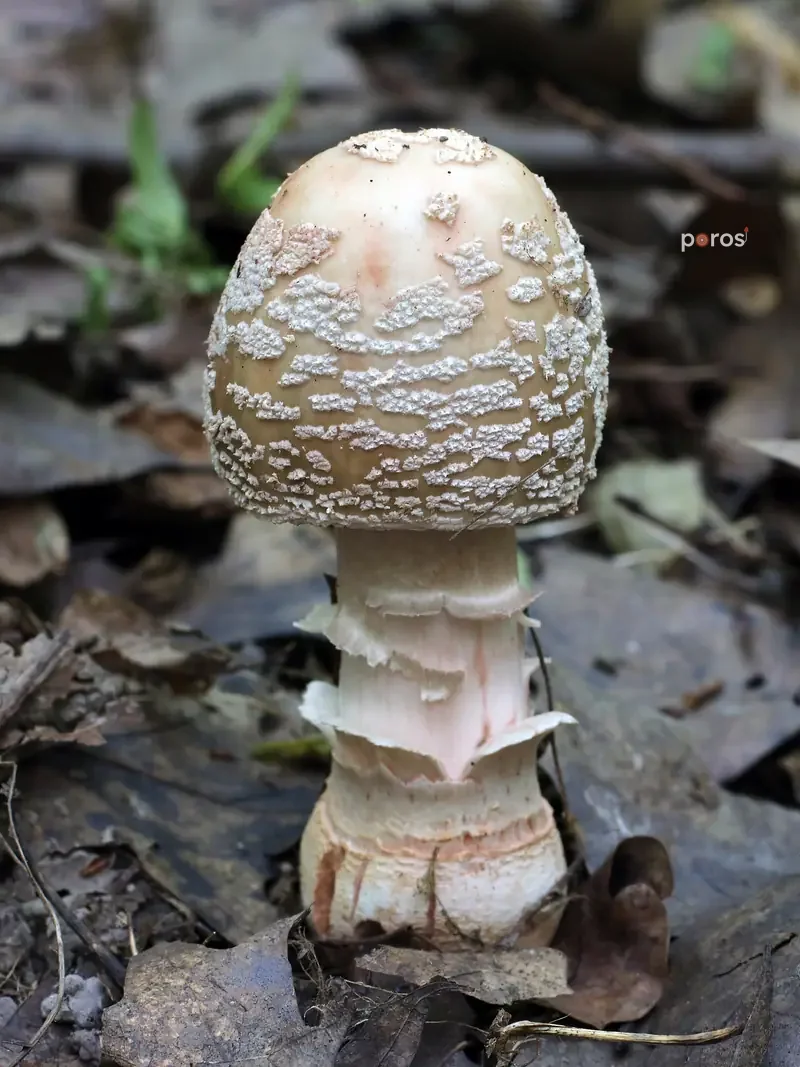 BlusherAmanita rubescensInedible
-
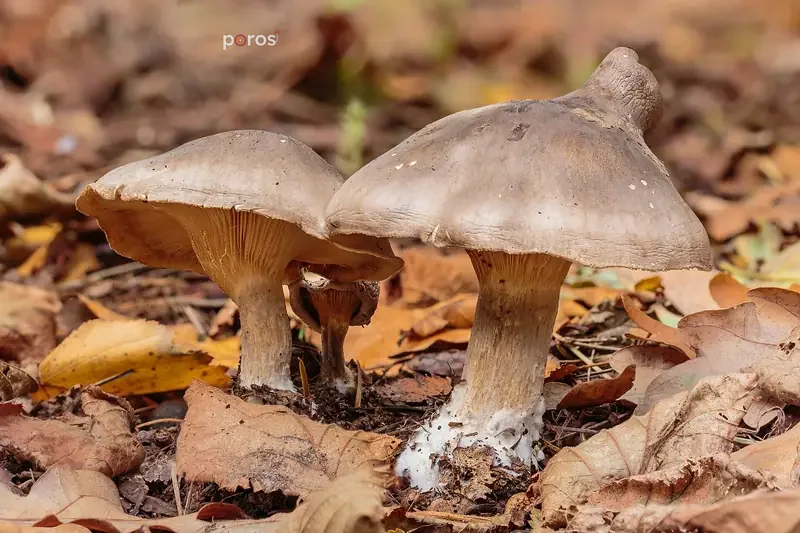 Clouded funnelClitocybe nebularisInedible
-
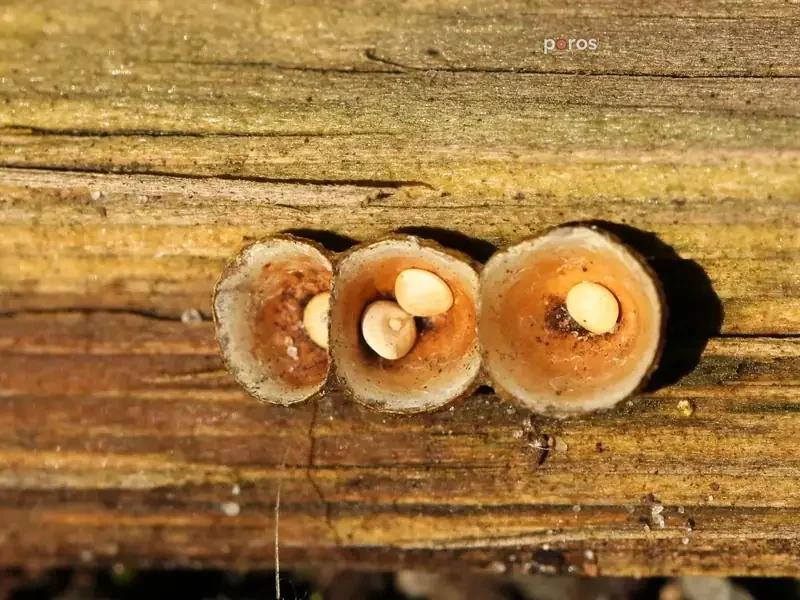 Common bird’s nest fungusCrucibulum laeveInedible
Sources
- Demirel ve Uzun (2004), Turkish Journal of Botany 28: Two New Records of Phallales for the Mycoflora of Turkey journals.tubitak.gov.tr
- Anatolian Journal of Botany (2019) 3(2): Türkiye'deki Phallales'lerin yayılışına katkılar dergipark.org.tr
- Wikipedia (EN): Mutinus caninus en.wikipedia.org
All sources (7)
- First Nature: Mutinus caninus, Dog Stinkhorn first-nature.com
- iNaturalist: Mutinus caninus (Türkiye gözlemleri) inaturalist.org
- GBIF: Türkiye kayıtları gbif.org
- MushroomExpert: Mutinus caninus mushroomexpert.com
Photo credits (10)
- File:Mutinus caninus, Dog Stinkhorn, UK.jpg · Stu's Images · CC BY-SA 3.0
- Mutinus caninus · iNaturalist #327130633 · Cara Ennis · CC BY 4.0
- Mutinus caninus · iNaturalist #141878322 · Jeff Jones · CC BY 4.0
- File:Gemeine Hundsrute Mutinus caninus.JPG · Holger Krisp · CC BY 3.0
- File:Mutinus caninus 95993876.jpg · Michel Langeveld · CC BY-SA 4.0
- Mutinus caninus · iNaturalist #327130633 · Cara Ennis · CC BY 4.0
- Mutinus caninus · iNaturalist #237300844 · Jose Castro · CC BY 4.0
- Mutinus caninus · iNaturalist #34824834 · Tina Ellegaard Poulsen · CC BY 4.0
- iNaturalist: İstanbul, 5 Oct 2024 · Umut Nuri Erdoğan · CC BY
- iNaturalist: İstanbul, 21 Apr 2024 · Umut Nuri Erdoğan · CC BY


