
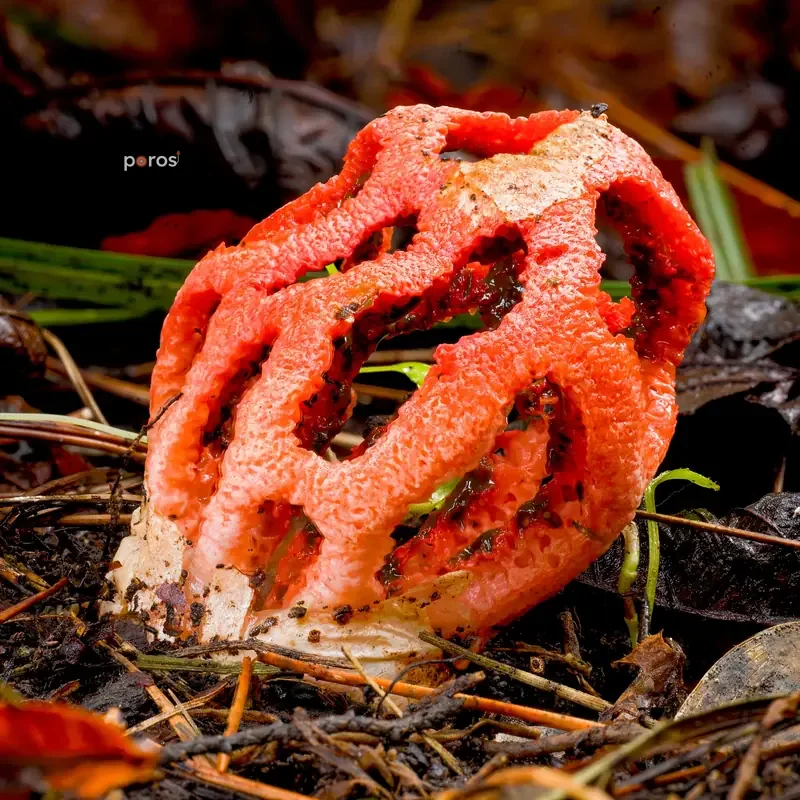


Red cage fungus
Clathrus ruber · Phallaceae
The red cage fungus (Clathrus ruber) hatches from a white egg into a red-orange, hollow lattice ball with no cap or stem.
Last updated: Prepared by the Poros Mantar editorial team6 sources checkedReport a correction
The red cage fungus (Clathrus ruber) hatches from a white egg into a red-orange, hollow lattice ball with no cap or stem. The olive-brown slime on the inside of the lattice smells of rotting meat and draws flies, which carry the spores. In Turkey it is seen mostly in parks, gardens and groves in Istanbul. It is not edible, and illness after eating it has been reported.
Also called: latticed stinkhorn, basket stinkhorn, red cage Turkish: Kafes mantarı, kırmızı kafes mantarı
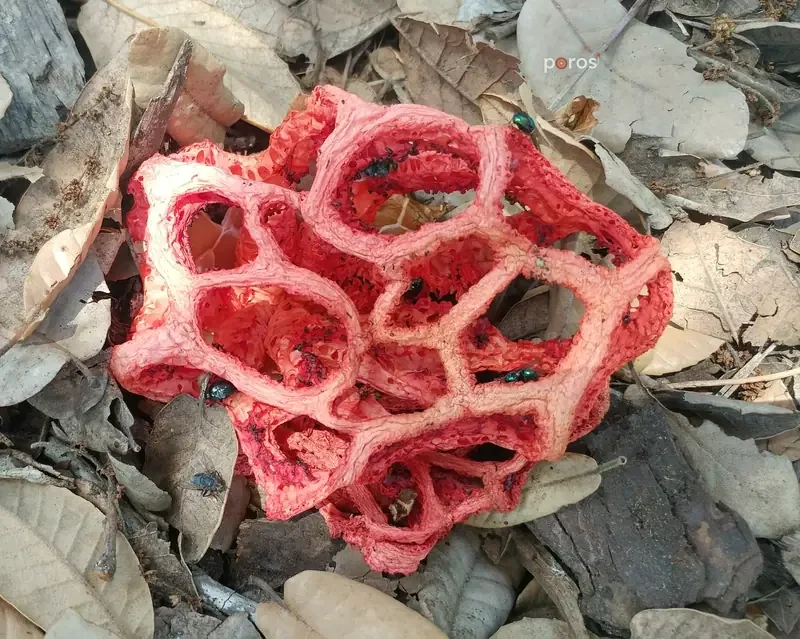
How to recognise it
Red cage fungus, part by part
No ring Spore print: Olive-brown (in the slimy spore mass) When mature it smells strongly and repulsively of rotting meat.

When and where
Apr–May, Oct–Dec
- Jan
- Feb
- Mar
- Aprin season
- Mayin season
- Jun
- Jul
- Aug
- Sep
- Octin season
- Novin season
- Decin season
The red cage fungus appears in mild, damp weather. Turkish records are spread across the year but peak in April–May and October–December.
Type Inedible
Months seen AprilMayOctoberNovemberDecember
Regions Black Sea RegionMediterranean RegionAegean RegionMarmara RegionSinopAydınOrduSamsunMuğlaKocaeliIstanbulBalıkesir
Where does red cage fungus grow?
In leaf litter, mulch, wood chips and garden soil; in parks, gardens, roadsides and coastal groves. It is common in Mediterranean climates and appears singly or in small groups.
Where is red cage fungus found in Turkey?
Our map data (GBIF and iNaturalist) holds 128 Turkish records, 104 of them from Istanbul. The rest come from Muğla, Samsun, Sinop, Kocaeli, Balıkesir, Ordu, Aydın, Antalya, Bursa, Sakarya, İzmir and Osmaniye.
Other provinces: Osmaniye (1)
Which months
- Jan6
- Feb1
- Mar2
- Apr18
- May45
- Jun7
- Jul3
- Aug1
- Sep5
- Oct24
- Nov7
- Dec9
red cage fungus map of Turkey: all provinces and months →
13 provinces, 128 observations (GBIF, iNaturalist); months from observation dates. Record density also reflects where observers work.
Latest red cage fungus observations
-
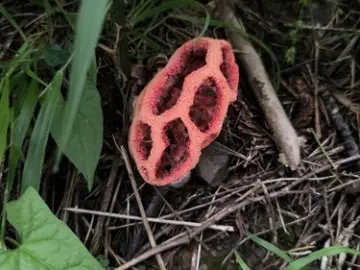 İstanbul23 May 2026 · iNaturalist© Umut Nuri Erdoğan · CC BY
-
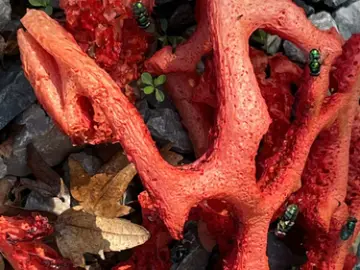 İstanbul4 Oct 2025 · iNaturalist© no rights reserved · CC0
-
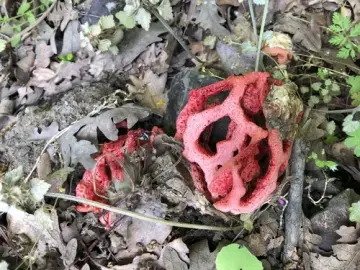 Sakarya25 Apr 2025 · iNaturalist© no rights reserved · CC0
-
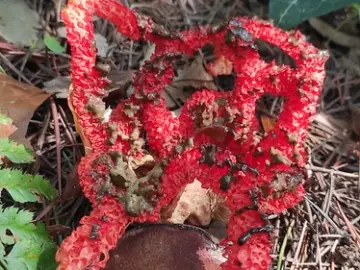 İstanbul3 Oct 2024 · iNaturalist© Umut Nuri Erdoğan · CC BY
-
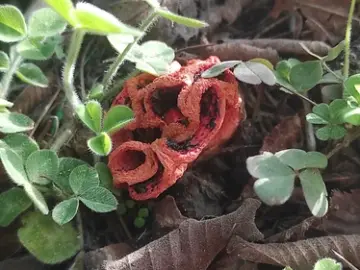 İstanbul2 Oct 2024 · iNaturalist© Umut Nuri Erdoğan · CC BY
-
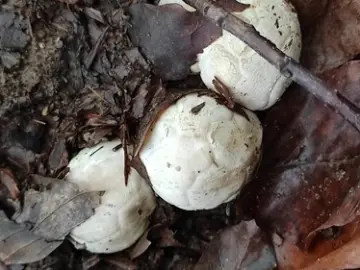 İstanbul21 Sep 2024 · iNaturalist© Umut Nuri Erdoğan · CC BY
-
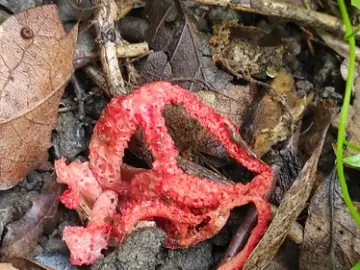 İstanbul3 May 2024 · iNaturalist© Umut Nuri Erdoğan · CC BY
-
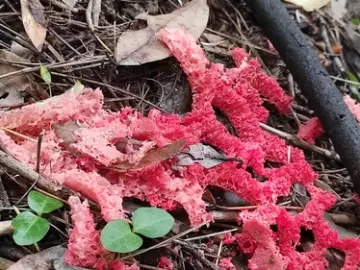 İstanbul21 Apr 2024 · iNaturalist© Umut Nuri Erdoğan · CC BY
- See on the map
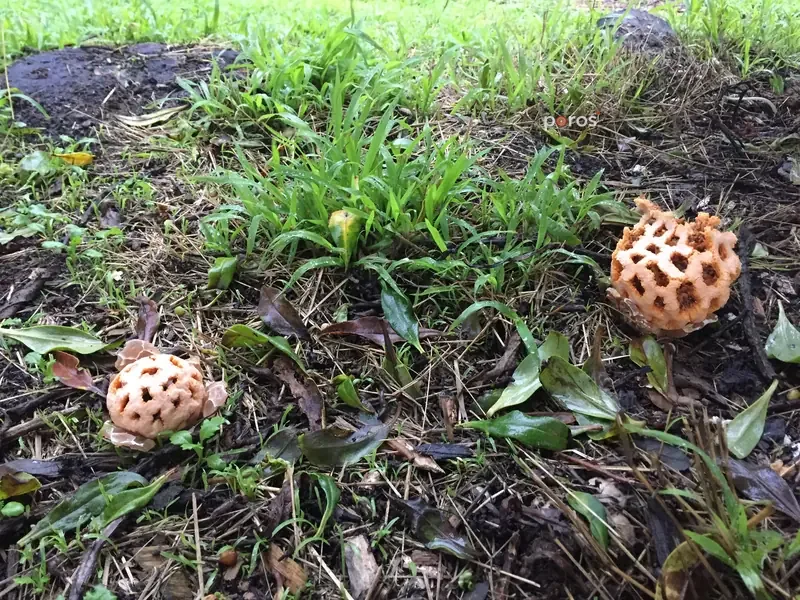
Look-alikes
What could it be confused with?
Red cage fungus can be mistaken for the species below. Each card shows the look-alike and how it differs from Red cage fungus.
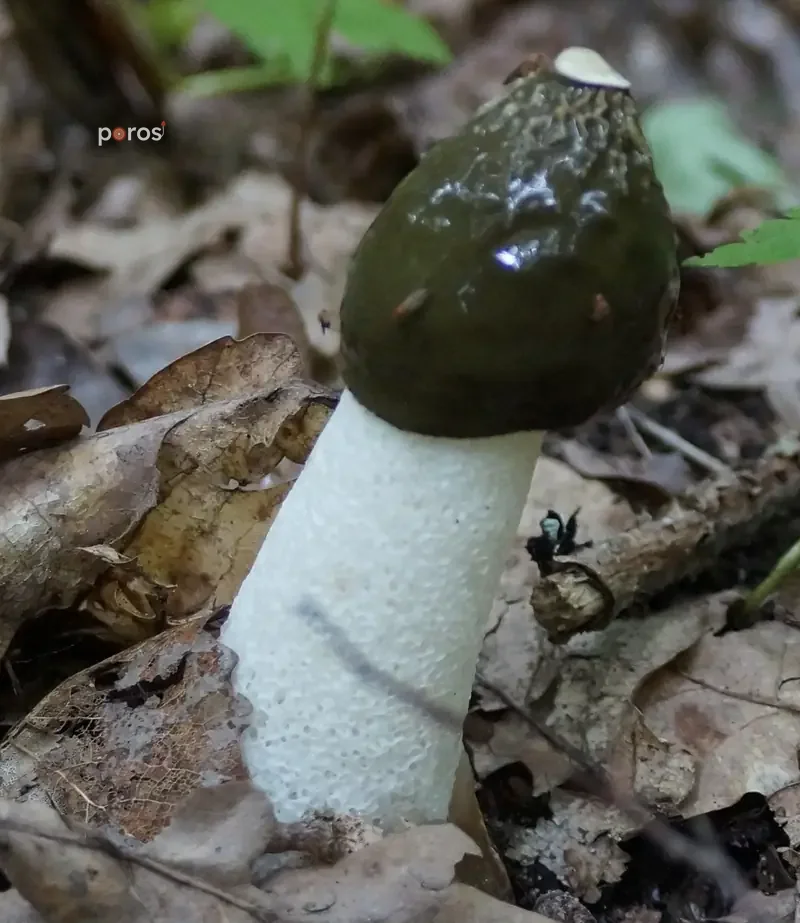 Inedible
not Red cage fungus
Common stinkhorn Phallus impudicus
From the same family; it also hatches from a white egg and smells of carrion, but matures into a tall white stem with a dark head instead of a cage.
 Edible species
not Red cage fungus
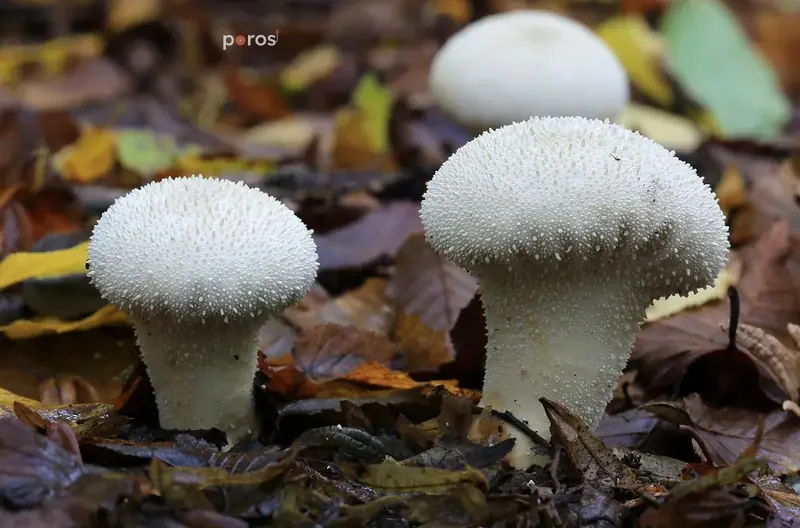
Common puffball Lycoperdon perlatum
At the egg stage the red cage looks like a white ball. A puffball cut lengthwise is white and uniform all through; a red cage egg shows jelly and the outline of the red lattice.
 Deadly
not Red cage fungus
Death cap Amanita phalloides
The death cap's egg is white too. Cut lengthwise, a death cap egg shows the outline of cap, gills and stem; a red cage egg shows jelly and a red lattice. Never eat any egg-shaped fungus without cutting it open.
 Inedible
not Red cage fungus
Devil's fingers Clathrus archeri
Instead of a cage, four to seven red arms open from the egg like an octopus.
What it contains
It has not been studied for nutrition; since it is not eaten, no nutrition data is given.
General information, not a health claim.
The red cage fungus is not edible. Its strong carrion smell keeps people from picking it, and there are reports of stomach upset after eating it. Its egg stage can be confused with a death cap egg; never eat any egg-shaped fungus without cutting it lengthwise and looking inside.
Frequently asked questions
Is the red cage fungus edible?
No. It smells of carrion and there are reports of stomach upset after eating it; it is treated as inedible.
Is it poisonous?
No deadly toxin is known, but it is not edible. The real danger is confusing its egg stage with a death cap egg.
Why does it smell so bad?
The slimy spore mass inside the cage smells of carrion to attract flies, which spread the spores on their feet.
It came up in my garden. What should I do?
It does no harm to plants; it breaks down mulch and plant debris. If the smell bothers you, remove it with gloves and bin it; keep children and pets from eating it.
How do you identify it?
A red-orange, holey, ball-shaped lattice rising from a white egg, with olive-brown slime inside and a strong carrion smell.
Where is it found in Turkey?
Most records are from parks and groves in Istanbul, with others from the Aegean, Mediterranean and Black Sea coasts.
When does it appear?
In mild, damp weather; in Turkey it is seen most often in April–May and October–December.
Are the latticed stinkhorn and basket stinkhorn the same as the red cage fungus?
Yes. Latticed stinkhorn, basket stinkhorn and red cage are all English names for Clathrus ruber, the stinkhorn that forms a round red lattice.
How is it different from the octopus stinkhorn?
The octopus stinkhorn (Clathrus archeri) also hatches from a white egg, but its red arms spread out like tentacles instead of forming a closed lattice ball. We have not found records of the octopus stinkhorn from Türkiye.
When is red cage fungus season in Turkey?
In our calendar, red cage fungus season runs Apr–May, Oct–Dec. The red cage fungus appears in mild, damp weather. Turkish records are spread across the year but peak in April–May and October–December.
Where does red cage fungus grow?
In leaf litter, mulch, wood chips and garden soil; in parks, gardens, roadsides and coastal groves. It is common in Mediterranean climates and appears singly or in small groups.
Where is red cage fungus found in Turkey?
Our map data (GBIF and iNaturalist) holds 128 Turkish records, 104 of them from Istanbul. The rest come from Muğla, Samsun, Sinop, Kocaeli, Balıkesir, Ordu, Aydın, Antalya, Bursa, Sakarya, İzmir and Osmaniye.
What can red cage fungus be confused with?
Red cage fungus can be confused with common stinkhorn (Phallus impudicus, inedible), common puffball (Lycoperdon perlatum, edible species), death cap (Amanita phalloides, deadly) and Devil's fingers (Clathrus archeri, inedible). Look-alikes are compared on this page.
What is red cage fungus called in Turkish?
In Turkish, red cage fungus (Clathrus ruber) is called Kafes mantarı; other local names include kırmızı kafes mantarı.
Related species
-
Common stinkhornPhallus impudicusInedible
-
 Dog stinkhornMutinus caninusInedible
-
 Amethyst deceiverLaccaria amethystinaInedible
-
 Artist’s bracketGanoderma applanatumInedible
-
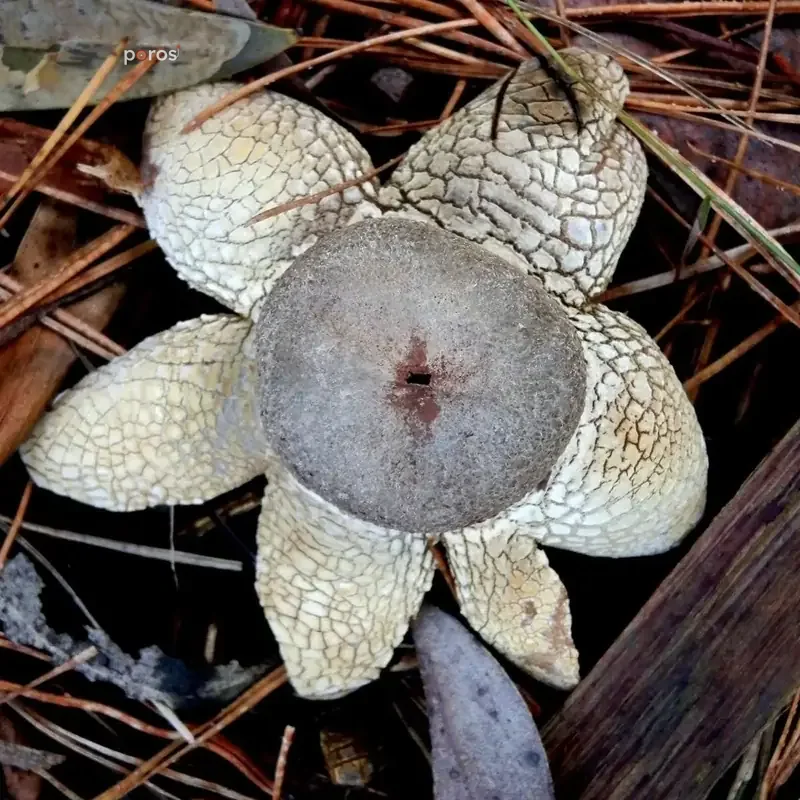 Barometer earthstarAstraeus hygrometricusInedible
-
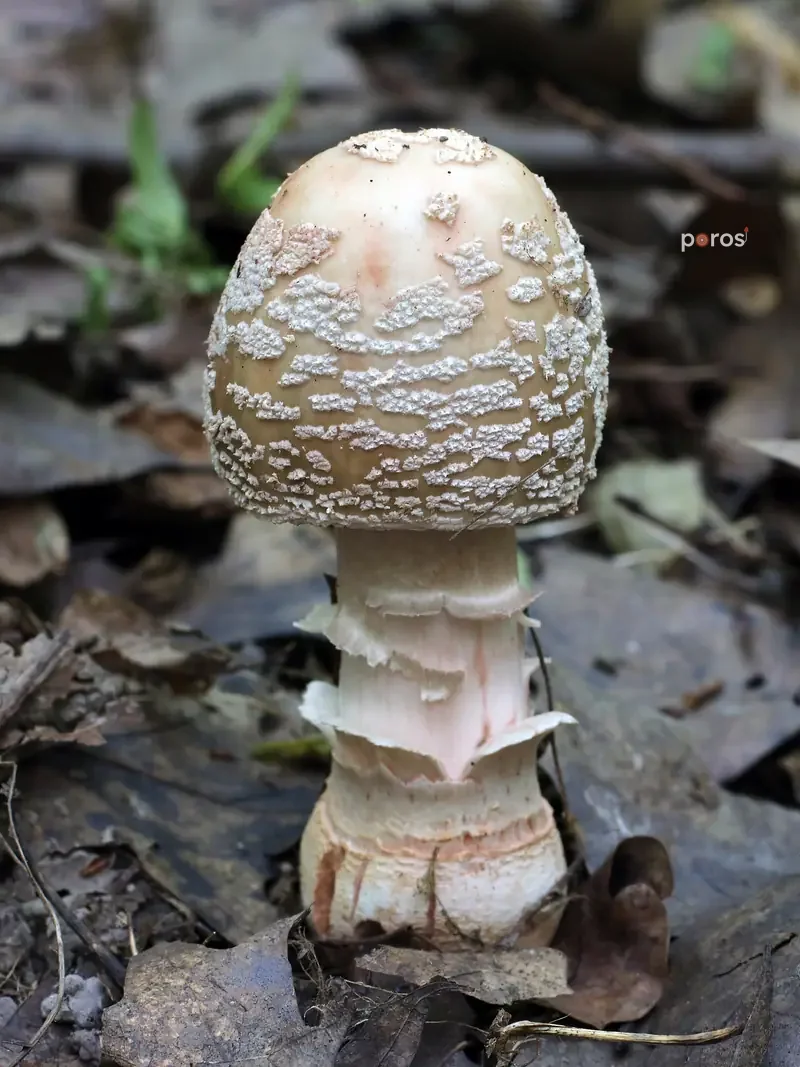 BlusherAmanita rubescensInedible
-
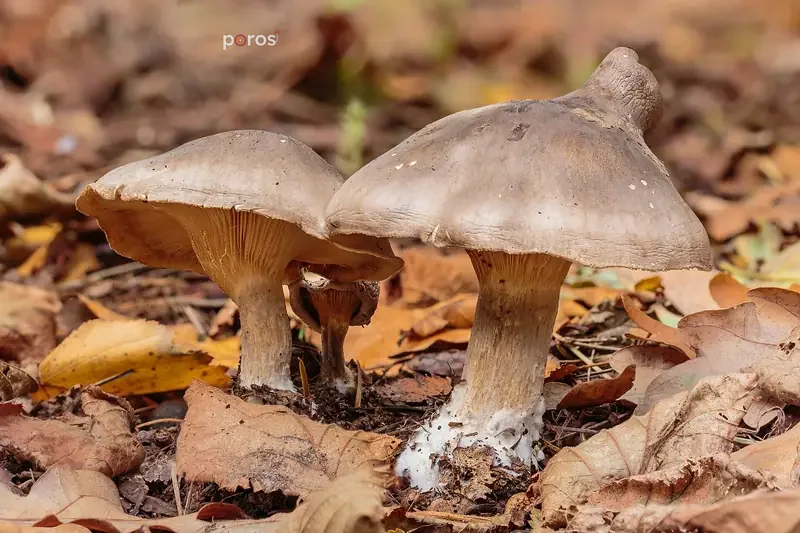 Clouded funnelClitocybe nebularisInedible
-
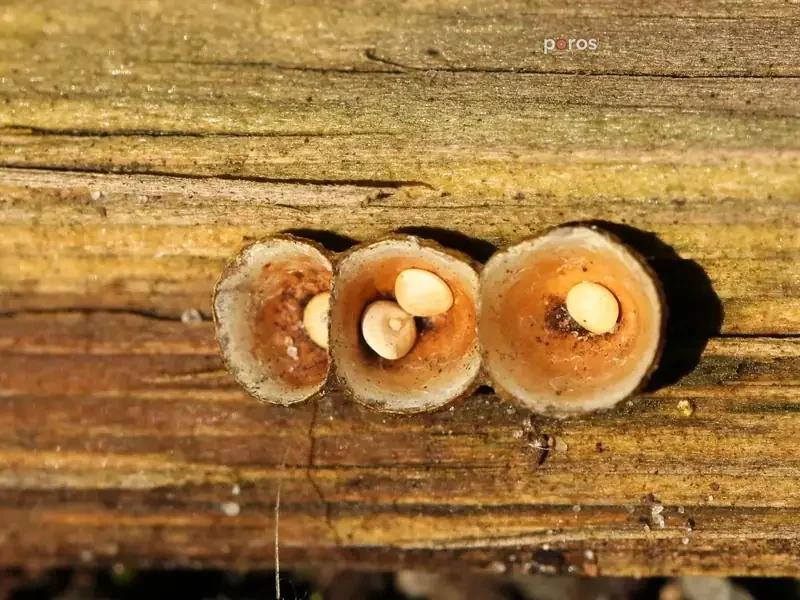 Common bird’s nest fungusCrucibulum laeveInedible
Sources
- Keskin ve ark. (2021), Environmental Science and Pollution Research: Belgrad Ormanı (İstanbul) yabani mantarlarında metal içeriği pubmed.ncbi.nlm.nih.gov
- Fiasson ve Petersen (1973), Mycologia: Clathrus ruber'de karotenler pubmed.ncbi.nlm.nih.gov
- Wikipedia (EN): Clathrus ruber en.wikipedia.org
All sources (6)
- First Nature: Clathrus ruber first-nature.com
- iNaturalist: Clathrus ruber (Türkçe ad ve Türkiye gözlemleri) inaturalist.org
- GBIF: Türkiye kayıtları gbif.org
Photo credits (16)
- File:Clathrus ruber 444460222.jpg · Matej Frančeškin · CC BY 4.0
- Clathrus ruber · iNaturalist #109727703 · Casey H. Richart · CC BY 4.0
- Clathrus ruber · iNaturalist #1036161 · Ken-ichi Ueda · CC BY 4.0
- Clathrus ruber · iNaturalist #151278949 · Karen Offereins · CC BY 4.0
- Clathrus ruber · iNaturalist #39106 · Bob Dodge · CC BY 4.0
- Clathrus ruber · iNaturalist #39106 · Bob Dodge · CC BY 4.0
- Clathrus ruber flavescens · iNaturalist #166324038 · Peter Brastow · CC BY 4.0
- Clathrus ruber · iNaturalist #5082650 · LJ Moore-McClelland · CC BY 4.0
- iNaturalist: İstanbul, 23 May 2026 · Umut Nuri Erdoğan · CC BY
- iNaturalist: İstanbul, 4 Oct 2025 · no rights reserved · CC0
- iNaturalist: Sakarya, 25 Apr 2025 · no rights reserved · CC0
- iNaturalist: İstanbul, 3 Oct 2024 · Umut Nuri Erdoğan · CC BY
- iNaturalist: İstanbul, 2 Oct 2024 · Umut Nuri Erdoğan · CC BY
- iNaturalist: İstanbul, 21 Sep 2024 · Umut Nuri Erdoğan · CC BY
- iNaturalist: İstanbul, 3 May 2024 · Umut Nuri Erdoğan · CC BY
- iNaturalist: İstanbul, 21 Apr 2024 · Umut Nuri Erdoğan · CC BY
