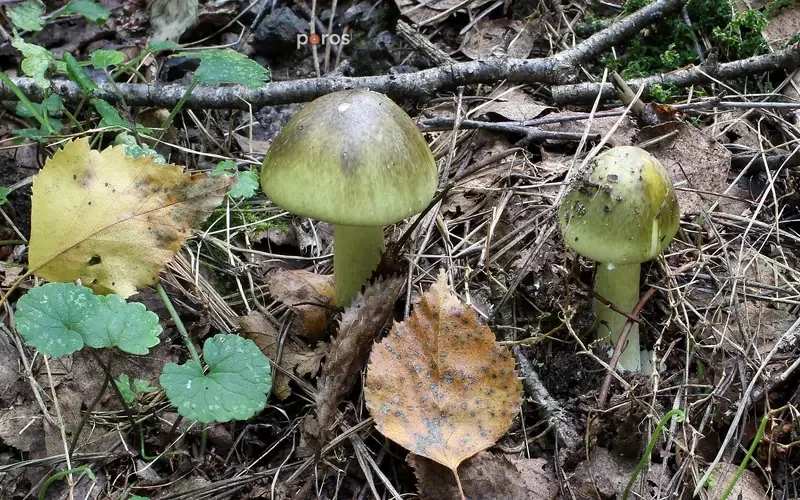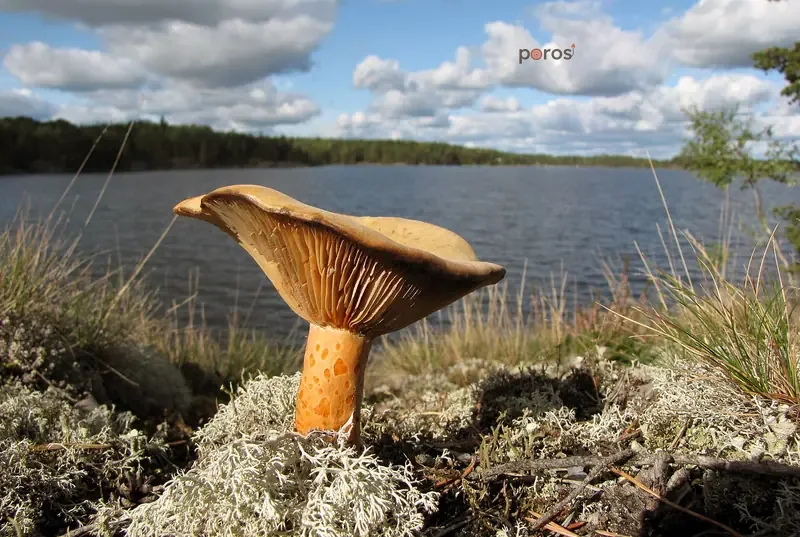
The saffron milk cap (Lactarius deliciosus) is an edible species; so-called “poisonous saffron milk caps” are other mushrooms mistaken for it. The most common confusion is the woolly milkcap, which has white milk and a woolly cap margin and grows with birch. The saffron milk cap has orange milk and a bare margin and grows under pine; if any of these three signs doesn't match, don't eat it.
Is the saffron milk cap poisonous?
A correctly identified saffron milk cap is not poisonous: Lactarius deliciosus is an edible species that is gathered and sold at markets around the Mediterranean and in Turkey. Poisonings linked to its Turkish name, kanlıca, come from other species mistaken for it when picked or sold. So the real question is not “is there a poisonous kanlıca?” but “is the mushroom you think is a kanlıca really one?”
The distinction matters because in Turkey the name kanlıca is not given to a single species. The bloody milk cap, the false saffron milk cap and Lactarius salmonicolor, which grows under fir in Bolu, are picked under the same or similar names, and all of them are edible. We untangle the names in çıntar vs saffron milk cap. The risk lies in a mushroom that doesn't belong to this group at all ending up in the same basket or crate.
Never eat a mushroom you cannot identify with certainty. The saffron milk cap is fairly easy for an experienced forager to recognise, but a single wrong mushroom makes the whole pan unsafe.
What are the four signs of a saffron milk cap?
Four signs together identify the saffron milk cap: orange milk, an orange cap with concentric rings, green staining where it is handled, and a pine tree. Looking at only one of them is not enough; all four must be present in the same mushroom. The descriptions on First Nature and Wikipedia agree on these points.
- Milk: a broken gill bleeds orange to orange-red milk that does not change colour in air. White milk means it is not a saffron milk cap.
- Cap: carrot-orange with darker concentric rings; the margin is bare, not woolly or fringed.
- Green staining: cut, bruised or handled areas slowly turn green.
- Tree and soil: under pine, on acidic soil carpeted with needles; it is mycorrhizal with pine.
These signs narrow things down but are not an identification on their own. If you are unsure, show it to an expert or don't eat it.
Which poisonous mushroom is most often confused with it?
The poisonous species most often confused with the saffron milk cap is the woolly milkcap (Lactarius torminosus). According to First Nature, its cap is pinkish-salmon and zoned, its margin is distinctly woolly, its milk is white, and it always grows with birch. It is very acrid raw and causes gastrointestinal poisoning; it should be treated as poisonous.
From a distance its colour and banding can resemble a saffron milk cap, so tell them apart up close, at three points: milk, margin and tree. The warning that Directo al Paladar passes on about this “false níscalo”, as it is known in Spain, is the same: don't take a mushroom with a woolly or bearded cap edge and white, milky latex.
There are also orange or orange-brown poisonous species with no milk at all. The most dangerous is the fool's webcap, which contains orellanine, damages the kidneys and can take days to cause symptoms. An orange mushroom without milk is not a saffron milk cap and must never be eaten on the grounds that it “might be one”.
- Saffron milk cap: orange milk · bare margin · under pine · stains green.
- Woolly milkcap (L. torminosus): white milk · woolly, fringed margin · under birch · poisonous, not edible.
- Fool's webcap (Cortinarius orellanus): no milk · rusty veil remnant on the stem · deadly, not edible.
Why not pick an orange mushroom with white milk?
A mushroom with white milk does not belong to the saffron milk cap group, however orange its cap, and so it is never picked as one. Every member of the group has orange or red milk; milk colour is the most reliable distinguishing feature here.
Many milkcaps (Lactarius) have white milk, and some of them are acrid or poisonous. Whether an unidentified white-milked mushroom is edible cannot be decided in the field. The same rule applies to mushrooms sold at markets under names such as “white çıntar”: if the species is unknown, don't buy it.
Checking the milk takes seconds. Break one of the gills under the cap with a fingernail and look at the drop. An old or dried-out mushroom may have little milk; don't count a mushroom as a saffron milk cap if you cannot see its milk.
The most common mistake when picking is putting different species in one basket. Carry saffron milk caps in their own basket or compartment, and don't drop an unknown mushroom in with them to “check later”. Once broken pieces mix, they are hard to separate at home. As the Missouri Department of Conservation advises, collecting the whole mushroom, base included, also makes identification easier: the stem base, a cup or attachment to wood is often the key to an identification.
Why don't folk tests reveal a poisonous look-alike?
Folk tests don't reveal poisonous mushrooms, because poisonous species share no substance that blackens silver, garlic or onion. The Catalan health department (Generalitat de Catalunya) states plainly that tests based on garlic, potatoes or a silver spoon turning black do not work. The Swiss poison centre Tox Info Suisse calls the silver spoon and onion belief a persistent misconception that crosses borders.
Animals are no guide either. The Generalitat points out that a mushroom poisonous to people may not be poisonous to snails or other animals, and Tox Info Suisse notes that slugs will happily nibble a death cap. A mushroom with insect damage is not a safe mushroom.
Other rules of thumb that turn up in the news, such as “yellow under the cap means poisonous” or “mushrooms that bleed milk are poisonous”, don't hold either. The saffron milk cap itself bleeds milk. The only reliable method is correct identification of the species.
- Does a silver spoon turn black: useless; a poisonous mushroom may leave it untouched.
- Onion, garlic, potato: useless.
- Eaten by insects or snails: useless; animals react differently from people.
- Long boiling, vinegar water: does not destroy deadly toxins.
Why can urine change colour after eating saffron milk caps?
Orange or red urine after eating a lot of saffron milk caps is a documented effect of the mushroom's own pigment, noted in its Wikipedia entry. That colour change alone is not a sign of poisoning.
Symptoms such as vomiting, diarrhoea, stomach pain, sweating or weakness are a different matter and must be taken seriously. The time at which symptoms begin says something about the mushroom eaten; see mushroom poisoning symptoms for details. If symptoms appear, don't try to interpret them yourself; follow the steps below.
If in doubt: call 112 and 114
If you have doubts after eating a mushroom you took for a saffron milk cap, call 112 without waiting for symptoms and contact the National Poison Information Centre on 114. According to the Turkish Ministry of Health, the 114 line is open around the clock, and symptoms can start 2–6 hours after the meal, depending on the toxin.
The Generalitat's advice is practical too: go to hospital straight away even if symptoms seem mild, and take leftovers, peelings or the rest of the dish with you. Everyone who ate the same meal should seek medical attention, even without symptoms. Don't induce vomiting or try any home remedy.
If you want to identify a mushroom before eating it, our identify by photo tool gives a first idea, but a photo is not enough to decide edibility. See look-alikes side by side on our poisonous mushrooms page, the general rules in how to tell if a mushroom is poisonous, and the species profile on our saffron milk cap page.
FAQ
Is the saffron milk cap poisonous?
A correctly identified saffron milk cap (Lactarius deliciosus) is not poisonous; it is an edible species. Poisonings linked to it come from other species mistaken for it. Don't eat any mushroom you cannot identify with certainty.
Is there a poisonous look-alike?
Yes. The best known is the woolly milkcap (Lactarius torminosus): white milk, a woolly cap margin, grows under birch and causes gastrointestinal poisoning. The milkless, orange-brown fool's webcap is also dangerous.
Can çıntar be poisonous?
The saffron milk cap group species picked as çıntar are edible; the poisonous ones are other mushrooms taken for çıntar. A mushroom with white milk, or no milk at all, is not çıntar.
Why does urine change colour after eating saffron milk caps?
The mushroom's own pigment can turn urine orange-red; it is a known effect and not, on its own, a sign of poisoning. If there is vomiting, diarrhoea or stomach pain, call 112 and 114.
Can you eat saffron milk caps raw?
No. Wild mushrooms should not be eaten raw, and Swiss mushroom-control bodies also advise against eating mushrooms raw. Saffron milk caps are eaten thoroughly cooked.
Can a photo confirm a saffron milk cap?
No. A photo often doesn't show the milk colour, the texture of the cap margin or the host tree. It gives a first idea; the decision on edibility is made by examining the mushroom itself.
How can you tell a poisonous lookalike from a saffron milk cap?
A saffron milk cap (Lactarius deliciosus) bleeds orange milk when cut, has a hollow stem and orange spots on the stem. Lookalikes that bleed white or yellowing milk, or taste acrid, are not milk caps. If all the features in this article do not match, do not eat it; show it to an expert if unsure.
Sources
- Habertürk — Sağlık Bakanlığı'ndan mantar zehirlenmelerine karşı uyarı haberturk.com
- Missouri Department of Conservation — Mushroom hunting mdc.mo.gov
- First Nature — Lactarius torminosus, Woolly Milkcap first-nature.com
All sources (8)
- First Nature — Lactarius deliciosus, Saffron Milkcap first-nature.com
- Wikipedia (EN) — Lactarius deliciosus en.wikipedia.org
- Tox Info Suisse — Toxic tales from daily life at the Tox: Mushrooms toxinfo.ch
- Generalitat de Catalunya — Health recommendations (mantar mevsimi) tramits.gencat.cat
- Directo al Paladar — Níscalos: seçme, sahte níscalo (Lactarius torminosus) uyarısı directoalpaladar.com
Last updated: 2 November 2026